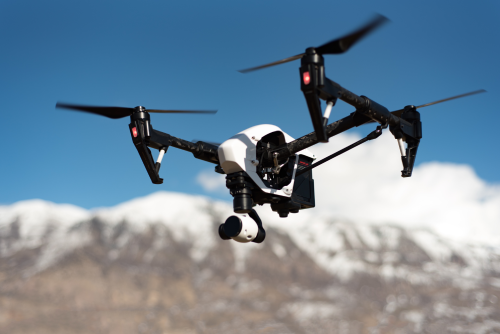
Content agencies do not need the most expensive drone on the market. They need a drone that starts fast, flies reliably, produces client-ready footage, and fits into a repeatable workflow. For most buyers in India, the best drones for content agencies are the ones that balance image quality, portability, battery life, spare-part availability, and compliance confidence.
Quick Take
If you want the short answer, here is the practical buying advice:
-
Best overall for most content agencies: DJI Air 3
It hits the sweet spot between quality, lens flexibility, flight time, and day-to-day usability. -
Best for solo creators, travel shoots, and social-first agencies: DJI Mini 4 Pro
Small, easy to carry, quick to deploy, and especially useful for vertical content. -
Best premium image quality without overcomplicating the kit: DJI Mavic 3 Classic
A strong choice when your agency sells more polished commercial work and wants a better main camera. -
Best premium multi-lens option for high-end campaigns: DJI Mavic 3 Pro
Best suited to agencies doing luxury real estate, tourism films, premium brand videos, and bigger ad work. -
Best specialist drone for dynamic fly-throughs and action shots: DJI Avata 2
Great as a second drone, not your only drone. -
Most important India-specific buying tip: buy from a seller who can actually support batteries, propellers, firmware help, and repairs. A “cheap deal” is not cheap if your shoot gets delayed.
What makes a drone good for a content agency?
A content agency’s needs are different from a hobby flyer’s needs.
You are not just buying a flying camera. You are buying a production tool that has to work on client days, travel days, revision-heavy days, and low-margin days.
Here is what matters most.
1. Reliable image quality, not just headline specs
Many buyers get distracted by sensor size, resolution, and marketing terms.
What agencies really need is:
- footage that grades well in editing
- enough dynamic range to handle bright Indian daylight
- decent low-light performance for evening exterior shots
- consistent color from one shoot to the next
If your team does weddings, resorts, campuses, cafés, or real estate, consistency is more valuable than chasing the highest possible spec sheet.
2. Lens flexibility
A drone with more than one useful lens can save a shoot.
A wider lens is good for:
- establishing shots
- large properties
- beaches
- city skylines
- factory campuses
A medium tele lens, or a longer lens with a narrower field of view, is useful for:
- flattering buildings and roads
- compressing distance for more cinematic-looking shots
- safer framing when you cannot fly too close
- cleaner reveals
This is one reason mid-range and premium drones often feel more “professional” in client work.
3. Wind handling and flight confidence
Indian shooting conditions are not always easy.
You may be dealing with:
- coastal wind
- open farmland gusts
- rooftop turbulence
- dust
- heat
- humidity before rain
Small drones are convenient, but they are usually less confidence-inspiring in stronger wind. A drone that flies calmly saves time and reduces stress.
4. Fast workflow
Agency work is rarely about one perfect shot. It is about quick turnaround.
Look for:
- fast startup
- stable app and controller experience
- simple file transfer
- dependable battery charging
- easy matching with your ground camera footage
If your editor struggles every time footage arrives, the drone is slowing your business down.
5. Vertical content readiness
A lot of agencies in India now deliver more reels, ads, shorts, and vertical social posts than traditional horizontal films.
That means the best drone for your agency may not be the most cinematic drone. It may be the one that helps you deliver:
- Instagram Reels
- YouTube Shorts
- vertical hotel walkthrough teasers
- launch promos for cafés, gyms, studios, and retail brands
6. Safety features that actually help
Obstacle sensing means the drone uses sensors to detect obstacles around it. It is helpful, but it is not magic.
For agency work, these features matter because they reduce risk when shooting around:
- trees
- poles
- facades
- resort pathways
- parking areas
But no safety system replaces pilot judgment, especially around people.
7. Service, spares, and batteries in India
This is where many buying guides fail.
For agency use, ask these questions before paying:
- Can I easily get extra batteries?
- Are propellers readily available?
- Is there a clear repair process?
- Will the seller help with firmware or activation issues?
- Can I get turnaround support if a part fails before a client shoot?
For agencies, ecosystem strength matters almost as much as camera quality.
Best drones for content agencies
Depending on stock, seller support, and service availability in India, these are the strongest practical picks for most agency buyers.
| Drone | Best for | Biggest strengths | Main trade-offs |
|---|---|---|---|
| DJI Air 3 | Most agencies | Dual-camera flexibility, strong flight time, dependable all-round performance | Larger than a mini drone |
| DJI Mini 4 Pro | Travel, social media, solo teams | Very portable, easy to deploy, strong for vertical content | More wind-sensitive, less premium image depth than larger drones |
| DJI Mavic 3 Classic | Premium client work | Better main-camera image quality, stronger low-light results | Costlier, larger kit, less casual to carry |
| DJI Mavic 3 Pro | High-end campaigns | Multiple useful lenses, premium flexibility | Expensive and more than many agencies actually need |
| DJI Avata 2 | Fly-throughs, action, social hooks | Dynamic FPV-style movement, unique perspective | Specialist tool, not a main agency drone |
DJI Air 3: Best overall for most content agencies
If your agency wants one drone that can handle the widest range of jobs, the Air 3 is the safest recommendation.
Why it works so well
The biggest advantage is its dual-camera setup. In practice, that gives your editors and shooters more usable options without carrying a much larger system.
That matters on shoots like:
- real estate videos
- resort promotions
- school and campus films
- factory and warehouse overviews
- wedding venue exteriors
- automotive location shoots
The wider view gets your establishing shots. The medium tele view gives you cleaner, more cinematic framing and helps you avoid the “everything looks far away” problem common with basic drone footage.
It also tends to be a better confidence tool than a mini-class drone in mixed outdoor conditions.
Best for
- agencies handling mixed client work
- small production teams
- real estate and hospitality content
- brand videos that need both practical and polished aerials
- teams that want a serious main drone without going full flagship
Why not just buy the cheapest option?
Because agency work punishes compromise.
When you are shooting for a client, you will appreciate:
- better wind confidence
- longer useful flight windows
- more framing options
- fewer “I wish we had a second lens” moments
Main limitations
- less pocketable than a Mini
- still not a true indoor specialist
- may feel like overkill if your work is only quick local social content
DJI Mini 4 Pro: Best for travel, social content, and lean teams
For solo operators and small agencies, the Mini 4 Pro is often the smartest starting point.
Why it is such a strong agency tool
Its biggest strength is convenience.
You are far more likely to carry it, deploy it, and actually use it. For agencies that travel often or shoot in multiple short locations in one day, that matters a lot.
It is especially useful for:
- café and restaurant reels
- local retail and storefront content
- resort and travel creators
- destination wedding teams
- founder-led social media agencies
- college, education, and event recaps
It is also particularly friendly for vertical-first deliverables.
Best for
- creators who travel light
- agencies that produce mostly reels and short-form ads
- teams that want a low-bulk backup drone
- businesses entering drone content without buying a large kit first
Where it falls short
A mini-class drone is still a small drone.
That means:
- stronger wind can affect confidence
- low-light performance is not as strong as larger premium systems
- clients expecting very polished commercial-grade output may eventually push you toward an Air or Mavic-class drone
Practical verdict
If your agency wins business through speed, mobility, and social media output, the Mini 4 Pro is easy to recommend.
If you regularly shoot larger outdoor properties, premium brand films, or windy locations, move up to the Air 3.
DJI Mavic 3 Classic: Best premium image quality for agencies that do not need multiple lenses
Many agencies want better image quality, but do not actually need a more complex multi-camera setup.
That is where the Mavic 3 Classic makes sense.
Why it stands out
Its main value is simple: better hero shots.
If your agency sells more polished work for:
- architecture
- premium real estate
- luxury hospitality
- tourism campaigns
- corporate brand films
- higher-budget client presentations
then a stronger main camera can make a visible difference.
You may see the benefit most in:
- sunrise and sunset scenes
- contrast-heavy daylight
- cleaner highlight roll-off on roofs, roads, and water
- more flexible color grading
Best for
- agencies moving up from entry or mid-range drones
- commercial teams that care more about image quality than gadget features
- editors who want cleaner premium footage from a single main camera
Why choose it over the Pro version?
Because many agencies do not truly need more lenses.
If most of your drone work is built around strong wide cinematic shots, the Classic can be the smarter value decision.
Main limitations
- bigger and costlier than Air/Mini-class drones
- less convenient for quick casual shoots
- not ideal if your clients often ask for multiple lens looks in one aerial sequence
DJI Mavic 3 Pro: Best for premium agencies and high-end campaigns
The Mavic 3 Pro is for agencies that know why they need it.
Not because it is the “best” on paper, but because its lens flexibility helps premium productions move faster and look more intentional.
Why agencies choose it
On larger productions, being able to move between different lens perspectives in the air is extremely useful.
That helps on:
- luxury villa films
- destination tourism campaigns
- ad films
- automotive content
- premium real estate
- branded documentaries
- large campus and industrial storytelling
Instead of every aerial looking wide and obvious, you can build more visual variety into the edit.
Best for
- agencies already serving premium clients
- production houses adding a drone to a broader camera package
- teams that know how to color grade and plan lens choices properly
Who should skip it
Do not buy this just to impress clients.
Skip it if:
- most of your work is social media reels
- you are still learning aerial shooting basics
- you do not yet have regular drone demand
- your budget would get stretched so much that you cannot buy enough batteries and accessories
Main limitation
The Mavic 3 Pro is powerful, but it can be more drone than many agencies need. If you are not making money from its extra flexibility, it is hard to justify.
DJI Avata 2: Best specialist drone for dynamic content
The Avata 2 is not a normal agency drone. It is a specialist tool.
It is best thought of as an add-on for agencies that want fast, immersive, FPV-style footage. FPV means first-person view flying, usually used for more dynamic movement than a standard camera drone.
Why it is useful
This kind of drone can create shots that a regular foldable drone usually cannot match, such as:
- one-take walkthroughs
- gym and café fly-throughs
- showroom runs
- warehouse paths
- action sports clips
- dramatic auto and bike content
- creator-led social ads with movement-heavy style
Its more protected propeller design also makes it better suited to controlled fly-through-style work than a standard open-prop drone.
Important warning
This is not a beginner’s main drone, and it is not a licence to fly close to people.
You still need:
- skill
- practice
- risk control
- a spotter
- strong location planning
Avoid treating FPV as a shortcut. It is a separate discipline.
Best for
- agencies already comfortable with standard drone work
- teams adding a visual differentiator
- social ad and experiential content creators
- automotive, fitness, and venue-based shoots
Main limitation
It is a specialist camera movement tool, not a full replacement for a standard aerial drone.
What about non-DJI alternatives?
In real-world content work, many agency buyers still end up comparing DJI models because the ecosystem is mature.
That said, you may come across alternatives from Autel or other brands.
A non-DJI drone can make sense if, and only if, you confirm:
- reliable local seller support
- spare battery availability
- propeller availability
- firmware stability
- realistic repair turnaround in India
For agency work, a drone with slightly weaker specs but better support is often the better business choice.
Which drone fits your agency type?
Here is the simplest way to choose.
| Agency type | Best starting choice | Why |
|---|---|---|
| Social media agency doing reels for local brands | DJI Mini 4 Pro | Fast setup, easy carry, great for short-form work |
| Real estate, resorts, hospitality, campuses | DJI Air 3 | Better lens flexibility and stronger outdoor confidence |
| Wedding and destination event teams | DJI Air 3 with a Mini backup | One main drone plus a light backup is ideal |
| Premium commercial or architecture-focused agency | DJI Mavic 3 Classic | Better main-camera output without unnecessary complexity |
| High-end ad or luxury property agency | DJI Mavic 3 Pro | Multiple useful aerial looks in one system |
| Automotive, gym, showroom, fly-through content team | DJI Air 3 plus DJI Avata 2 | Standard coverage plus dynamic motion shots |
The real budget: what agencies should buy besides the drone
A content agency should budget for a full working kit, not just the aircraft.
At minimum, plan for:
- extra batteries
- a charging hub or fast charging solution
- spare propellers
- high-speed memory cards
- ND filters
An ND filter is like sunglasses for the camera lens. It helps control motion blur in bright daylight and can make video look smoother and more natural.
Also useful:
- a compact landing pad for dusty locations
- a protective case or bag
- a power solution for car travel or remote shoots
- a maintenance log for batteries and prop changes
- a backup drone plan, even if that means a rental contact
For client work, one battery and one memory card are not a serious setup.
Safety, legal, and compliance checks for agency work in India
If you are flying for client work in India, stay conservative.
Rules, processes, and platform requirements can change. Before any paid shoot, verify the latest official guidance from DGCA, India’s aviation regulator, and the current Digital Sky workflow where relevant.
Minimum good practice
- Check the airspace before every shoot.
- Do not assume a client’s property is automatically flyable.
- Get venue or landowner permission in writing.
- Avoid airports, helipads, military and cantonment areas, protected sites, and other restricted locations.
- Do not fly over crowds just because the client wants a dramatic shot.
- Keep visual line of sight unless specifically authorized otherwise.
- Use an observer or spotter on professional shoots.
- Respect privacy, especially in residential, wedding, school, and resort environments.
- Carry batteries safely and follow airline or venue rules during travel.
Important India-specific reminder
Do not assume that “small drone” means “no rules.”
Drone category, registration status, pilot requirements, NPNT-related questions, insurance needs, and platform processes can depend on the aircraft and the operation. Verify the latest official position before taking client money.
Common mistakes content agencies make when buying a drone
Buying a flagship too early
A high-end drone looks impressive, but if your agency mostly shoots quick social media content, you may be better served by a lighter, faster system.
Ignoring the full kit cost
Many teams spend heavily on the drone and then delay batteries, filters, and spares. That hurts more than buying a slightly lower-tier drone with a complete kit.
Choosing specs over support
If repair help, spare batteries, or props are hard to get, your workflow becomes fragile.
Treating obstacle sensing like autopilot
Sensors help. They do not understand every branch, wire, glass surface, or tight indoor path.
Flying indoors without proper planning
GPS behavior, lighting, people movement, and obstacles can make indoor flying risky very quickly. Test carefully and do not improvise in front of clients.
Using FPV as a trend rather than a tool
FPV shots are exciting, but not every brand film needs them. Use them to support the story, not to replace it.
Promising aerial shots before compliance and weather checks
Aerial delivery should always be subject to location legality, safety, and weather. Build that into client communication early.
FAQ
Do content agencies need a licence to fly drones in India?
Do not assume a simple yes or no. Requirements can depend on the drone category and the type of operation. Always verify the latest official DGCA and Digital Sky guidance before flying for paid work.
Is a sub-250g drone enough for agency work?
Yes, for many agencies it is. A sub-250g class drone can handle reels, travel content, local brand videos, and light real estate work very well. But it is not automatically suitable for every location, wind condition, or client expectation.
Which is better for most agencies: Mini 4 Pro or Air 3?
For most agencies, the Air 3 is the better main drone. It is more versatile and more confidence-inspiring outdoors. The Mini 4 Pro is better if portability, quick travel, and social-first delivery matter most.
Should I buy one premium drone or two more practical drones?
Many small agencies are better served by one solid main drone and one lighter backup than by a single expensive flagship. Redundancy matters when client schedules are tight.
Is the Mavic 3 Pro worth it for social media agencies?
Usually no. Unless your agency already serves premium clients who benefit from the extra lens flexibility, the Air 3 or Mini 4 Pro is usually the smarter business decision.
Do I need an FPV drone for brand work in 2026?
Only if your clients actually need dynamic fly-throughs, action shots, or immersive movement. FPV is a differentiator, not a requirement.
How many batteries should a content agency keep?
For serious client work, at least three is a practical starting point. For longer outdoor shoots, destination work, or low-power locations, more may be necessary.
Can a drone replace a gimbal camera or mirrorless camera?
No. A drone adds aerial perspective and motion. It does not replace interviews, close product work, handheld coverage, or controlled interior cinematography.
What should I verify before buying from a drone seller in India?
Check invoice quality, support terms, battery availability, spare propellers, repair process, firmware help, and whether the seller can realistically support you after the sale.
Final takeaway
If you are buying one drone for a content agency today, start with the DJI Air 3 unless portability is your top priority. Choose the DJI Mini 4 Pro for lean, travel-friendly, social-first work, move to the Mavic 3 Classic or Pro only when clients truly pay for that extra quality, and add the Avata 2 only as a specialist second system. The best drone for an agency is not the flashiest one; it is the one your team can fly safely, service easily, and trust on every client shoot.
