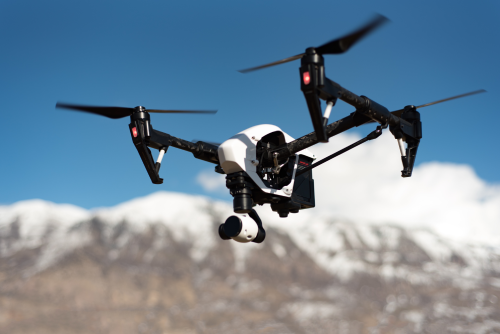
Understanding how rescue teams use drones in emergencies helps explain why these aircraft have become such valuable tools in modern disaster response. In India, where floods, landslides, urban fires, cyclones, industrial accidents, and missing-person cases can escalate fast, a drone can reach a risky area in minutes and send back live visuals before teams move in. That early information often saves time, reduces guesswork, and lowers risk for rescuers themselves.
Quick Take
- Rescue teams use drones mainly for fast aerial assessment, search and rescue, route checking, hazard spotting, and damage mapping.
- A drone is most useful in the first phase of an emergency, when responders need to know what has happened and where to send people first.
- Thermal cameras, which detect heat differences, can help at night or in low visibility, but they are not magic and can miss people.
- In floods, landslides, building collapse, fires, and remote-area searches, drones often help rescuers cover ground faster than foot teams alone.
- Drones do not replace boats, ambulances, firefighters, dogs, or helicopters. They support those teams with better information.
- Weather, smoke, tree cover, battery limits, and poor signal can reduce what a drone can do.
- In India, drone use during emergencies still needs proper coordination and compliance. Private operators should not self-deploy without approval from the responsible authority.
Why drones matter in the first hour of an emergency
When an emergency starts, the biggest problem is often uncertainty.
A district administration team, fire service unit, police team, or disaster response crew may know there is flooding, a building collapse, a forest search, or a major road accident. But they may not yet know:
- How large the affected area is
- Where people are trapped or stranded
- Which roads are still usable
- Whether there are power lines, fire, smoke, or unstable debris
- Where rescue vehicles can safely enter
- Which location needs help first
Traditionally, responders gather this information from phone calls, ground patrols, witnesses, and sometimes manned aircraft. That works, but it can be slow, incomplete, or dangerous.
A drone changes that by giving responders a quick overhead view. Instead of sending people blindly into a risky zone, commanders can first look from above, mark hazards, and decide on a safer approach.
This is why understanding how rescue teams use drones in emergencies is so important: the drone is not just a camera in the sky. It is a decision-making tool.
How rescue teams use drones in emergencies
Rapid aerial assessment
One of the most common uses of a rescue drone is simple: get eyes on the scene fast.
A multirotor drone, which can take off vertically and hover in place, is especially useful here. It can launch from a roadside, rooftop, or open patch of ground and quickly show responders:
- The size of a flood or fire
- The condition of a collapsed structure
- The movement of crowds
- The location of stranded people
- Safe entry and exit routes
Example
After heavy rain in a city, roads may look passable from street level but be deeply waterlogged a few hundred metres ahead. A drone can help police, municipal staff, or rescue teams see where vehicles are stuck, where water is deepest, and which route is safest for an ambulance or rescue truck.
In rural or hilly regions, this is even more useful because the ground route may be long, blocked, or invisible from one location.
Search and rescue for missing people
Drones are now widely used in search missions for:
- Missing trekkers
- Lost children
- Elderly persons with memory-related conditions
- People stranded after floods
- Accident victims in rough terrain
- Survivors near debris after a landslide or collapse
The usual method is not random flying. Good rescue teams search in a planned pattern.
They divide the area into sectors, then scan each one carefully using a standard daylight camera, a zoom camera, or both. If a possible sighting appears, the team marks the location and guides a ground unit there.
Why this helps
A drone can quickly scan:
- Riverbanks
- Open fields
- Rooftops
- Ravines
- Tree gaps
- Rail or road corridors
- Hill trails
This is much faster than sending a small ground team through every possible route.
What the drone pilot is really looking for
It is not always a full visible person. Sometimes the signs are smaller:
- A waving cloth
- A movement pattern that does not match the surroundings
- Fresh tracks
- A bright object such as a bag or jacket
- A parked bike or vehicle in an unusual place
In many search operations, the drone does not “rescue” the person. It helps narrow down where the ground team should go.
Thermal imaging and night searches
A thermal camera detects heat differences rather than normal colour and detail. That makes it useful in low light, after sunset, or when a person contrasts clearly with the background.
Rescue teams may use thermal drones to:
- Look for a missing person at night
- Spot heat signatures near rubble
- Detect hotspots after a fire
- Check whether an area still has dangerous heat before crews enter
Where thermal works well
Thermal can be effective when:
- The person is in the open
- The background is cooler than the body
- The search area is not too cluttered
- The drone is flying at the right height and speed
Where thermal can mislead teams
Thermal is helpful, but it is not foolproof.
False positives can come from:
- Sun-heated rocks
- Tin roofs
- Vehicles
- Livestock
- Machinery
- Recently heated surfaces
And it can miss people when:
- Dense tree cover blocks the view
- A person is under thick debris
- The ambient temperature is very high
- The drone is flying too high
- The operator is inexperienced
This is why professional teams treat thermal imagery as a clue, not final proof.
Checking access routes and hidden hazards
Sometimes the rescue is straightforward, but access is the problem.
A drone helps teams check whether responders can safely enter an area. This matters in:
- Flooded villages
- Landslide-hit mountain roads
- Urban fires
- Industrial sites
- Earthquake-affected streets
- Bridge or flyover damage
Aerial footage can reveal:
- Broken roads
- Washed-out shoulders
- Downed power lines
- Debris piles
- Unstable walls
- Secondary landslide risk
- Congested routes blocked by vehicles or crowds
Example
In a landslide zone in the hills, a road may look open from one bend but be blocked further ahead by fresh debris. A drone can scan the route before heavy vehicles or rescue teams move in, saving time and reducing danger.
In industrial incidents, drones can also help inspect a risky area without immediately exposing personnel to heat, smoke, or structural instability. Some advanced teams may use specialised sensors, but in many cases a standard high-resolution camera is still the main tool.
Flood and water rescue support
Floods are one of the clearest examples of how rescue teams use drones in emergencies.
In flood situations, drones help teams:
- Identify people stranded on rooftops or raised ground
- Track the extent of water spread
- Find safe approach paths for boats
- Check breaches in embankments or bunds
- Assess whether a village is cut off
- Locate livestock, vehicles, or critical assets
- Prioritise which pockets need rescue first
In Indian conditions
This matters during monsoon flooding, flash floods in hilly states, urban waterlogging, and cyclone-related inundation in coastal areas.
In a wide floodplain, ground teams may receive dozens of calls at once. A drone feed helps the control room or field commander decide:
- Which location has immediate life risk
- Whether boats can reach it
- Where relief distribution should start
- Which route is safe for evacuation
Can drones drop supplies?
Sometimes, yes, but only in a limited and specialised way.
A specially equipped drone may be able to carry a small item such as:
- A radio
- Basic medicine
- A rope line
- A lightweight flotation aid
- A small communication device
But this is not the main role of most rescue drones. Payload capacity is limited, weather matters, and drop operations need training and risk control. In most real emergencies, the bigger value of the drone is finding people and guiding the actual rescue team to them.
Building collapse, landslides, and earthquake response
Collapsed buildings and landslides are dangerous because conditions can change without warning. Walls may shift, rubble may settle, and nearby structures may also be unstable.
Drones help by giving responders a view from above before they send people in close.
What teams look for
- Gaps or voids where survivors might be
- Unsafe leaning walls
- Roof conditions
- Access points for cutting or lifting equipment
- Debris that could shift
- Nearby crowd pressure on the site
- Secondary hazards such as exposed wiring
In landslide zones, drones can also help identify whether there is fresh cracking or additional slope movement above the main incident area.
They do not replace structural engineers or specialist rescue teams, but they improve scene awareness.
Fireground support and hotspot detection
Fire services increasingly use drones for a better view of incidents that are hard to judge from street level.
A drone can help officers understand:
- Whether a fire is spreading across a roof
- Which side of a structure is most affected
- Whether adjacent buildings are at risk
- Where smoke is moving
- Whether hotspots remain after visible flames reduce
Thermal imaging is especially useful in overhaul work, meaning the stage after the main fire is knocked down, when crews check for hidden heat that could reignite.
Limits at fire scenes
Fire is one of the hardest environments for drones.
Problems include:
- Strong heat rising from the structure
- Thick smoke reducing visibility
- Turbulent air
- Water spray
- Night glare
- Frequent movement of crews and equipment
This is why fireground drone flying needs tight coordination with the officer in charge.
Damage mapping and relief planning
After the immediate life-saving phase, drones are often used for damage assessment.
This is useful after:
- Cyclones
- Floods
- Large fires
- Landslides
- Earthquakes
- Major industrial incidents
By flying repeated photo missions, teams can create stitched maps from many overlapping images. These maps help authorities and support agencies estimate:
- Which areas are worst affected
- How many houses are damaged
- Which roads are open or blocked
- Where temporary shelters may be needed
- Where debris clearance should begin
- How relief logistics should be organised
This is one of the most practical long-tail uses of drones in emergencies because it turns visual data into a planning tool.
What kind of drones are used in rescue work
Most rescue operations do not need every type of drone. The right platform depends on the mission.
| Drone type | Best use in emergencies | Main strength | Main limitation |
|---|---|---|---|
| Multirotor | Search, inspection, hovering over a site, urban rescue, flood assessment | Can take off quickly and hover precisely | Shorter flight time |
| Fixed-wing | Large-area survey after floods, cyclones, or wide rural incidents | Covers more ground efficiently | Cannot hover; needs more launch and recovery planning |
| Tethered drone | Long-duration overwatch above one site, command post visibility, night lighting in some setups | Can stay up longer because power comes through a cable | Limited movement and more specialised setup |
| Heavy-lift or utility drone | Special missions such as carrying small payloads or sensors | More capability for niche tasks | Cost, complexity, and operational risk are higher |
For many district-level or first-response teams, a good multirotor platform with a reliable camera is the starting point.
Useful payloads and accessories may include:
- Standard daylight camera
- Zoom camera
- Thermal camera
- Loudspeaker
- Spotlight
- Extra batteries
- Charging setup or field power source
- Rugged carrying case
- Tablet or display for live viewing
- Mapping or mission-planning software
What a rescue drone workflow usually looks like
The difference between a useful drone flight and a waste of time is process.
Here is a common field workflow.
1. Define the mission clearly
Before launch, the team decides what question the drone must answer.
For example:
- Are there people stranded in this village cluster?
- Which route can the ambulance take?
- Is the fire spreading to the next structure?
- Which part of the landslide is still active?
A clear mission stops random flying.
2. Check airspace and coordinate with command
The drone team should coordinate with the incident commander, meaning the person or team managing the scene.
They also need to know:
- Is any helicopter operating nearby?
- Is the area close to an airport, helipad, or sensitive zone?
- Has local police or district administration cleared the operation?
- Are other drone teams already flying?
In a real emergency, airspace confusion can be dangerous.
3. Choose the right drone and sensor
Not every mission needs thermal. Not every search needs a zoom camera. Not every area needs a large drone.
The team chooses the platform based on:
- Search area size
- Light conditions
- Wind
- Obstacles
- Required detail level
- Urgency
4. Plan the search pattern
Professional teams search systematically.
They may:
- Divide the area into grids
- Fly parallel tracks
- Use lower altitude for detailed search
- Use a visual observer, meaning a second person watching the drone and surroundings
- Note landmarks and map references
This reduces the chance of missing a sector.
5. Stream or relay findings in real time
The best rescue drone teams do not just record video. They communicate while flying.
If the drone sees a possible victim, blocked bridge, or safe landing area for a boat, that information is passed immediately to the ground team.
6. Mark the exact location
A good sighting is only useful if the ground team can find it.
That means sharing:
- Coordinates
- Nearby landmark
- Direction of approach
- Any visible hazards
- Screenshot or image if possible
7. Recover, rotate, review, repeat
Rescue flights often happen in cycles.
After landing, the team:
- Changes batteries
- Reviews critical footage
- Logs what was covered
- Updates the search map
- Relaunches if needed
Battery discipline matters more than many beginners realise.
Safety, legal, and compliance points in India
Emergency flying does not mean anyone can launch a drone anywhere.
If you are in India, keep these points in mind:
- Rescue agencies may operate under official procedures, but private operators, NGOs, and companies should verify the latest DGCA, Digital Sky, and local authority requirements before flying.
- Civil drone compliance, including platform-specific requirements such as NPNT, may still apply depending on the operation and drone type. Verify current official guidance instead of relying on old advice.
- District administration, police, fire services, disaster management authorities, and any air traffic-related authority may all matter depending on the location.
- Never self-deploy near active helicopter operations unless you are explicitly coordinated into the airspace plan.
- Sensitive locations, airports, military areas, and restricted zones can involve additional rules.
- Pilots should be trained for emergency operations, not just normal hobby flying.
- Batteries, propellers, and firmware should be checked before deployment. A crash at a rescue scene creates a new hazard.
- Survivor privacy matters. Images of injured or distressed people should be handled carefully and only shared on a need-to-know basis.
- Crowded disaster scenes are difficult to fly over safely. Risk to people on the ground must be managed.
For readers who own drones: the worst time to “help” by flying casually is during a real emergency. If authorities have not asked you to fly, do not add confusion to an already stressed scene.
Limits of drones that people often overlook
Drones are useful, but they are not all-powerful.
Common limits include:
- Heavy rain and strong wind
- Thick smoke or poor visibility
- Dense tree canopy
- Short battery endurance
- Weak signal in valleys or built-up areas
- GPS problems near tall structures
- Difficulty seeing through debris, walls, or roofs
- Operator fatigue during long missions
In other words, a drone gives responders better information, not perfect information.
Common mistakes rescue teams and volunteers make
Flying without a clear objective
If the pilot launches just to “see what’s there,” footage may look dramatic but not be operationally useful. Every flight should answer a specific question.
Searching too high or too fast
Beginners often fly high because it feels safer. In search work, that can make people or clues too small to identify.
Treating thermal as a guaranteed people-finder
Thermal helps, but many hot objects are not people, and many people are not easy to detect. Teams need cross-checking.
Poor communication with ground teams
A drone sighting means little if the foot team cannot locate it quickly. Coordinates, direction, and landmarks must be shared clearly.
No battery and power plan
In long operations, charging, battery rotation, and spare power become mission-critical. A grounded drone helps no one.
Self-deploying into a crowded airspace
This is a serious mistake. Private pilots who fly without coordination can interfere with official rescue work or manned aircraft.
Ignoring privacy and dignity
Sharing dramatic rescue footage on social media may harm victims and can undermine trust. Operational footage should be treated responsibly.
FAQ
Can drones replace rescue helicopters?
No. Drones are cheaper, quicker to launch, and useful at low altitude, but they do not replace the lift, range, speed, or evacuation capacity of a helicopter. They are support tools.
Do thermal drones always find people at night?
No. Thermal cameras can help a lot, but results depend on background temperature, tree cover, altitude, weather, and operator skill. They can both miss people and create false alarms.
Are hobby drones useful in emergencies?
They can be useful in some tasks, especially for quick visual assessment, but only if they are legally compliant, properly maintained, and flown by someone operating under authorised coordination. Casual hobby flying at a disaster scene is not appropriate.
Which is better for rescue work: multirotor or fixed-wing?
For most close-range rescue tasks, multirotors are more practical because they can hover and launch from tight spaces. Fixed-wing drones are better when teams need to cover a very large area efficiently.
Can drones fly during monsoon rain?
Many standard drones should not be flown in rain, and strong monsoon winds also create risk. Some enterprise platforms are more weather-resistant, but teams should still check the specific aircraft limits and the mission necessity before flying.
Can rescue teams use drones to deliver medicine or life jackets?
Sometimes, but this is a specialised role. Most emergency drone use is still about locating people, assessing hazards, and guiding ground teams rather than carrying meaningful payloads.
How do drones help after a building collapse?
They help teams inspect rooftops, unstable walls, access points, debris layout, and possible survivor locations without immediately putting more people into the danger zone.
Can volunteers offer drone help during a disaster?
Only through the official command structure. If you want to help, contact the responsible authority or agency and wait for assignment. Do not just arrive and launch.
Are rescue drone flights automatically allowed in restricted areas during an emergency?
Not automatically. Some official agencies may have procedures for such operations, but private and civil operators should verify current permissions and instructions from the relevant authorities before acting.
Final takeaway
The biggest value of a rescue drone is not the aircraft itself. It is the speed of useful information.
When used well, drones help rescue teams see danger earlier, search faster, move smarter, and avoid sending people blindly into unsafe areas. If you are part of an agency, NGO, or private response team in India, focus on training, coordination, batteries, sensors, and compliance before the next emergency happens. And if you are a hobbyist, remember this: in a real disaster, the right move is usually not to self-launch, but to support authorised teams that can use drones safely, legally, and effectively.
