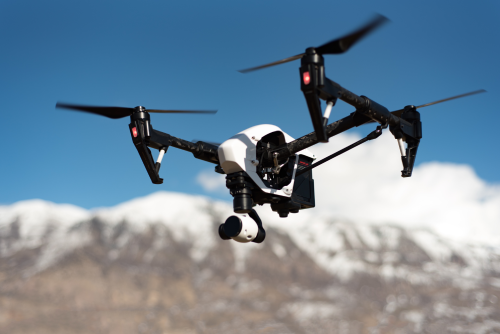
Smooth cinematic drone footage is less about headline resolution and more about stability, control, and a camera you can shape in editing. The best drones for smooth cinematic shots combine a proper 3-axis gimbal, predictable flight behaviour, and image quality that still looks good after colour correction. For buyers in India, local support, spare batteries, and rule compliance matter almost as much as the camera itself.
Quick Take
If you want the short answer, these are the strongest categories to shortlist for smooth cinematic shots:
-
Best overall for most creators: DJI Air 3S
A very strong balance of flight stability, image quality, and lens flexibility. -
Best lightweight travel option: DJI Mini 4 Pro
Easy to carry, easy to learn, and capable of genuinely polished footage. -
Best premium foldable for paid work: DJI Mavic 3 Pro
Best if you need multiple focal lengths and more room for serious grading. -
Best for high-end commercial productions: DJI Inspire 3
Not for casual buyers, but a real cinema platform. -
Best for FPV-style cinematic motion: DJI Avata 2
Great for dynamic reveals and action-heavy movement, but not a replacement for a standard camera drone. -
Best non-DJI option only if support is clear: Autel EVO Lite+ class
Worth considering only when local service, batteries, and repairs are properly sorted.
A simple rule for Indian buyers: buy the drone you can legally fly, reliably service, and confidently control in your usual shooting conditions. A slightly smaller drone with local support is often a better investment than a more impressive model that becomes a repair nightmare.
What actually makes a drone good for cinematic shots
A drone can be “smooth” without looking cinematic, and it can have a sharp camera without producing usable video. For cinematic work, these features matter most.
1. A true 3-axis gimbal
A 3-axis gimbal is the motorised stabiliser that keeps the camera level and reduces shake while the drone moves. This is the biggest reason camera drones look polished while toy drones look jittery.
Without a proper gimbal, even 4K or higher resolution footage can still feel amateur.
2. Gentle, predictable flight control
Good cinematic drones don’t just hover well. They also:
- start and stop smoothly
- brake without sudden jolts
- make slow pans and reveals easier
- hold position well in wind
This is why flight tuning matters as much as camera specs. A drone that feels “calm” in the air is far easier to use for slow cinematic movement.
3. A camera that survives editing
If you like to colour grade, expose carefully, or shoot at sunrise and sunset, look for:
- better dynamic range, so highlights and shadows hold together
- a log profile, which is a flatter colour profile designed for colour grading
- strong low-light performance
- clean, natural detail without oversharpening
For quick social media edits, an entry-level camera may be enough. For paid work, travel films, and brand videos, better image flexibility matters.
4. Lens options
Wide shots are useful, but cinematic work often improves when you can switch focal lengths.
A second camera or telephoto option helps you:
- compress backgrounds for a more premium look
- create stronger parallax, where foreground and background move differently and add depth
- avoid flying too close to people or structures
- build more varied edits from one location
5. Wind handling
Indian shooting conditions can be demanding:
- coastal wind in Goa, Chennai, Kochi, or Mumbai
- open farmland gusts
- mountain turbulence in Himachal, Uttarakhand, Sikkim, or Ladakh
- hot, dusty conditions in many plains and semi-urban locations
A lightweight drone may be excellent in calm weather but struggle to hold a polished frame in gusty conditions.
6. Obstacle sensing and tracking
Obstacle sensors and subject tracking are helpful, especially for beginners and solo creators, but they are not magic. They reduce risk and make repeatable shots easier, yet they do not replace visual awareness, planning, or legal responsibility.
7. ND filters for daylight video
An ND filter is like sunglasses for your camera. It reduces light so you can keep a more cinematic shutter speed in bright daylight.
If you shoot daytime video in India without ND filters, your footage can look too sharp and choppy during movement, even if the drone itself is excellent.
Best drones for smooth cinematic shots
Here is the practical shortlist for most buyers in 2026.
| Drone | Best for | Why it stands out | Main trade-off |
|---|---|---|---|
| DJI Mini 4 Pro | Travel, beginners, students, solo creators | Very portable, polished stabilisation, easy to carry anywhere | More affected by wind and harsher light than larger drones |
| DJI Air 3S | Best overall for most buyers | Better stability, stronger image quality, useful lens flexibility | Bigger, heavier, and more expensive than Mini-class drones |
| DJI Mavic 3 Pro | Paid work, ad films, premium travel, weddings | Multiple focal lengths and stronger professional image workflow | Expensive and more than many beginners need |
| DJI Inspire 3 | Film production, agencies, serious commercial crews | Cinema-grade imaging and professional operating workflow | Very expensive, complex, and often better rented than bought |
| DJI Avata 2 | Dynamic FPV-style movement and reveals | Distinct motion, prop guards, immersive shots | Not a substitute for a standard gimbal camera drone |
| Autel EVO Lite+ class | Non-DJI alternative buyers | Strong camera potential and manual control | Service and parts can be harder to verify in India |
DJI Mini 4 Pro
Best for: travel creators, first-time buyers, students, lightweight everyday filming
The Mini 4 Pro is the drone that makes the most sense for people who actually want to carry a drone regularly. It is small enough to travel with easily, fast enough to deploy on location, and good enough to produce footage that looks far beyond “beginner” level.
Why it works for cinematic shots:
- a proper gimbal keeps footage stable
- the drone is easy to fly slowly and carefully
- obstacle awareness and subject tracking reduce workload for solo creators
- it is a strong option for hiking, vacations, campus filmmaking, and casual commercial clips
- its portability means you are more likely to take it with you and actually get the shot
Where it struggles:
- strong wind can show the limits of a lightweight airframe
- harsh noon light and more demanding colour work expose the gap between Mini-class drones and larger cameras
- if you start doing weddings, real estate, tourism films, or regular client work, you may outgrow it
Buy it if: you want the easiest path to polished drone video without carrying a heavy kit.
Skip it if: you shoot regularly in windy areas or want a more professional camera pipeline from day one.
DJI Air 3S
Best for: most creators, travel filmmakers, YouTubers, real estate, small businesses, serious hobbyists
For many people, the Air 3S is the best drone for smooth cinematic shots because it sits in the sweet spot. It gives you more confidence than a Mini-class drone in wind, better image flexibility, and the creative advantage of multiple focal lengths without jumping all the way to a flagship cinema platform.
Why it stands out:
- stronger in the air than ultralight drones
- more polished motion in real-world conditions
- lens flexibility helps you create more cinematic framing
- easier to build shot sequences: wide establishing shot, medium push-in, tighter reveal
- a better fit for sunrise, golden hour, landscape, tourism, and commercial social content
This class is especially useful for Indian creators who often shoot in mixed conditions: urban rooftops one week, open countryside the next, and beach or hill travel footage after that.
The biggest advantage over a smaller drone is not just image quality. It is confidence. You can usually compose more carefully, hold frames more solidly, and get more keepers in wind or changing light.
Main compromises:
- less convenient than a Mini-class drone
- bigger accessories budget
- still not a true cinema platform for productions that need top-end post flexibility
Buy it if: you want one drone that can cover hobby use, content creation, and many small paid projects.
Skip it if: portability matters more than everything else, or you are ready for a more specialised high-end platform.
DJI Mavic 3 Pro
Best for: freelancers, destination wedding teams, tourism films, premium branded content, advanced solo videographers
The Mavic 3 Pro is where foldable drones start feeling much more like serious camera tools. Its biggest strength is creative flexibility. Instead of getting “one drone look,” you can choose between different focal lengths and build a more cinematic edit from the same flight.
Why it is so good for cinematic work:
- multiple focal lengths make your edit look more intentional
- the main camera gives more room for careful colour work
- tele options let you separate subjects from backgrounds more elegantly
- you can create premium-looking parallax without flying aggressively close
- it is excellent for luxury properties, resorts, wedding venues, and destination films
This is the foldable drone for people who already understand why lens choice matters. If you know the difference between a wide establishing shot and a compressed tele shot, the Mavic 3 Pro gives you a lot more storytelling range.
Where people go wrong with it:
- they buy it as a first drone and underuse its strengths
- they underestimate accessory and replacement costs
- they assume expensive gear will automatically make their footage cinematic
It is still a drone that rewards smooth piloting, careful planning, and disciplined shot design.
Buy it if: you already shoot regularly and want a foldable drone that feels closer to a professional imaging tool.
Skip it if: this is your first drone or you mainly create quick social clips.
DJI Inspire 3
Best for: production houses, ad films, film crews, large commercial projects, high-end aerial cinematography
The Inspire 3 is not a casual recommendation. It is the drone for serious productions that need a cinema-grade aerial system, a more advanced workflow, and often a dedicated crew.
Why it belongs here:
- it is built around a true professional imaging workflow
- it supports a higher-end standard of cinematography than compact consumer drones
- dual-operator use is far better for complex moves
- it makes sense when the drone is one part of a larger production pipeline
The Inspire 3 is most relevant if you are shooting:
- ad campaigns
- feature or documentary work
- large tourism or hospitality films
- premium automotive or branded content
- repeatable, precise shots that need more than a hobby drone workflow
But there are major caveats:
- high purchase cost
- expensive batteries, accessories, and transport
- more operational complexity
- more responsibility around permissions, crew safety, insurance, and documentation
For many Indian production teams, the smarter move is to rent this class of drone with an experienced operator unless aerial work is a core recurring service.
Buy it if: aerial cinematography is a serious business function, not an occasional extra.
Skip it if: you are a solo creator, a beginner, or still validating whether clients will actually pay for this level of output.
DJI Avata 2
Best for: FPV-style cinematic movement, indoor-outdoor reveals, sports, action content, dramatic motion shots
The Avata 2 is a different type of cinematic tool. It is for FPV flying, meaning a more immersive, agile style of flight designed for motion-heavy footage rather than slow hovering landscapes.
Why people love it:
- it can produce shots a conventional camera drone cannot
- built-in prop guards add confidence for closer, tighter movement
- it works well for reveal shots, fly-throughs, and action sequences
- it gives social media edits a much more energetic visual style
Where it fits best:
- resort reveals
- bike and car movement
- creator intros
- sports clips
- interior-to-exterior transitions
- short-form cinematic reels
Where it does not replace a normal drone:
- slow scenic sunset shots
- classic real estate exteriors
- calm landscape framing
- longer hovering compositions
- professional aerials where lens flexibility and precise gimbal framing matter most
For most buyers, the Avata 2 is a second drone, not the only drone.
Buy it if: you specifically want dynamic movement and are willing to learn FPV techniques carefully.
Skip it if: your priority is traditional cinematic aerial footage.
If you want a non-DJI alternative
Autel’s camera-drone lineup, especially the EVO Lite+ class, can still interest buyers who want a non-DJI option. On paper, some models offer appealing image quality and manual control.
In India, though, the bigger question is practical ownership:
- Is there a trustworthy local seller?
- Can you get batteries and propellers easily?
- Is there a clear repair path?
- Will firmware support be smooth?
- What is resale value like in your city?
If those answers are unclear, choose the drone with the stronger support ecosystem, not the one with the nicer spec sheet.
How to choose the right one for your shooting style
Use this simple decision process before spending money.
1. Start with your actual shots
Ask yourself what you shoot most often:
- Travel films and holidays: Mini 4 Pro
- Mixed creator work and small business shoots: Air 3S
- Premium weddings, real estate, tourism, branded work: Mavic 3 Pro
- Commercial productions with crew and bigger budgets: Inspire 3
- Fast motion and fly-throughs: Avata 2
If you do not know your shot style yet, do not start with the most expensive model.
2. Match the drone to your locations
If you often shoot in:
- dense cities or while travelling light: smaller drones are easier to carry and deploy
- coastal or windy regions: heavier drones usually feel more stable
- indoor-outdoor transition spaces: FPV tools may help, but only with safe planning and permission
- mountains and open landscapes: image quality and wind handling become more important
3. Think about editing
If you mostly post quick reels and vlogs, you may not need a flagship drone.
If you colour grade carefully, deliver to clients, or mix drone shots with mirrorless camera footage, stepping up to the Air 3S or Mavic 3 Pro makes more sense.
4. Budget for the full kit
Your real drone budget should include:
- extra batteries
- spare propellers
- ND filters
- high-speed memory cards
- a charging hub
- a case or safe bag
- cleaning tools for dusty locations
- possible insurance, where relevant
A buyer who spends a little less on the drone but enough on the support kit often gets better results.
5. Prioritise serviceability in India
A drone is not just a camera. It is a flying machine with parts that wear out or break.
Before buying, ask:
- Who handles warranty?
- How long do repairs typically take?
- Are batteries easy to replace?
- Can you buy genuine propellers locally?
- Is there a clear invoice and serial documentation?
- If the drone is imported, who will support it after the sale?
India-specific buying checklist
Before you place an order, run through this checklist:
- Verify the latest DGCA and Digital Sky requirements for your intended use, weight class, and flying area.
- Buy from a reputable seller who clearly explains warranty and repair responsibility.
- Do not assume imported stock equals easy ownership. Ask about support in writing.
- Check battery availability. Batteries become a pain point faster than the drone itself.
- Consider climate. Heat, dust, humidity, and monsoon conditions are real ownership factors in India.
- Think about travel. If you fly often, portability matters more than reviewers admit.
- Match the drone to your work. A wedding operator and a trek vlogger should not buy the same drone blindly.
- Avoid overbuying. If your shooting style is still basic, a lighter, simpler drone may give you better results.
Safety, legal, and compliance checks in India
Drone rules can change, and requirements can differ by drone type, weight, location, and purpose. Before buying or flying, verify the latest official guidance from the relevant Indian authorities and platforms.
A few practical rules to follow:
- Check current airspace restrictions before every flight.
- Do not fly near airports, military areas, or other sensitive locations unless you are clearly authorised to do so.
- Do not fly over crowds, traffic, processions, or emergency scenes.
- Get permission from venue owners or organisers for weddings, resorts, campuses, and private properties.
- Respect privacy. Low-altitude filming near homes and private spaces can create legitimate complaints even if you mean no harm.
- If you are doing commercial work, clients may expect documentation, invoices, permissions, and insurance depending on the job.
- If a seller says a drone is “legal everywhere” or “no permission needed,” verify that independently before you trust it.
The safest habit is simple: treat compliance as part of your pre-flight routine, not as an afterthought after buying the drone.
Common mistakes that ruin cinematic footage
Even the best drone cannot fix poor technique. These are the mistakes buyers make most often.
Buying on resolution alone
Higher resolution does not automatically mean better footage. Gimbal quality, colour handling, lens choice, and flight stability matter more.
Flying too fast
Cinematic footage usually comes from slow, controlled movement. Beginners often push forward too aggressively and end up with footage that feels like surveillance, not storytelling.
Ignoring ND filters
In bright Indian daylight, footage can look unnaturally crisp and stuttery without ND filters. They are one of the simplest upgrades you can make.
Shooting only ultra-wide views
Wide shots are useful, but they can all start looking the same. Medium and tele perspectives often make footage look more premium.
Overtrusting obstacle sensing
Obstacle sensors help, but branches, wires, glass, and complex urban environments can still cause problems. Never use tracking modes carelessly around people or traffic.
Buying too small for your conditions
A lightweight drone is wonderful until you are shooting on a windy coastline or trying to hold a clean frame over a ridge line.
Skipping practice on smooth turns
The most cinematic moves often combine gentle forward motion, a slow yaw, and a careful gimbal tilt. That takes practice, not just good hardware.
FAQ
Is a sub-250g drone enough for cinematic shots?
Yes, for many people it is. A Mini-class drone can produce beautiful travel footage, landscape clips, and polished social content. The limitation is usually wind handling, low-light performance, and how far you want to push the footage in editing.
Which is better for most buyers: DJI Mini 4 Pro or DJI Air 3S?
If portability and ease of carrying matter most, choose the Mini 4 Pro. If you want a stronger all-round cinematic tool with better stability and more framing flexibility, choose the Air 3S.
Do I really need ND filters?
If you care about cinematic-looking daylight video, yes. ND filters help keep motion blur natural and make movement look smoother.
Can an FPV drone replace a normal camera drone?
Usually no. FPV drones like the Avata 2 are excellent for dynamic motion and fly-throughs, but they do not fully replace the classic stable aerial look of a standard gimbal camera drone.
Is obstacle sensing necessary for beginners?
It is very helpful, but it should not be the reason you take risky shots. Think of it as backup assistance, not permission to fly carelessly.
Should I buy an imported drone if it is cheaper?
Only if you clearly understand the warranty, repair path, battery availability, and compliance implications. A cheaper purchase can become expensive if parts or service are difficult to access.
What frame rate is best for cinematic drone footage?
For a classic cinematic feel, many creators prefer standard frame rates such as 24 or 25 fps, then use higher frame rates only when they specifically want slow motion. Smooth movement matters more than frame rate alone.
Is the Mavic 3 Pro worth it for beginners?
Usually not. It is an excellent drone, but most beginners will learn faster and spend smarter with a Mini 4 Pro or Air 3S first.
Should I rent before buying a premium drone?
Yes, especially if you are considering the Mavic 3 Pro or Inspire 3. One rental job can tell you more about real workflow, battery needs, and handling than weeks of reading reviews.
Final takeaway
For most Indian buyers, the smartest shortlist is simple:
- DJI Mini 4 Pro if you want the easiest lightweight cinematic drone
- DJI Air 3S if you want the best all-round drone for smooth cinematic shots
- DJI Mavic 3 Pro if you shoot paid work and want more creative control
- DJI Inspire 3 only if aerial cinematography is a serious professional service
- DJI Avata 2 as a second drone for dynamic FPV movement
Before you buy, verify the latest India-specific compliance requirements, confirm after-sales support, and be honest about the kind of shots you actually film. The best drone is the one that gives you stable, repeatable footage in your real-world conditions, not the one with the most impressive spec sheet.
