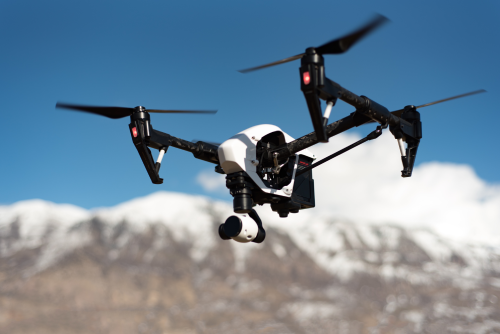
Coastal filming is one of the fastest ways to discover whether a drone is genuinely good in the real world. The best drones for coastal shoots need more than a sharp camera: they must handle sea breeze, harsh reflections, salt-laden air, and the simple fact that a mistake over water is often an expensive one. For most Indian buyers, the right choice comes down to wind confidence, camera flexibility, and how easily you can support the drone with batteries, spares, and service.
Quick Take
- Best overall for most coastal creators: an Air-class foldable camera drone, especially the DJI Air 3, is the sweet spot.
- Best lightweight travel option: DJI Mini 4 Pro if you mostly shoot in calmer morning conditions and want the easiest carry.
- Best premium image-quality pick: DJI Mavic 3 Classic or Mavic 3 Pro for serious paid work, resort films, and high-end real estate.
- Best for action-style coastal movement: DJI Avata 2, but only as a specialist tool, not your only drone.
- Best value older option: DJI Air 2S if bought carefully in used or refurbished condition.
- What to avoid for beach work: tiny selfie drones and toy-class drones. They are simply not the right tool for sea wind and over-water risk.
- Big buying rule: if beaches are a major part of your work, it is usually smarter to move from Mini class to Air class than to spend the same money on extra accessories for a lighter drone.
Why coastal shoots are harder than they look
A beautiful shoreline is also a demanding flying environment.
Here is what makes coastal shooting different from flying inland:
- Wind is stronger than it feels from the ground. A beach can feel mild at takeoff and much rougher at drone altitude.
- Salt is the enemy. Most consumer drones are not waterproof, and they are definitely not salt-proof.
- Water reflections confuse exposure and sometimes sensors. Bright sun on water can blow out highlights, while cliffs, palms, or buildings may fall into deep shadow.
- There is often no safe recovery. A small mistake over the sea can mean total loss.
- Beaches are crowded. That raises both safety and privacy concerns.
- Bird activity can be intense. Gulls, kites, crows, and coastal birds are not a small issue.
- Coastal locations often sit near sensitive airspace. Ports, naval areas, helipads, airports, offshore infrastructure, and protected zones can all affect whether you can legally fly.
That is why “best drone for beach videos” is not just a camera question. It is a reliability and decision-making question.
Best drones for coastal shoots
The models below are the most practical picks for typical creator, hobby, and small-business use. Availability, firmware support, and after-sales service can vary in India, especially for imported drones, so verify current seller credibility and spare-part support before buying.
| Drone | Best for | Why it works well on the coast | Main compromise |
|---|---|---|---|
| DJI Air 3 | Most creators, resort promos, travel films, serious hobby use | Better wind confidence than Mini class, dual-camera flexibility, strong all-round safety features | Bigger and costlier than a Mini |
| DJI Mini 4 Pro | Travel creators, beginners, casual beach content | Very portable, easy to carry, strong feature set for its size, good for vertical content | Less reassuring in stronger sea breeze |
| DJI Mavic 3 Classic / Pro | Professional paid work, premium resorts, real estate | Best image quality and low-light headroom in this mainstream foldable group | Expensive, larger kit, higher financial risk over water |
| DJI Avata 2 | Action inserts, dynamic reveals, FPV-style coastal motion | Unique movement, protected propellers, creative close-environment shots | Not a full replacement for a standard camera drone |
| DJI Air 2S (used/refurbished) | Value-focused buyers comfortable with older gear | Strong camera-to-cost ratio, solid all-round performer | Older platform, battery and support risk |
The best picks in detail
DJI Air 3: Best overall for most coastal creators
If coastal shoots are a regular part of your workflow, the DJI Air 3 is the easiest recommendation for most buyers.
Why it stands out:
- It gives you more confidence in wind than a Mini-class drone.
- Its wide and medium-tele cameras are genuinely useful at the coast.
- It is portable enough for travel, but serious enough for paid side work.
- It offers a strong balance of image quality, flight stability, and practical features.
That dual-camera setup matters more than many buyers realize. On a beach, a medium tele lens can help you:
- compress layers of waves and shoreline,
- isolate a boat or subject without flying too close,
- reduce the stretched look that very wide lenses can create,
- shoot resorts or villas with a cleaner, more premium perspective.
This is the drone I would suggest for:
- travel creators who shoot beaches often,
- resort and hospitality content makers,
- YouTubers and wedding teams who need repeatable quality,
- small businesses that want one drone that can do most things well.
Who should skip it:
- buyers who only want the smallest possible travel drone,
- people who shoot only occasionally in very calm conditions,
- anyone who cannot realistically budget for extra batteries and basic accessories.
If the coast is your priority, an Air-class drone is usually where the conversation should start.
DJI Mini 4 Pro: Best lightweight travel option
The Mini 4 Pro is one of the easiest drones to carry, learn, and live with. For solo creators, students, frequent travelers, and casual buyers, that matters a lot.
Why people love it:
- it is compact and easy to pack,
- it offers a surprisingly advanced feature set for its size,
- it is friendly for travel content and social video,
- it can produce excellent footage in good conditions.
It is especially good for:
- sunrise beach walks,
- calm backwaters and quiet coves,
- solo trip documentation,
- creators who value portability above everything else.
But here is the honest coastal reality: light drones are not the first choice for stronger sea wind. The Mini 4 Pro can absolutely produce beautiful footage by the coast, but it demands more judgment.
That means:
- choose calmer times of day,
- avoid long over-water runs in gusty conditions,
- leave extra battery reserve,
- be more conservative with distance.
In simple terms: the Mini 4 Pro is a very good beach drone, but not the best beach drone if coastal work is your main use case.
DJI Mavic 3 Classic or Mavic 3 Pro: Best for professional image quality
If you shoot for clients and your output must look polished under difficult light, this is where the Mavic line earns its reputation.
The biggest advantage is image quality, especially dynamic range, which means the drone can hold detail better in bright highlights and dark shadows at the same time. Coastal scenes often have exactly that challenge: bright reflective water, dark rocks, shaded palms, and white surf in one frame.
Why the Mavic line is excellent for coastal work:
- larger-sensor image quality,
- better highlight handling in harsh beach sun,
- stronger low-light performance at dawn and dusk,
- more confidence for premium resort, tourism, and real-estate shoots.
For many professionals, the Mavic 3 Classic is the smarter value buy than the Pro version. The Pro is worth it if you know you need its additional camera flexibility. If not, the Classic often gives the cleaner buying decision.
Who should buy one:
- commercial operators,
- agencies,
- filmmakers and real-estate teams,
- wedding professionals charging premium rates.
Who should think twice:
- beginners making their first beach flights,
- buyers without proper insurance planning for paid work,
- anyone who will be too nervous to fly confidently over demanding locations.
A premium drone is only worth it if your skill, workflow, and client needs justify the risk and cost.
DJI Avata 2: Best for dynamic action inserts
The Avata 2 is not the best all-purpose coastal drone. But it may be the most exciting one for certain shots.
What it does well:
- low, dynamic movement along coast paths and walls,
- dramatic reveal shots,
- action sequences around terrain and architecture,
- more immersive motion than a standard camera drone.
Its protected-propeller design also makes it feel more forgiving in close-environment flying than an open-prop FPV setup, though that does not make it risk-free.
Where it fits best:
- action travel films,
- surf-lifestyle edits,
- dramatic entry shots for hotels or beach clubs,
- creators who already know they want FPV-style movement.
What it is not:
- a substitute for a standard scenic drone,
- the best first drone for beginners,
- ideal for long, relaxed landscape coverage.
If your content style is cinematic and dynamic, the Avata 2 is a great second drone. If you are buying only one drone for coastal work, a conventional camera drone is the safer and more versatile choice.
DJI Air 2S: Best value if bought used carefully
The Air 2S is an older model now, but it remains relevant because it still offers a lot of camera drone for the money if found in good condition.
Why it still deserves consideration:
- strong image quality for the price,
- more reassuring presence in wind than tiny drones,
- good all-round capability for travel and creator work.
The caution is not the drone itself. The caution is the used market.
Check carefully for:
- battery health and age,
- any history of crashes or water exposure,
- gimbal smoothness,
- unusual motor noise,
- corrosion around screws, ports, and battery contacts,
- seller reliability and spare availability.
For some buyers, a good Air 2S is a better coastal tool than a brand-new ultra-light drone. But only if the unit is genuinely healthy.
How to choose the right drone for your kind of coastal work
1. Decide whether portability or wind confidence matters more
If you carry your drone everywhere and mostly shoot short travel clips at sunrise, a Mini-class drone can make sense.
If you regularly shoot beaches, cliffs, resorts, or boats, choose a more stable Air-class drone if you can.
2. Be honest about your lighting conditions
If you love dawn, dusk, and golden hour, larger sensors help more.
If you mostly shoot bright daytime social clips, a smaller drone may still be enough.
3. Think about lens flexibility, not just resolution
A second lens can be more useful than extra headline megapixels.
For coastal work, a medium tele view is excellent for:
- waves,
- boats,
- shoreline compression,
- resort architecture,
- keeping a respectful distance from people and wildlife.
4. Budget for the full working kit
Do not buy the drone and stop there.
For coastal shoots, you should strongly consider:
- at least 2 to 3 batteries,
- spare propellers,
- ND filters for bright sunlight,
- a landing pad so sand stays out of motors and the gimbal,
- a proper case or dry bag,
- microfiber cloths for cleanup.
5. Check repair and spares support in India before payment
This is a huge point that many buyers ignore.
Ask before buying:
- Can I get original batteries easily?
- Are props, chargers, and filters available?
- Who handles repairs?
- How long will parts take?
- Is the seller trustworthy if something goes wrong?
A beach drone that cannot be serviced is not a bargain.
Features that matter more at the coast than in other locations
Wind handling
This is the big one. Better wind confidence means less stress, safer returns, and smoother footage.
A proper 3-axis mechanical gimbal
This is essential for stable cinematic footage. For serious beach shooting, do not rely on toy-class stabilization.
Good dynamic range
This helps with bright water and dark land in the same frame.
A tele or medium-tele option
Very useful for safe, flattering coastal compositions.
Reliable return-to-home features
Helpful, but remember that automated functions are not magic. You still need safe takeoff points and good judgment.
Battery efficiency
Coastal flights often drain faster than people expect because of wind and repeated course corrections.
Accessory ecosystem
Spare batteries, filters, props, and cases matter more at the beach than in many inland locations.
Safety, legal, and compliance checks for Indian coastal shoots
A beach being open to the public does not automatically mean you can legally fly a drone there.
Before any coastal shoot in India, verify the latest official position yourself.
Keep these checks in mind:
- Check current airspace status on the official system before every location.
- Do not assume a lightweight drone is free from all rules. Compliance can depend on drone category, operation type, and current policy.
- Use a compliant drone and complete any registration, pilot, or permission steps that apply to your operation.
- Stay well away from airports, helipads, ports, naval areas, coast guard installations, shipyards, offshore facilities, and other sensitive zones.
- Do not fly over crowds, beach events, roads, or people in the water.
- Respect privacy. Beaches, private villas, shacks, and resorts can create real complaints very quickly.
- Avoid wildlife areas, especially bird colonies, mangroves, and turtle nesting beaches.
- For paid work, get site permission from the client or property manager and consider insurance.
Rules, local restrictions, and enforcement can change. Always confirm the latest official guidance before acting.
Common mistakes buyers make for coastal shoots
Buying purely on camera hype
A drone with a stronger camera but weaker real-world reliability may be the worse beach choice.
Taking off directly from sand
Sand and fine dust are terrible for gimbals, motors, and cooling vents. Use a landing pad or a clean hard surface.
Flying out with the wind and returning into it
A safer habit is to begin the mission flying into the wind so the return leg is easier.
Returning too late on battery
Over water, be more conservative than you are inland. Leave more reserve than you think you need.
Trusting obstacle sensing blindly over water
Reflective water and low-texture surfaces can reduce how much confidence you should place in automated systems.
Shooting only at midday
Noon sun on beaches is harsh. Even the best drone footage usually looks better in early morning or late afternoon.
Ignoring birds
If birds show interest in your drone, do not turn it into a contest. Gain safe separation and leave.
FAQ
Is a Mini-class drone enough for beach photography and video?
Yes, if you shoot mostly in calmer conditions and value portability. But if coastal work is frequent or paid, an Air-class drone is usually the safer long-term buy.
Are consumer drones waterproof or safe from salt air?
No. Most mainstream camera drones are not waterproof, and salt exposure is especially harmful. Avoid mist, spray, drizzle, and very low passes near breaking surf.
Which is better for beaches: DJI Mini 4 Pro or DJI Air 3?
For regular coastal use, the Air 3 is the stronger choice because it handles wind better and gives you more framing flexibility. The Mini 4 Pro wins on portability.
Do I need ND filters for coastal shoots?
For video, usually yes. Beaches are bright, and ND filters help you keep more natural-looking motion in sunny conditions.
Is a tele lens actually useful at the beach?
Very. It helps isolate boats, compress waves, frame resorts more elegantly, and keep more distance from crowds and wildlife.
Can I trust obstacle avoidance over the sea?
Treat it as a backup, not a guarantee. Over water, reflective surfaces and limited texture can reduce how much you should rely on sensors.
Can I launch a drone from a boat?
It is possible in some workflows, but it adds risk and is not ideal for beginners. Boat motion, wind, changing home points, and recovery difficulty make it a much more advanced operation.
How many batteries should I carry for a coastal shoot?
For a casual creator session, 3 batteries is a practical starting point. For commercial work, carry more if your workflow demands repeated takes or travel between spots.
Is FPV better than a standard drone for coastal videos?
FPV is better for short, high-energy motion shots. A standard camera drone is better for scenic coverage, real-estate style work, and most all-purpose beach filming.
Should I buy used for coastal work?
You can, especially with models like the Air 2S, but only if you inspect battery health, crash history, gimbal condition, and signs of corrosion very carefully.
Final takeaway
If beaches are a serious part of your shooting plan, buy for wind confidence and reliability first, not just for a flashy spec sheet. For most Indian buyers, the smartest answer is an Air-class drone like the DJI Air 3; choose a Mini 4 Pro only if portability is the priority and you will fly conservatively, and step up to a Mavic 3 Classic or Pro only when your paid work truly needs that premium image quality.
