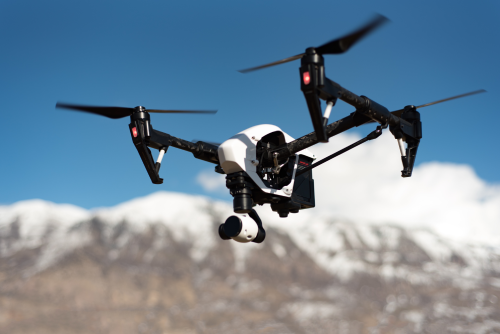
The best drones for village survey work are not always the biggest or most expensive. In India, the right choice depends on what you are surveying, how accurate the output needs to be, and whether you can actually get training, service support, and legal clearance for professional use.
If you are mapping farm blocks, village roads, ponds, drains, rooftops, or panchayat assets, this guide will help you choose the right drone class without overspending on features you do not need.
Quick Take
- For most private village mapping jobs, a compact RTK-enabled mapping quadcopter is the best starting point.
- For crop-health work, a multispectral drone only makes sense if you will actually use vegetation analytics, not just regular photos.
- For large rural areas, watershed projects, or multiple villages, a VTOL or fixed-wing mapping drone is far more efficient than a small quadcopter.
- For engineering-grade outputs, dense vegetation, or LiDAR work, you need a heavy industrial platform, but it is overkill for most small teams.
- A basic GPS camera drone is fine for visual documentation and progress photos, but not for serious survey accuracy.
- In India, always verify the latest DGCA, Digital Sky, airspace, pilot, registration, and NPNT-related requirements before buying or flying for survey work.
What village survey work actually includes
“Village survey work” can mean very different jobs:
- Mapping farm plots, ponds, canals, and common land
- Creating an orthomosaic map, which is a stitched top-down image
- Measuring road, drain, culvert, or building progress
- Documenting panchayat assets such as schools, tanks, anganwadis, or solar pumps
- Crop scouting and irrigation checks
- Watershed, erosion, or flood-damage assessment
- Roof inspection, telecom inspection, or utility line documentation
That is why one drone cannot be “best” for every rural project.
A drone that is excellent for crop stress mapping may be unnecessary for a road survey. A drone that creates nice visuals may still be poor for accurate land measurement. And for official parcel-boundary or revenue work, drone imagery alone is often not the final legal authority. The workflow, ground control, and departmental acceptance matter just as much as the aircraft.
How to choose the right survey drone
1. Start with the final output, not the drone
Ask what your client or team actually needs:
- Simple photos or videos
- Orthomosaic map
- 3D model
- Elevation/contour data
- Crop-health layers such as NDVI
- LiDAR data for terrain under vegetation
If you only need visual progress reports, a survey-grade platform may be unnecessary. If you need accurate maps, a casual camera drone is usually the wrong tool.
2. Decide how much accuracy you really need
A lot of buyers overspend here.
For basic visual documentation, standard GPS positioning may be enough. For repeatable mapping, you should look at RTK or PPK workflows. These are positioning correction methods that improve location accuracy. Even then, Ground Control Points (GCPs) on the ground may still be needed for better results.
If the job involves official measurement, engineering, or land records, verify the exact accuracy standard and accepted method before choosing hardware.
3. Match the aircraft type to the area size
- Quadcopters are best for small to medium sites, irregular village layouts, ponds, buildings, and tight takeoff spaces.
- VTOL or fixed-wing drones are better for large agricultural belts, watershed zones, or multi-village coverage.
- Heavy industrial drones make sense when payload flexibility, LiDAR, or large-team operations are required.
4. Look beyond the camera
A good survey drone is really an ecosystem:
- Mapping app or mission-planning software
- Image-processing software
- RTK base or network support
- Spare batteries and chargers
- Storage and field tablets
- Local training and repairs
- Calibration and maintenance support
The drone body is only part of the cost.
5. Check support in India before you pay
For Indian buyers, this matters more than brochure specs.
Before purchase, confirm:
- Who repairs it in India
- Battery replacement availability
- Turnaround time for service
- Software license costs
- Whether public procurement or tender rules matter
- Whether the platform fits your legal and operational workflow
A slightly less glamorous drone with reliable local support is often a better business choice than a “best-on-paper” drone that sits idle when a part fails.
Best drones for village survey work
Named models below are best understood as reference classes. Enterprise drone availability, procurement conditions, compliance paths, and support networks can change. Verify current legal availability, service support, and official requirements in India before buying.
| Best option | Typical example class | Best for | Main strength | Main caution |
|---|---|---|---|---|
| Best overall for most teams | Compact RTK mapping quadcopter | Village asset mapping, roads, ponds, small-to-medium land blocks | Portable, fast, easy to deploy | Limited efficiency on very large areas |
| Best for agriculture analytics | Multispectral mapping quadcopter | Crop health, irrigation stress, field comparison | Sees plant stress beyond visible RGB | Not needed for regular visual survey |
| Best for large rural coverage | VTOL/fixed-wing mapping drone | Watersheds, corridor work, multi-village mapping | Covers large areas efficiently | More training and logistics |
| Best for high-end engineering work | Heavy industrial RTK platform with mapping or LiDAR payload | Large projects, vegetation, utility corridors | Flexible and powerful | Expensive and complex |
| Best low-budget starter | Basic GPS camera drone | Visual inspection, progress photos, documentation | Simple and affordable | Not survey-grade |
1. Compact RTK mapping quadcopter
A Mavic 3 Enterprise-class compact mapping drone is the best fit for most village survey work done by small firms, consultants, contractors, and trained local operators.
Best for
- Panchayat asset mapping
- Pond, tank, canal, and drain documentation
- Road and building progress surveys
- Farm block mapping
- Small-to-medium site orthomosaics and 3D models
Why this class works so well
This class is popular because it balances portability, usable accuracy, and field speed.
Look for:
- Mechanical shutter camera, which reduces image distortion during mapping
- RTK support
- Reliable waypoint missions
- Fast setup in tight spaces
- Enough battery ecosystem for repeated sorties
For real rural work, this matters more than flashy marketing numbers.
Watch-outs
- It is still a multirotor, so very large areas will take time
- Tall trees and dense vegetation can limit what photogrammetry sees
- It is not a shortcut to official land demarcation
- Availability, support, and procurement suitability must be checked in India
Best buyer
- Local survey startups
- Civil contractors
- GIS consultants
- Agricultural service teams that mainly need RGB mapping
2. Multispectral mapping quadcopter
A Mavic 3 Multispectral-class drone is the right tool if your village survey work is actually agricultural analytics, not just visible mapping.
Best for
- Crop stress monitoring
- Irrigation issue detection
- Input planning
- Demonstration plots
- FPO, agri-consulting, and agri-university work
Why it is useful
A regular RGB camera shows what the eye sees. A multispectral sensor captures data from additional bands that can reveal stress before it becomes obvious in normal images.
If your work includes crop scouting reports, comparative health maps, or precision agriculture decisions, this class can add real value.
Watch-outs
- It is more expensive than a standard mapping quadcopter
- The data is only useful if you can interpret it properly
- It is not the best pick for road, drainage, or building-focused survey work
- Many clients still need normal RGB visuals alongside multispectral outputs
Best buyer
- Agri-tech startups
- FPO service teams
- Agronomists
- Research institutions doing repeat farm monitoring
3. VTOL or fixed-wing mapping drone
For large rural mapping jobs, a VTOL or fixed-wing survey drone, including India-focused platforms such as ideaForge SWITCH-class systems or similar survey UAVs, can be a smarter buy than a compact quadcopter.
Best for
- Watershed projects
- Large agricultural belts
- Corridor mapping
- Multi-village coverage
- Repetitive district-scale rural planning work
Why this class stands out
VTOL means vertical takeoff and landing, while the aircraft flies like a fixed wing during the mission. That gives you the coverage advantage of a plane without needing a runway.
This class is far more efficient when you need to cover large tracts regularly. It can reduce time in the field and improve productivity for bigger service businesses.
Watch-outs
- More training and mission discipline are required
- Launch, recovery, and emergency planning need more attention
- It is less convenient for tiny one-off jobs
- Procurement, maintenance, and integration costs are higher
Best buyer
- Professional survey firms
- District-scale service providers
- Watershed and infrastructure consultants
- Teams working across many villages every month
4. Heavy industrial RTK platform with mapping or LiDAR payload
A Matrice 350 RTK-class industrial platform with photogrammetry or LiDAR payload options is the right choice only when normal mapping drones are no longer enough.
Best for
- High-end engineering survey
- Utility corridors
- Vegetated terrain where LiDAR matters
- Large infrastructure jobs near rural areas
- Enterprise teams that need payload flexibility
Why you would choose it
This class is about capability, not convenience. It can carry specialized sensors and handle advanced workflows that smaller mapping drones cannot.
If your deliverables include serious terrain modeling, vegetation penetration with LiDAR, or demanding industrial inspection plus mapping, this is where the bigger platforms start to make sense.
Watch-outs
- Very high total ownership cost
- Larger crew, more batteries, more planning
- More demanding data processing workflow
- Often unnecessary for routine village mapping
Best buyer
- Engineering consultants
- Utility and infrastructure firms
- Enterprise drone departments
- Teams billing advanced survey outputs
5. Basic GPS camera drone for visual survey only
A basic GPS camera drone can still be useful, but only if you stay honest about what it can and cannot do.
Best for
- Visual inspection
- Progress documentation
- Before-and-after photo records
- Community presentations
- Roof, pond, and structure visuals
Why it still has a place
For students, small contractors, NGOs, or local documentation teams, a basic camera drone can be a low-risk entry into aerial work. It is simpler to fly, easier to carry, and good for getting visual context.
Watch-outs
- Not survey-grade
- Usually lacks the positioning consistency needed for serious mapping
- Often not the best choice for repeatable orthomosaics
- Can create false confidence if used for measurement-heavy tasks
Best buyer
- Beginners learning aerial documentation
- Teams that only need visuals
- Users planning to outsource precise survey work
Which drone type should different Indian buyers choose?
| Buyer type | Best choice | Why |
|---|---|---|
| Local survey startup | Compact RTK mapping quadcopter | Best balance of usability, portability, and map quality |
| Civil contractor or panchayat-linked documentation team | Compact RTK quadcopter, or outsource if jobs are rare | Good for roads, drains, assets, and progress records |
| FPO or agri consultant | Multispectral drone if analytics are billable; otherwise RGB RTK quadcopter | Multispectral only pays off if you use the data well |
| District-scale mapping provider | VTOL/fixed-wing plus one compact quadcopter | Large-area efficiency with small-site flexibility |
| Engineering or utility consultant | Heavy industrial platform with advanced payloads | Only if the project demands LiDAR or higher-end outputs |
| Student or hobby buyer | Basic GPS camera drone | Learn aerial workflow first, but do not market it as survey-grade |
| Occasional user | Hire a survey service provider | Buying rarely makes sense for one-off work |
Safety, legal, and compliance checks in India
Village survey work is usually professional work, not casual hobby flying.
Before you buy or operate, verify the latest official position on:
- Drone category and permitted use
- Registration requirements
- Type certification requirements
- Remote pilot training or certificate requirements
- Airspace permissions
- NPNT, or “No Permission, No Takeoff,” where applicable
- Current Digital Sky or other official permission workflow
- Any restrictions near airports, strategic sites, borders, wildlife zones, or sensitive infrastructure
Also remember:
- Get client and landowner clarity before flying over private property
- Do not capture people, homes, or community areas unnecessarily
- Keep maintenance logs, battery records, and incident notes
- If the output is for official land records, tender submission, or engineering acceptance, verify departmental standards first
- Insurance may be worth considering for commercial operations, but check the latest terms and suitability
Most importantly, a drone map is not automatically an official land record. If the job involves disputes, demarcation, or revenue boundaries, confirm the accepted survey process with the relevant authority before flying.
Common mistakes buyers make
-
Buying for camera megapixels instead of mapping workflow
A flashy camera spec is less useful than a mechanical shutter, RTK support, and stable mission planning. -
Assuming RTK removes the need for ground checks
RTK helps, but GCPs and field validation may still be required. -
Using a visual drone for legal or measurement-heavy work
Aerial photos alone do not equal survey-grade output. -
Ignoring software costs
Processing, GIS, storage, and reporting software can matter as much as the aircraft. -
Overlooking after-sales support
A grounded drone during harvest season or project deadline is far more costly than a slightly higher purchase price. -
Buying a multispectral drone without an analytics plan
If you cannot interpret or monetize the data, the sensor may become an expensive extra. -
Trying to use one drone for every job
Small quadcopters, VTOL platforms, and heavy industrial drones each serve different workflows.
FAQ
Can I use a normal camera drone for village land survey?
For basic visual documentation, yes. For accurate mapping, measurements, or professional deliverables, usually no. A proper survey workflow needs better positioning, repeatable mission planning, and often RTK/PPK plus ground control.
Do I really need RTK for village survey work?
Not for every job. If you only need photos, progress records, or general visuals, RTK may be unnecessary. If you need reliable map accuracy and repeatable outputs, RTK is highly desirable.
What is better for village work: quadcopter or fixed-wing?
For one village, small sites, ponds, roads, and buildings, a quadcopter is usually better. For large rural coverage, watershed projects, or multiple villages, fixed-wing or VTOL becomes more efficient.
Is a multispectral drone worth it for regular farm visits?
Only if you will use vegetation analytics in a meaningful way. If your work is mainly visual crop checks, boundary mapping, or documentation, a good RGB mapping drone is often enough.
Can drone maps replace official land records?
Usually not by themselves. Drone maps are excellent for visualization, planning, and measurement support, but official boundary acceptance depends on the relevant survey and revenue process. Always verify the required standard before relying on drone data for legal use.
What software do I need besides the drone?
Most serious workflows need three layers of software: mission planning, photogrammetry processing, and GIS or reporting. Common outputs include orthomosaics, 3D models, point clouds, and elevation data. Check what your clients actually need before buying licenses.
What accessories are essential for survey work?
At minimum, plan for spare batteries, quality memory cards, a rugged tablet or controller setup, spare propellers, charging solution, protective case, and field checklists. For higher-accuracy work, you may also need RTK accessories and GCP tools.
Should a panchayat, NGO, or small contractor buy a drone or hire a service provider?
If the work is occasional, outsourcing is usually smarter. Buy only if you have recurring jobs, trained operators, a clear legal workflow, and a plan for processing, reporting, and maintenance.
What to do next
If your work is mostly village asset mapping, road progress, ponds, and small-to-medium land blocks, start with a compact RTK mapping quadcopter. If your main revenue comes from crop analytics, choose multispectral. If you regularly cover large rural areas, move to a VTOL/fixed-wing system. And if the output must stand up in official or engineering workflows, spend less time chasing headline specs and more time verifying accuracy standards, support, training, and compliance before you buy.
