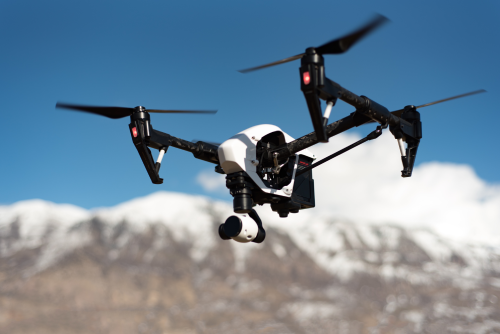
Choosing the best drones for surveying and mapping is not just about camera quality or flight time. For buyers in India, the smarter decision usually comes down to accuracy workflow, software compatibility, after-sales support, and whether the drone can reliably deliver the kind of map or measurement your client actually needs.
Quick Take
- For most small and mid-sized survey jobs, a compact RTK multirotor is the sweet spot.
- A mechanical shutter matters more than headline megapixels for clean photogrammetry results.
- RTK and PPK improve accuracy, but they do not remove the need for proper field control and checkpoints.
- Fixed-wing drones make sense only when you regularly map very large open areas.
- LiDAR is worth the premium only when photogrammetry struggles, such as vegetation, corridor mapping, and complex terrain.
- In India, compliance, software workflow, battery availability, and local service support matter as much as the drone itself.
- If your work involves legal boundaries, tender deliverables, or engineering-grade outputs, validate the full workflow, not just the aircraft brochure.
Which class fits which buyer?
| Drone / class | Best for | Why buyers choose it | Main tradeoff |
|---|---|---|---|
| DJI Mavic 3 Enterprise | Construction sites, land parcels, solar plants, stockpiles, topographic maps on small to medium sites | Portable, fast setup, strong mapping ecosystem, RTK option | Limited payload flexibility and not ideal for LiDAR or very large daily coverage |
| DJI Matrice 350 RTK + Zenmuse P1 | Professional survey firms, utility and corridor work, larger sites, mixed inspection + mapping teams | Higher productivity, modular payloads, stronger field performance | Expensive and operationally heavier |
| DJI Matrice 350 RTK + Zenmuse L2 | LiDAR mapping, vegetation, mines, transmission corridors, terrain under partial canopy | Better terrain capture where photogrammetry struggles | High system cost and more complex data processing |
| WingtraOne GEN II / senseFly eBee X class fixed-wing | Very large open-area mapping | Covers large areas efficiently | More training, recovery/logistics, and support dependence |
| DJI Phantom 4 RTK (used market) | Budget entry into survey-grade photogrammetry | Proven workflow, familiar to many teams | Aging batteries, support risk, used-unit uncertainty |
| Indian OEM / system-integrator mapping platforms | Tender-driven work, support-first deployments, procurement preference for local systems | Local support and easier service conversations | Must validate real-world accuracy, software, and uptime carefully |
What actually makes a drone good for surveying and mapping?
A drone used for surveying and mapping is only one part of the system. What you really buy is a workflow that turns field data into an orthomosaic, point cloud, contour map, terrain model, or volume report that a client can trust.
The features that matter most
Mechanical shutter
A mechanical shutter reduces image distortion caused by motion during flight. This is a big advantage over a rolling shutter for photogrammetry, especially on faster passes or in windy conditions.
RTK or PPK support
RTK means real-time kinematic positioning. PPK means post-processed kinematic positioning. Both improve the geotag accuracy of each image.
That matters because better geotags usually mean:
- fewer ground control points
- faster field setup
- better consistency across jobs
- more predictable outputs
RTK is convenient in the field. PPK is useful when mobile data or correction access is unreliable.
Software compatibility
This is where many buyers go wrong. The drone may be excellent, but if your preferred mission-planning app, photogrammetry software, or CAD/GIS export workflow is weak, your productivity suffers.
Before buying, confirm:
- automated mapping mission support
- waypoint reliability
- export formats your clients use
- GCP and checkpoint handling
- cloud versus local processing options
- whether your team already knows the software
Area coverage per day
A compact multirotor is perfect for many jobs, but it is not the most efficient option for huge open areas. If you regularly map mines, long corridors, or large agricultural blocks, endurance and area coverage matter more than portability.
Field practicality
In Indian conditions, practical factors matter a lot:
- summer heat
- coastal wind
- dust
- travel between remote sites
- battery charging in the field
- spare availability
A drone that looks great on paper but is hard to deploy quickly or keep flying on site can cost you more than a pricier but dependable platform.
Best drones for surveying and mapping
Availability, service networks, and procurement conditions can change in India. Treat the recommendations below as the most sensible buyer categories and commonly preferred platforms, then verify current dealer support, compliance status, and software compatibility before you commit.
DJI Mavic 3 Enterprise
Best overall for most survey buyers
For many users, this is the easiest recommendation. If your work involves construction progress mapping, solar projects, topographic surveys, stockpile measurements, land development, or small to medium engineering sites, a compact RTK-capable multirotor like the Mavic 3 Enterprise is often the best balance of capability and practicality.
Why it stands out
- fast to deploy
- easy to transport
- strong enterprise software ecosystem
- suitable for repeat site visits
- mechanical shutter workflow
- good fit for one-person or small-team operations
Who should buy it
- civil contractors doing weekly site maps
- small survey firms entering drone mapping
- solar EPC and O&M teams
- real estate and infrastructure progress teams
- consultants who need portability and speed
Where it falls short
- not the right choice for LiDAR
- less efficient than fixed-wing for very large areas
- limited payload flexibility compared with larger enterprise platforms
- not ideal if your business depends on heavy mixed-sensor workflows
Best fit scenario
If you map 20 to 300 acres at a time, work from tight takeoff spaces, and want a reliable photogrammetry platform without stepping into heavy enterprise logistics, this is the most practical starting point.
DJI Matrice 350 RTK with Zenmuse P1
Best for professional survey firms and larger projects
This is the step up when your work is bigger, your deadlines are tighter, and your team needs a more capable platform. With a photogrammetry payload such as the Zenmuse P1, the Matrice 350 RTK becomes a serious production system for topographic surveys, corridor mapping, larger mines, industrial sites, and utility projects.
Why it stands out
- higher productivity on bigger sites
- stronger performance in tougher field conditions
- enterprise-grade platform for repeat professional use
- payload flexibility for teams that also do inspection work
- better fit for growing survey businesses
Who should buy it
- established survey firms
- engineering consultants
- utilities and corridor mapping teams
- larger mine and infrastructure operators
- businesses that want one platform for multiple enterprise missions
Where it falls short
- significantly higher total system cost
- larger transport and battery logistics
- steeper training and SOP requirements
- overkill for small sites or occasional work
Best fit scenario
If your team already has a few regular clients, needs faster daily output, or wants a platform that can also handle inspection payloads later, this is a strong long-term buy.
DJI Matrice 350 RTK with Zenmuse L2
Best for LiDAR mapping
Photogrammetry works brilliantly in open areas with good texture and visibility. It becomes less reliable when you need terrain beneath vegetation, highly detailed corridor modelling, or fast capture in conditions where overlap-based image reconstruction is difficult.
That is where a LiDAR setup comes in.
Why it stands out
- better terrain capture under partial canopy
- useful for vegetation-heavy corridor projects
- strong option for mines, roads, transmission lines, and complex earthwork
- can reduce some of the limitations of image-only mapping
Who should buy it
- firms already winning higher-value mapping jobs
- corridor and utility survey providers
- mining teams working in difficult terrain
- businesses expanding into premium survey services
Where it falls short
- expensive to buy
- expensive to process well
- requires stronger QA workflow
- unnecessary if your work is mostly open-area photogrammetry
Best fit scenario
Buy LiDAR only if you know exactly why you need it. If most of your projects are standard construction or open-field topographic maps, the extra spend may not pay back quickly.
WingtraOne GEN II or senseFly eBee X class fixed-wing drones
Best for very large open-area mapping
When your jobs regularly involve hundreds or thousands of acres, fixed-wing platforms become attractive because they can cover much more ground efficiently. These systems are common in large agricultural, mining, environmental, and corridor-style surveys.
Why they stand out
- excellent area coverage
- efficient use of flight time
- often better economics on very large open sites
- ideal when multirotor battery swaps slow down the day
Who should buy one
- firms mapping large open terrain repeatedly
- agri and land-resource projects
- mine planning teams
- environmental and large-corridor operators
Where they fall short
- more demanding field planning
- recovery and landing considerations
- less convenient in tight or urban sites
- stronger dependence on training and support partner quality
Best fit scenario
If most of your work is large, open, and repeatable, fixed-wing deserves a serious look. If your work is mixed, urban, or site-constrained, a multirotor is usually the smarter first purchase.
DJI Phantom 4 RTK
Best used-market value if budget is tight
It may be an older platform, but the Phantom 4 RTK still shows up in survey conversations because it earned trust in real projects. For buyers trying to enter survey-grade photogrammetry without a brand-new enterprise budget, it can still be a practical option if purchased carefully.
Why it still matters
- proven mapping workflows
- familiar to many operators and processors
- capable of respectable survey outputs in the right hands
- sometimes available at attractive used prices
The risks
- battery age and replacement difficulty
- uncertain repair path
- discontinued-platform concerns
- hidden crash history in used units
Buy only if
- you can inspect the unit properly
- battery health is acceptable
- logs and maintenance history are clear
- you have a realistic spare and repair plan
This is not the safest choice for a deadline-heavy business, but it can still be a good training or entry platform for the right buyer.
Indian OEM or system-integrator mapping platforms
Best for procurement-sensitive and support-first buyers
Some buyers in India do not simply want the most famous global platform. They may need local support, tender alignment, easier service communication, or a system tailored for a government, infrastructure, or enterprise deployment.
In such cases, an Indian OEM or system integrator may be the better route than buying a drone from specs alone.
What to check carefully
- sample orthomosaic and point cloud outputs
- independent accuracy reports
- mission-planning software maturity
- spare part lead times
- local training
- service-level agreement for downtime
- export compatibility with your GIS/CAD workflow
Do not assume “made locally” automatically means “best for mapping.” Validate the deliverable quality with a live demo on a site like yours.
How to choose the right drone for your work
1. Start with the deliverable, not the drone
Ask what you are actually selling or producing:
- orthomosaic
- topographic map
- earthwork volume
- digital surface model
- terrain model
- corridor map
- LiDAR point cloud
- site progress report
A weekly progress map for a contractor and a vegetation corridor survey for a utility are completely different jobs.
2. Decide the accuracy level you really need
Not every project needs the same accuracy. Some clients need relative measurements for progress and volume tracking. Others need tightly controlled outputs checked against surveyed points.
If the job is boundary-sensitive or part of legal land records, the drone is only one component of the workflow. Ground control, checkpoints, and proper survey practice remain essential.
3. Estimate your usual site size
A simple rule of thumb:
- small to medium sites: compact RTK multirotor
- larger production jobs: heavier enterprise multirotor
- very large open areas: fixed-wing
- vegetation or complex terrain: consider LiDAR
4. Match the sensor to the terrain
- Open, visible terrain: photogrammetry usually works well
- Dense vegetation or partial canopy: LiDAR may justify itself
- Mixed inspection plus mapping: modular enterprise platform can make more sense
5. Confirm software before placing the order
This is a non-negotiable check. A drone is useless for professional mapping if mission planning is unstable or export formats do not match your downstream process.
6. Ask about service and spares in India
Before buying, ask the dealer or partner:
- How quickly can I get batteries?
- What is the repair turnaround?
- Are props, arms, chargers, and modules locally stocked?
- Do you offer replacement aircraft during repair?
- Is on-site training included?
7. Calculate total system cost, not just drone cost
Your actual budget may include:
- RTK module or base station access
- extra batteries and chargers
- rugged carry case
- survey targets
- GNSS rover or checkpoint workflow
- mapping software licence
- processing workstation
- training and standard operating procedures
- annual maintenance and downtime backup
A cheaper drone with poor support can become more expensive within a year.
Hidden costs many first-time buyers miss
The aircraft is often only half the purchase decision.
Software costs
Photogrammetry and LiDAR processing software can be a major recurring expense. Also check whether your client allows cloud processing. Some infrastructure and government projects prefer or require local processing.
Field control equipment
Even with RTK, many professional workflows still need checkpoints, and sometimes full ground control. If you do not already have access to survey-grade ground equipment or a partner who can provide it, budget for that part of the workflow.
Batteries and power
For commercial work, one or two batteries are never enough. You need enough batteries to finish a field window without constant stress. Field charging, inverter support, and heat management matter.
Training time
A team that knows how to fly is not automatically ready to do survey work. Mapping needs repeatable flight planning, overlap discipline, QA checks, and data management.
India-specific legal and compliance checks
Rules and platform requirements can change, so always verify the latest official guidance before buying or flying. Do not rely on dealer claims alone.
Check these before purchase
- whether the drone and intended operation fit current DGCA and Digital Sky requirements
- whether the platform has the approvals or certification relevant to your use case
- whether registration, permissions, pilot credentials, or other compliance steps apply
- whether your client site falls in restricted or sensitive airspace
- whether the drone’s firmware and permission workflow align with Indian operational requirements
- whether insurance is required by the client or prudent for your risk profile
For surveying jobs, also verify site-level permissions
Even when you have a client contract, that does not automatically mean you can fly. Sites near airports, ports, industrial plants, railways, power infrastructure, borders, military areas, and government facilities may have additional restrictions or local clearance expectations.
Data handling matters too
Some clients, especially in infrastructure and government-facing sectors, care deeply about where data is stored and processed. Ask early whether cloud upload is acceptable.
Common mistakes buyers make
Buying by megapixels alone
A flashy camera spec does not guarantee better maps. Shutter type, geotag quality, lens consistency, and software matter more.
Assuming RTK removes the need for checks
RTK improves positioning, but serious work still needs a proper accuracy verification process.
Using a consumer drone for survey-grade deliverables
A consumer drone may produce a good-looking map. That does not mean it is the right tool for measured professional outputs.
Ignoring mission-planning support
Some drones look affordable until you discover poor waypoint automation or weak mapping app support.
Underestimating processing requirements
Large datasets, especially LiDAR, need computing power, storage, and operator skill.
Buying too much drone too early
A heavy enterprise platform can be a bad first investment if your jobs are still small and occasional. Start with the workflow you can actually keep busy.
FAQ
Can I use a DJI Mini or similar small drone for surveying?
You can use a small consumer drone for learning photogrammetry basics, visual maps, and rough measurements. For paid survey work where accuracy and repeatability matter, a proper RTK-capable mapping platform is the safer choice.
Is RTK enough, or do I still need ground control points?
For many professional jobs, you should still use at least checkpoints to verify accuracy. Depending on terrain, client specification, and required precision, you may also need ground control points.
What is better for mapping: RTK or PPK?
Both can work very well. RTK is convenient because corrections happen during flight. PPK is useful when network coverage is poor or you prefer to process corrections afterward. The better choice depends on your field conditions and workflow.
Should I choose a multirotor or fixed-wing drone?
Choose a multirotor for most small to medium sites, tighter launch spaces, and mixed project work. Choose fixed-wing only if you regularly map large open areas where endurance and area coverage justify the extra complexity.
Is LiDAR necessary for mine and terrain surveys?
Not always. For open pits, stockpiles, and bare terrain, photogrammetry may be enough. LiDAR becomes more valuable when vegetation, complex geometry, or corridor work makes image-based reconstruction less reliable.
How many batteries do I need for professional mapping work?
Enough to complete a realistic field session without constant charging pressure. For compact multirotors, that often means multiple battery sets, not just one spare. The exact number depends on site size, travel time, and whether field charging is practical.
Is a used Phantom 4 RTK still worth buying in 2026?
It can be, but only if the unit is in strong condition and you have a repair and battery plan. It is still a capable mapping tool, but aging hardware can hurt reliability.
Are Indian-made drones good for surveying and mapping?
Some are promising or suitable for specific deployments, especially where local support and procurement alignment matter. But do not buy on branding alone. Ask for sample outputs, live demos, accuracy reports, and proof of support capability.
What software should I evaluate before buying a drone?
Check mission planning, photogrammetry or LiDAR processing, checkpoint workflow, CAD/GIS export, local versus cloud processing, and how easily your team can learn and support the system.
Final takeaway
For most buyers in India, the best drone for surveying and mapping is a compact RTK multirotor like the Mavic 3 Enterprise class if your jobs are small to medium and mostly photogrammetry. Step up to a Matrice-class system if you run larger projects or need modular payloads, and consider fixed-wing or LiDAR only when your actual job mix justifies the extra cost and complexity. Before you buy, ask for a live demo, confirm the software workflow, and verify current compliance requirements.
