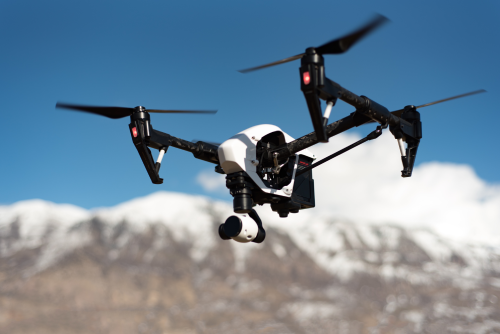
If you are wondering how to choose the best drone for photography, start with your shooting style, not the brand name or the biggest spec sheet. The best drone for one buyer in India could be a simple lightweight camera drone, while another person may need a larger-sensor model with stronger wind performance, better colour, and more control. A smart choice balances image quality, stability, ease of use, legal compliance, after-sales support, and the kind of work you actually want to shoot.
Quick Take
- Choose a drone based on what you shoot: travel, landscapes, real estate, weddings, social media, or commercial work.
- For photography, sensor size, gimbal stability, and dynamic range matter more than flashy megapixel numbers.
- For video, look beyond resolution. Bitrate, colour depth, frame rates, and low-light performance often matter more.
- A beginner usually gets better results from a simpler, safer drone than from an advanced model that is harder to fly well.
- Budget for the full kit: spare batteries, memory card, charger, filters, spare propellers, case, and storage.
- In India, always verify the latest DGCA and Digital Sky rules before buying or flying. Do not assume a seller’s claim is enough.
- Good after-sales support and parts availability can matter more than a small difference in camera specs.
Start With What You Actually Want to Shoot
Many buyers get stuck comparing drone brands before they have defined their own use case. That usually leads to overspending or buying the wrong type of drone.
Ask yourself these three questions first:
- What will I shoot most often?
- Where will I usually fly?
- Will I use the footage casually, for clients, or for professional delivery?
Travel and social media creators
If you mainly want scenic travel shots, weekend outings, Instagram reels, or YouTube B-roll, you usually want:
- A compact foldable drone
- Fast setup
- Good automatic flight modes
- Reliable GPS positioning
- Decent stills and 4K video
- Vertical or social-friendly shooting options, if available
- Good battery life without a heavy backpack
In this case, portability and ease of use may matter more than having the biggest sensor.
Landscape photographers
If your priority is still photography, especially sunrise, sunset, mountains, beaches, lakes, or cityscapes, then focus on:
- Better sensor size
- RAW photo capture
- Wider dynamic range
- Strong gimbal stability
- Better low-light performance
- Good wind handling
A landscape photographer will usually benefit more from cleaner files and better colour flexibility than from extra speed or sports-style features.
Real estate, architecture, and hospitality
If you shoot homes, apartments, construction sites, hotels, resorts, or venues, your priorities change:
- Stable hover
- Accurate framing
- Good dynamic range for bright skies and shadowed buildings
- Reliable obstacle sensing
- Smooth video movement
- A lens that does not distort buildings too aggressively
- Consistent quality for repeat client work
For this type of shooting, stability and dependable results are often more important than extreme portability.
Weddings and events
Event shooters need a different balance:
- Fast deployment
- Strong safety features
- Dependable signal performance
- Good image quality in mixed light
- Quiet operation, if possible
- Predictable handling in crowded or tight areas
But there is an important caution here: event environments can be risky. You must be extra careful about crowd safety, permissions, venue rules, and current legal requirements. In many cases, flying over or near people is not a casual decision.
Commercial filmmakers and agencies
If you are shooting ads, branded content, destination films, high-end resort videos, or client campaigns, your needs often include:
- Larger sensor
- Better colour depth for grading
- Higher bitrate
- More robust wind resistance
- Better low-light performance
- Stronger build quality
- More advanced manual control
This is where “good enough for social media” and “good enough for paid delivery” become two very different things.
Camera Features That Matter Most for Aerial Photography
A drone is not just a flying gadget. For photography, it is a camera system in the air. That means the camera should drive your decision.
Sensor size
This is one of the most important buying factors.
A larger sensor generally gives you:
- Better image quality
- Cleaner shadows
- More flexibility in editing
- Better low-light performance
- Better dynamic range
Dynamic range means how well the camera captures bright and dark parts of the scene at the same time. This matters a lot in India, where midday light can be very harsh and contrasty.
A smaller sensor can still deliver excellent results in daylight, especially for social media and casual use. But if you want premium stills or footage you can push in editing, sensor size matters.
Megapixels
More megapixels do not automatically mean better photos.
A higher megapixel count can help with cropping, but if the sensor is tiny, image quality may still be weaker. A well-tuned camera with fewer but larger pixels can often produce cleaner images than a smaller sensor with a higher megapixel claim.
Treat megapixels as a secondary factor, not the main one.
RAW photo support
If you care about editing, choose a drone that can shoot RAW photos.
RAW files keep more image data than JPEG files. That makes it easier to:
- Recover highlights
- Lift shadows
- Adjust white balance
- Fine-tune colours
For casual sharing, JPEG may be enough. For serious photography, RAW is worth having.
Lens field of view
Most drone cameras use a wide lens. That is useful because it captures more of the scene, but very wide lenses can make buildings or horizons look stretched if not handled carefully.
For real estate and architecture, you may prefer a more natural-looking field of view rather than an ultra-wide look.
Aperture
Some drones have a fixed aperture, while others offer an adjustable aperture.
Aperture controls how much light enters the camera. On drones, adjustable aperture is helpful for:
- Managing bright daylight
- Keeping shutter speed under control
- Reducing reliance on filters in some situations
For most beginners, fixed aperture is fine. For advanced shooters, adjustable aperture adds flexibility.
Video resolution and frame rates
Even if your main interest is photography, most buyers today will also shoot video.
Look at:
- 4K or higher recording
- Useful frame rate options
- Stable, sharp footage
- Good colour rendering
Do not assume that higher resolution automatically means much better quality. A well-processed 4K image from a better sensor can look stronger than a higher-resolution file from a weaker camera.
Bitrate and colour depth
These matter more for serious video creators.
- Bitrate is the amount of data recorded in the video.
- Colour depth affects how much colour information the file keeps.
Higher bitrate and richer colour files usually help in editing, especially if you want to colour grade footage for commercial work.
If you only want easy, ready-to-share clips, you may not need to chase advanced recording formats. But if you edit professionally, these features matter.
Low-light performance
Drone cameras are usually at their best in good light.
If you plan to shoot:
- sunrise
- sunset
- blue hour
- city lights
- evening venues
then a better sensor becomes much more valuable.
Do not expect miracles from a small-sensor drone after dark. Marketing often makes low-light performance sound better than it is.
Gimbal quality
A 3-axis gimbal is essential for smooth aerial photography and video.
The gimbal is the motorised stabilisation system that keeps the camera level and steady in the air. A good gimbal helps with:
- sharper stills
- smoother pans
- more professional footage
- less jitter in wind
If a drone’s camera is weakly stabilised, even a good sensor cannot save poor footage.
A Simple Feature Comparison Table
| Feature | Why it matters | Best for |
|---|---|---|
| Larger sensor | Better dynamic range, low-light, cleaner files | Landscapes, commercial work, real estate |
| RAW photos | More editing flexibility | Photographers, serious hobbyists |
| 3-axis gimbal | Smooth, stable footage and sharper stills | Everyone |
| Strong wind handling | More stable framing outdoors | Coastal, hill, open-field shooting |
| Obstacle sensing | Extra safety margin | Beginners, real estate, event work |
| Good colour profile | Better grading in post | Filmmakers, agencies |
| Compact size | Easier travel and faster setup | Travel creators, casual users |
| Better after-sales support | Less downtime after damage or battery issues | All buyers, especially professionals |
Flight Features Matter More Than Many Buyers Realise
A drone with a good camera but poor flight behaviour can still deliver disappointing results.
Wind resistance and stability
India has many environments where wind can change quickly:
- beaches
- hill stations
- rooftop shoots
- open farmland
- monsoon season edges
A drone that struggles in wind will produce unstable framing, tilted horizon issues, and anxious flying. If you often shoot outdoors in exposed areas, do not underbuy here.
Real-world battery life
Ignore marketing flight time as the only battery number.
Actual battery life depends on:
- wind
- flight speed
- temperature
- hovering
- repeated climbs
- return-to-home reserve
For practical photography use, you want enough battery to compose calmly, reposition, reshoot, and land safely. Most buyers should plan on multiple batteries.
Obstacle sensing
Obstacle sensing uses sensors to detect objects around the drone.
It is helpful, especially for beginners, but it is not magic. It may not catch:
- thin wires
- branches
- low-contrast surfaces
- difficult lighting
- fast sideways movement in some cases
Think of it as a backup, not a license to fly carelessly.
GPS lock and return-to-home
Reliable GPS and a trustworthy return-to-home feature are very important for safety.
These help when:
- signal gets weak
- the pilot becomes disoriented
- battery runs low
- the drone needs to recover its position
For new buyers, this is one of the most useful confidence-building features.
Transmission and signal quality
Range claims are often used as a marketing tool, but most responsible drone photography happens within visual line of sight anyway. Instead of chasing extreme range numbers, focus on:
- stable live feed
- dependable signal in your typical environment
- low lag
- reliable control response
That matters more for actual shoots.
Portability
A heavier drone may offer better image quality and stronger wind performance, but it also means:
- bulkier travel
- larger case
- more setup effort
- less spontaneity
If you want to carry the drone on trips, hikes, or student projects, a lighter foldable model may get used far more often than a larger drone that stays at home.
Which Type of Drone Fits Your Photography Needs?
You do not need to start with a specific model. Start with the class of drone that suits your work.
| Drone type | Best for | Strengths | Watch-outs |
|---|---|---|---|
| Lightweight beginner camera drone | New users, travel, casual social content | Easy to carry, simple to fly, less intimidating | Smaller sensor, weaker low-light, limited wind handling |
| Enthusiast mid-tier camera drone | Hobbyists, YouTubers, real estate creators, serious photographers | Better camera, stronger stability, more manual control | Higher cost, larger size, still not fully “cinema” level |
| Professional camera drone | Agencies, advanced filmmakers, premium client work | Better sensor, richer files, stronger wind performance, more robust control | Expensive, heavier, more complex, overkill for many beginners |
Best fit for most beginners
A beginner usually benefits most from a drone that offers:
- easy app interface
- stable hover
- 3-axis gimbal
- RAW photos
- 4K video
- strong safety features
- easy replacement parts and batteries
This is usually better than jumping straight to a heavy advanced drone.
Best fit for serious hobbyists
If you already understand exposure, editing, and shot planning, step up to a drone with:
- improved sensor size
- better dynamic range
- stronger wind handling
- better colour and editing flexibility
- more reliable obstacle sensing
This is the sweet spot for many creators.
Best fit for paid work
If clients are paying you, your buying priorities should include:
- dependable repeatable quality
- service support
- spare battery availability
- file quality for editing
- confidence in mixed conditions
- legal and operational compliance
Paid work is not the place to save money on reliability.
India-Specific Buying Checks Before You Pay
A drone that looks great on paper can become frustrating if it is hard to maintain or use in Indian conditions.
Check service and spare parts availability
Before buying, find out:
- Is there dependable after-sales support in India?
- Are spare propellers, batteries, chargers, and gimbal parts easy to get?
- How long do typical repairs take?
- Is local warranty support clear and usable?
This matters even more for professionals and small businesses. Downtime can cost you jobs.
Think about Indian weather and environment
Many Indian users fly in:
- heat
- dust
- humidity
- coastal air
- patchy monsoon windows
That means you should value:
- robust build quality
- reliable battery performance
- decent wind handling
- careful storage and transport
A drone that performs well in a studio review may behave very differently on a hot terrace in May or on a windy beach in Goa.
Consider your travel style
If you travel by road, train, or domestic flights, portability matters. Airline rules around batteries and drone carriage can vary, so always check the current policy of the carrier before travel.
Do not assume your drone kit will be treated like any normal camera bag.
Make sure your phone works well with the app
Drone performance also depends on the controller app and your phone or tablet.
Before buying, check:
- supported devices
- app stability
- storage space
- screen brightness outdoors
- controller compatibility
A good drone paired with a weak or unsupported phone creates a poor experience.
If buying used, inspect carefully
A used drone can be good value, but inspect:
- battery health
- number of charge cycles, if available
- gimbal movement
- camera sharpness
- motor condition
- crash history
- sensor errors
- charging accessories
- remote condition
Also verify that the drone can be legally and practically used for your intended purpose in India. Do not assume a second-hand deal is automatically trouble-free.
Safety, Legal, and Compliance Basics in India
This is the part many buyers ignore until too late.
Drone rules in India can depend on the drone category, weight, intended use, airspace, location, and current regulatory guidance. Because these rules can change, verify the latest official position before purchase and before every serious operation.
Before buying, verify these points
- Whether your drone model and intended use align with current DGCA and Digital Sky requirements
- Whether registration is needed
- Whether pilot training or certification is needed for your use case
- Whether the model needs specific compliance features such as NPNT
- Whether your usual shooting areas fall in restricted or sensitive airspace
- Whether client, venue, society, or property permissions are needed
Basic safe operating habits
No matter what drone you buy:
- Do not fly near airports, military areas, or other restricted zones.
- Avoid crowds, traffic, and emergency scenes.
- Respect privacy. Do not film people or private property recklessly.
- Keep the drone in visual line of sight unless you are specifically authorised otherwise.
- Do not rely fully on automated modes.
- Check weather before flight.
- Inspect props, battery level, GPS lock, and home point before take-off.
- Land early rather than squeezing the last few minutes from the battery.
For commercial shoots, it is also wise to think about insurance, client permissions, and local coordination. Even if not explicitly required in every case, these reduce risk.
A 7-Step Process to Choose the Best Drone for Photography
If you want to make a clean decision without getting lost in reviews, use this process.
1. Write down your main use case
Choose one primary use and one secondary use.
Example: – Primary: travel landscapes – Secondary: social media reels
Or: – Primary: real estate video – Secondary: hotel stills
This prevents you from buying for a fantasy use case that may never happen.
2. Set a full budget, not just a drone budget
Include:
- drone
- controller
- at least one or two extra batteries
- memory card
- case
- spare propellers
- filters
- charger or hub
- editing storage
Many buyers overspend on the drone and then struggle with the basics.
3. Choose the minimum camera level you need
Ask:
- Do I need RAW photos?
- Do I need strong low-light performance?
- Do I need better colour for professional editing?
- Do I mainly post on social media?
If your work is mostly daylight and online sharing, you may not need a high-end camera drone.
4. Decide how much safety help you want
Beginners should strongly consider:
- obstacle sensing
- solid return-to-home
- stable hover
- easy beginner modes
Experienced pilots may accept fewer aids in exchange for portability or price, but new users usually benefit from safer systems.
5. Check size and travel practicality
Be honest about whether you will carry it often. The best drone is not just the one with the best image quality. It is the one you will actually take with you and use confidently.
6. Verify India-specific support and compliance
Before payment, check:
- after-sales and parts
- battery availability
- official documentation
- app support
- current legal fit for your intended use
This is where many poor purchases can still be avoided.
7. Compare real sample images, not just marketing claims
Look for:
- daylight photo quality
- shadow recovery
- sky highlight handling
- horizon stability
- low-light noise
- footage smoothness in wind
Marketing videos are polished. Real user footage tells a clearer story.
Common Mistakes Buyers Make
Buying too much drone for their actual skill level
A more advanced drone is not always a better first drone. If you feel nervous flying it, your photography will suffer.
Chasing megapixels instead of image quality
A cleaner file with better dynamic range is usually more useful than a bigger number on the box.
Ignoring the gimbal
A strong gimbal can improve real-world results more than a small bump in resolution.
Believing obstacle avoidance makes crashes impossible
It does not. Wires, branches, poor light, and bad judgement can still cause accidents.
Not budgeting for batteries
One battery is rarely enough for a proper shoot. Aerial photography takes time.
Assuming all drones handle wind equally
They do not. This is especially important for coastal, rooftop, and hill shooting.
Forgetting editing and storage needs
Better video formats and RAW stills take space. You may also need a stronger phone, tablet, or computer.
Choosing based only on top speed or maximum range
Those are rarely the most important features for photography.
Not checking rules before buying
Never assume a drone is ready for legal use just because it is easily available for sale.
FAQ
What is the best kind of drone for photography beginners?
A beginner should usually look for a compact camera drone with a 3-axis gimbal, reliable GPS, return-to-home, RAW photo support, and easy controls. Safe flying and consistent results matter more than advanced cinema features at the start.
Is a higher megapixel drone always better for photos?
No. Sensor size, dynamic range, lens quality, image processing, and RAW performance often matter more than megapixels.
Do I need a large-sensor drone for social media content?
Not always. For daylight travel content, short videos, and casual posting, a smaller drone can be enough. A larger sensor becomes more useful when you want better low-light results, stronger editing flexibility, or client-level quality.
Is 4K enough for drone video?
For most creators, yes. Good 4K from a solid camera is enough for YouTube, Instagram, client previews, and many business uses. File quality, colour, and stability matter as much as resolution.
Are mini or lightweight drones good enough for professional work?
Sometimes. They can work well for social content, simple real estate clips, and daylight travel jobs. But for higher-end commercial work, better sensors, stronger wind handling, and richer files are often worth the upgrade.
Should I buy a drone with obstacle sensing?
If you are a beginner, it is highly recommended. It adds a useful safety layer, though it does not replace pilot awareness or legal responsibility.
What accessories are essential for aerial photography?
At minimum: – spare batteries – fast memory card – spare propellers – charger or charging hub – protective case – filters for bright daylight video – basic cleaning kit
Is it safe to buy a used drone?
It can be, if you inspect battery health, crash history, gimbal condition, camera sharpness, and controller performance. Also verify whether the drone can be used legally and practically for your intended purpose.
What should Indian buyers verify before the first flight?
Check the latest DGCA and Digital Sky guidance, your local airspace status, any required permissions, property or venue consent, firmware and app updates, and a full pre-flight hardware check.
How important is after-sales support when choosing a drone?
Very important. A drone is not a one-time purchase. Batteries age, props break, and gimbals can get damaged. Good support in India can save both money and downtime.
Final Takeaway
To choose the best drone for photography, first decide what you want to shoot most, then match that need to the right camera quality, flight safety, and support system. For most buyers in India, the smartest choice is not the most expensive drone, but the one with a good sensor, a reliable 3-axis gimbal, practical safety features, strong after-sales support, and a clear legal path for how you plan to use it. Before you buy, shortlist two or three options, verify current DGCA and Digital Sky requirements, and spend your money on the drone you will actually fly often and confidently.
