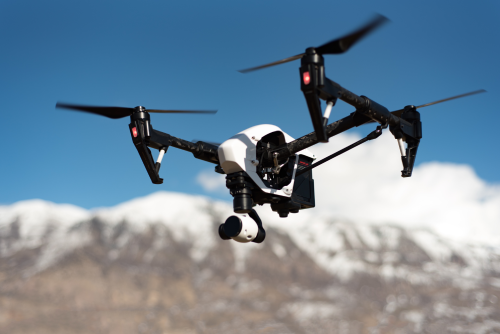
Choosing the best frame rate settings for drone video is less about picking the highest number and more about matching your look, lighting, and editing workflow. For most drone pilots in India, 25 fps and 50 fps are the smartest starting points, especially when artificial lighting, city scenes, or mixed light are part of the shoot.
Quick Take
- If you want one safe, practical default for India, use 25 fps for normal-speed video.
- If you know you want smooth slow motion, use 50 fps and slow it down on a 25 fps timeline.
- Use 24 fps only if you specifically want a film-style workflow and you are confident lighting flicker will not be a problem.
- Use 30 fps if your phone, action camera, or client workflow is already built around 30 fps.
- Use 60 fps mainly for action or slow motion in a 30 fps workflow.
- In India, 50 Hz electrical frequency matters. Under many LED, tube, street, shop, and indoor lights, 25/50 fps is often safer than 24/30/60 fps.
- Frame rate and shutter speed work together. For natural motion blur, keep shutter speed at about double the frame rate.
- In bright daylight, you will often need ND filters to hold the right shutter speed.
- Higher frame rates are not automatically better. They can reduce low-light performance and sometimes limit video quality modes on some drones.
What frame rate actually means
Frame rate is the number of video frames recorded every second.
- 24 fps = 24 frames per second
- 25 fps = 25 frames per second
- 30 fps = 30 frames per second
- 50 fps = 50 frames per second
- 60 fps = 60 frames per second
- 120 fps = 120 frames per second
A lower frame rate usually looks more cinematic because motion has a bit more blur and a slightly less “live TV” feel.
A higher frame rate usually looks smoother and more clinical. That can be good for action, fast reveals, sports, or footage you plan to slow down in editing.
For drone video, frame rate affects four big things:
- The look of motion
- Whether slow motion will look clean
- Whether lights flicker
- How much light your camera needs
Best frame rates for drone video at a glance
| Frame rate | Best for | Look | Main advantage | Main downside | India-specific note |
|---|---|---|---|---|---|
| 24 fps | Cinematic travel films, short films | Classic film look | Very natural cinematic feel | Can flicker under 50 Hz lighting | Fine outdoors in daylight, less safe under artificial lights |
| 25 fps | Most drone videos in India | Cinematic but practical | Better compatibility with 50 Hz lighting | Slightly less “film standard” than 24 for some creators | Often the best all-round choice in India |
| 30 fps | YouTube, phones, web content, mixed-device workflows | Slightly smoother than 24/25 | Easy for many social and phone workflows | Can flicker under some artificial lights in India | Good if your whole project is 30 fps |
| 50 fps | Slow motion on 25 fps timeline, action, sports | Smooth | Excellent for 2x slow motion in India | Needs more light and faster shutter | Very useful in India because it pairs well with 50 Hz lighting |
| 60 fps | Slow motion on 30 fps timeline, fast action | Very smooth | Great for slowing down to 30 fps | Can flicker more easily under 50 Hz lighting | Use when your project is built around 30 fps |
| 120 fps | Extreme slow motion | Very smooth | Dramatic slow motion | Often lower quality, lower resolution, more noise | Use sparingly, only when really needed |
The best default setting for most people
If you are a beginner or hobbyist and want a simple answer:
Best default for most Indian drone pilots: 4K at 25 fps
Why this works:
- It gives a clean cinematic look
- It is easier to manage under Indian 50 Hz lighting
- It is widely usable for travel, real estate, YouTube, property videos, and general content
- It keeps your workflow simple
Best second setting to learn: 4K at 50 fps
Use this when:
- You are filming moving vehicles, athletes, or fast reveals
- You want to slow clips down smoothly in editing
- You are shooting in windy conditions where motion may feel jittery at lower frame rates
- You want more flexibility in post without jumping to very high frame rates
If you only learn two drone frame rates well, make them 25 fps and 50 fps.
24 fps vs 25 fps: the most important choice for India
This is where a lot of confusion starts.
Why 24 fps became popular
24 fps is strongly associated with cinema. Many creators like its motion feel, and many editing tutorials default to it.
Why 25 fps often makes more sense in India
India uses 50 Hz mains electricity. Many artificial lights, especially budget LEDs, decorative lights, tube lights, signboards, and some street lighting, can create visible flicker when your frame rate and shutter speed do not match well with that frequency.
That means:
- 25 fps with 1/50 shutter is often a safer combination
- 50 fps with 1/100 shutter is also often safer
- 24 fps with 1/48 or 1/50 may still show flicker in some scenes
- 30 fps and 60 fps can also be risky under some artificial lights
Practical rule
Use 24 fps when:
- You are shooting mostly outdoors in daylight
- You are making a cinematic travel film or branded piece
- Your entire edit is built around 24 fps
- You are not working around mixed artificial lighting
Use 25 fps when:
- You want the safest all-round option in India
- You may shoot around buildings, streets, markets, malls, resorts, or event lighting
- You want easier compatibility with 50 Hz lighting
- You do not want to troubleshoot flicker later
For most Indian users, 25 fps is the smarter choice more often than 24 fps.
30 fps vs 60 fps: when they make sense
When 30 fps is a good choice
30 fps works well if:
- Your smartphone footage is already 30 fps
- Your action camera footage is 30 or 60 fps
- Your client wants web-first delivery
- You publish mainly on YouTube or social platforms and prefer a smoother feel
30 fps is not wrong for drone video. It is just not always the most convenient choice in India if artificial lights are involved.
When 60 fps is a good choice
60 fps is most useful when:
- You want smooth slow motion on a 30 fps timeline
- You are filming sports, racing, action scenes, or fast pans
- You need extra smoothness for tracking shots
But remember:
- 60 fps usually needs more light
- It can make footage look less cinematic if played back at normal speed
- Under some 50 Hz lighting conditions, flicker can become a problem
If your whole project is 30 fps, then 30 fps for normal footage and 60 fps for slow motion is a clean workflow.
Best frame rate by shooting style
Travel and cinematic landscape shots
Best choice: – 24 fps or 25 fps
Choose 24 fps if you want a classic film feel and you are mostly in daylight.
Choose 25 fps if you want similar cinematic motion with better safety around Indian lighting conditions.
Good examples: – Hill station sunrise reveals – Beach or coastline flyovers – Fort, lake, valley, and countryside establishing shots – Slow orbit shots around landmarks where permitted
Real estate and property videos
Best choice: – 25 fps for premium cinematic delivery – 30 fps if the client’s overall content workflow is already 30 fps – 50 fps for selected slow-motion hero shots
Why: Property videos usually benefit from smooth, controlled motion rather than hyper-fast action. Most clips do not need high frame rates unless you want elegant slow motion.
Practical tip: If you are shooting both drone footage and handheld phone footage for the same property, decide the master timeline before the shoot. That avoids mixing 25 fps drone clips with 30 fps phone clips later.
Weddings and events
Best choice: – 25 fps for standard coverage – 50 fps for dramatic slow motion
Why: Indian wedding and event venues often include decorative LEDs, stage lights, and mixed lighting. This is exactly where 25/50 fps can save you from flicker headaches.
Important: Always verify the latest rules, venue permissions, organiser approval, and local operating restrictions before flying at any event. Avoid unsafe operation near people and do not assume drone flying is allowed just because the event is private.
Action, sports, vehicles, and FPV-style motion
Best choice: – 50 fps in a 25 fps workflow – 60 fps in a 30 fps workflow
Why: Fast motion benefits from a higher frame rate. You get either smoother playback or cleaner slow motion.
Examples: – Mountain biking or cycling on a private, permitted route – Off-road vehicle content where lawful and safe – Water sport coverage where local operation is allowed – Dynamic tracking shots in open areas with enough safety margin
Inspection and documentation work
Best choice: – 25 fps or 30 fps – 50 fps only if motion detail matters
For inspection, the goal is clarity, not cinematic motion. Use the frame rate that best matches your final delivery and lighting conditions.
If you need to pause frames and review fast-moving machinery or wind-driven structures, 50 fps may help. But do not assume higher frame rate automatically means sharper detail. Resolution, shutter speed, lens quality, and compression matter too.
Reels, YouTube Shorts, and social content
Best choice: – 30 fps if your editing app, phone footage, and output are already 30 fps – 60 fps for action-heavy clips or slow motion – 25 fps if you want a more cinematic style and your full workflow supports it
A lot of social creators in India shoot everything on phones at 30 fps by default. In that case, matching your drone to 30 fps can make editing simpler.
If you use 25 fps drone footage in a 30 fps project, it can still work, but motion may not look as clean unless handled carefully in editing.
Why shutter speed matters just as much as frame rate
A very common mistake is choosing the right frame rate and then ruining the motion with the wrong shutter speed.
The simple rule
For natural-looking motion blur, shutter speed should be about double the frame rate.
| Frame rate | Good target shutter speed |
|---|---|
| 24 fps | 1/48 or 1/50 |
| 25 fps | 1/50 |
| 30 fps | 1/60 |
| 50 fps | 1/100 |
| 60 fps | 1/120 |
This is often called the 180-degree shutter rule.
Why it matters:
- If your shutter is too fast, motion looks choppy and harsh
- If your shutter is too slow, footage can look smeared
Why ND filters are so important for drones
In bright Indian daylight, your drone camera may naturally push shutter speed very high, especially if the drone has a fixed aperture.
Example: You set 25 fps, but the camera wants to expose at 1/1000 in noon sunlight. The result can look stuttery and unnatural.
An ND filter is like sunglasses for the camera. It reduces incoming light so you can keep shutter closer to the ideal setting.
As a rough idea:
- Bright morning or late afternoon: lighter ND
- Strong midday sun: stronger ND
- Overcast conditions: sometimes no ND or a mild ND works
The exact filter strength depends on the drone, weather, and angle to the sun. Always test before the real take.
Higher frame rate is not always better
Many beginners assume 60 fps or 120 fps must be better because the number is higher. That is not how drone video works.
Higher frame rates can cause these trade-offs:
- Need more light
- Force faster shutter speeds
- Increase noise in low light
- Reduce dynamic range on some cameras
- Disable certain color profiles or bit depths on some drone models
- Lower resolution or crop the image on some drones
- Fill storage faster in practical workflows
Before deciding on 50, 60, or 120 fps, check your drone’s recording limits. Some drones do not offer the same image quality in every frame-rate mode.
A practical 6-step method to choose your frame rate
1. Decide your final timeline first
Ask: – Will the final video be edited in 24, 25, or 30 fps? – Are you matching other cameras?
This is the most important decision.
2. Think about lighting
Ask: – Am I shooting in daylight only? – Will I be near shops, wedding lights, streets, buildings, or interiors?
If artificial lighting is involved in India, 25 or 50 fps is often the safer route.
3. Decide if you need slow motion
If yes: – For a 25 fps edit, shoot 50 fps – For a 30 fps edit, shoot 60 fps
If no: – Shoot your delivery frame rate directly
4. Check your drone’s quality limits
Before takeoff, verify: – Can your drone shoot 4K at that frame rate? – Is there a crop? – Does it keep the same color profile? – Is bitrate reduced? – Is stabilization affected?
5. Set shutter speed and ND filter
Keep shutter near double the frame rate.
Then use an ND filter if needed to control exposure in daylight.
6. Record a short test clip
This takes less than a minute and can save the whole shoot.
Check for: – Flicker – Jittery motion – Exposure problems – Excessive sharpness or noise
Best real-world presets for most users
| Situation | Suggested setting | Why it works |
|---|---|---|
| General travel video in India | 4K 25 fps, shutter 1/50 | Best balance of cinematic motion and lighting compatibility |
| Cinematic travel film in daylight | 4K 24 fps, shutter 1/50 | Strong film-style look when flicker risk is low |
| Real estate exterior shots | 4K 25 fps, shutter 1/50 | Smooth premium look for property videos |
| Action tracking | 4K 50 fps, shutter 1/100 | Cleaner motion and easy slow motion |
| Social content with 30 fps phone footage | 4K 30 fps, shutter 1/60 | Easier editing match |
| Slow motion for 30 fps projects | 4K 60 fps, shutter 1/120 | Simple 2x slow motion workflow |
Common mistakes to avoid
Shooting everything at 60 fps
Just because your drone offers 60 fps does not mean every shot should use it. Normal scenic shots often look better at 24 or 25 fps.
Ignoring India’s 50 Hz lighting environment
This is one of the most common reasons for flicker in city, event, and mixed-light footage.
Using the wrong shutter speed
Frame rate alone does not create a cinematic look. Motion blur matters.
Mixing 25 fps and 30 fps without planning
You can mix them, but it often causes awkward motion, duplicate frames, or messy timelines if you did not plan for it.
Assuming higher fps means higher quality
Higher frame rates can reduce quality on some drones. Always check the actual recording mode.
Shooting high frame rates in low light
50, 60, or 120 fps usually need more light. In dim scenes, they can create noisy, weak footage.
Overusing slow motion
Slow motion is best used selectively. If every clip is slowed down, the video can feel heavy and repetitive.
Forgetting to match other cameras
If your phone, action camera, or mirrorless camera is 30 fps, drone footage at 25 fps may complicate the edit. Decide this before the shoot.
Safety, legal, and compliance notes
Frame rate choice does not change your legal responsibilities.
Before filming with a drone in India:
- Verify the latest applicable DGCA and Digital Sky requirements for your drone and operation
- Check local restrictions, no-fly areas, temporary restrictions, and site permissions
- Do not fly carelessly near people, roads, sensitive locations, or private property
- Maintain line of sight and safe distance from obstacles
- Be extra cautious when filming fast-moving subjects, because higher frame rate work often encourages more aggressive flying
- For commercial shoots such as properties, resorts, factories, or events, get the relevant permissions in writing where needed
If you are unsure whether a location or operation is allowed, verify before takeoff instead of assuming.
FAQ
Is 24 fps or 25 fps better for drone video in India?
For most people in India, 25 fps is the better all-round choice because it works more comfortably with 50 Hz lighting. Use 24 fps if you specifically want that cinematic workflow and are mainly shooting in daylight.
Should I shoot drone video at 30 fps for YouTube?
You can. If your whole workflow is built around phones, action cameras, or creators who edit at 30 fps, it makes sense. Just be more careful around artificial lights in India.
Is 60 fps better than 30 fps?
Not automatically. 60 fps is better for action or slow motion. For regular cinematic footage, 30 fps or 25 fps usually looks better and is easier to light.
What frame rate is best for slow motion?
If your edit is 25 fps, shoot 50 fps for clean 2x slow motion. If your edit is 30 fps, shoot 60 fps.
Can I slow down 25 fps footage?
Only a little, and not as cleanly as 50 or 60 fps. If you know you want noticeable slow motion, record at a higher frame rate from the start.
What shutter speed should I use with 25 fps?
Start at 1/50. Then use an ND filter if daylight is too bright.
Do I need ND filters for drone video?
Usually yes, especially in bright daylight. They help you hold the proper shutter speed for natural motion blur.
Can I mix 25 fps drone footage with 30 fps phone footage?
Yes, but it is not ideal. It can create awkward motion or extra editing work. If possible, choose one master frame rate before the shoot and match all cameras to it.
Does 120 fps make drone video better?
Only for special slow-motion shots. It is not the best default setting and may come with quality compromises depending on the drone.
What should a beginner use on day one?
Start with 4K 25 fps for regular shots and 4K 50 fps for clips you want to slow down. That covers most beginner needs well in India.
Final takeaway
If you want the simplest answer, use 25 fps for normal drone video and 50 fps when you want slow motion. If your whole workflow is built around 30 fps, use 30 fps and 60 fps instead. Decide your timeline before takeoff, match your shutter speed properly, and in India always keep 50 Hz lighting in mind.
