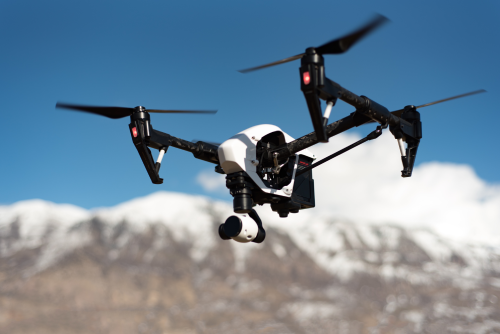
Temples, forts, stepwells, and old monuments can look stunning from the air, but they are also some of the most sensitive places to film. If you want to learn how to shoot temples and heritage sites with a drone, the key is not flashy flying. It is permission, respect, planning, and a few simple camera techniques done well.
Quick Take
- Check legality first. Many temples and heritage sites in India have site-specific restrictions, security concerns, or local no-drone rules. Verify the latest official airspace guidance and local permissions before you travel.
- Do not fly over worshippers, tourists, queues, ceremonies, or festivals.
- The best shots usually come from a safe distance, not from flying close to the structure.
- Sunrise and early morning often give the best light, calmer air, and fewer people. But active temples may also have morning rituals, so coordinate timings respectfully.
- For video, use slow movements, a level horizon, low ISO, and manual white balance. For photos, shoot RAW and use exposure bracketing when the sky is bright.
- A simple shot list beats random flying. Aim for 5 to 8 strong shots rather than 25 average ones.
- Birds, wires, flags, and sudden wind around towers and hilltops are bigger risks than many beginners expect.
- If drone access is unclear or denied, do not force it. Ground-based gimbal shots can still tell the story beautifully.
Before you fly: permission, airspace, and respect
Not every temple or heritage site can be filmed with a drone
This is the most important part.
In India, drone flying is not just about whether your drone can take off. It is also about whether the location allows it. A temple complex, fort, archaeological site, palace, or old city landmark may involve one or more of these authorities:
- The site management or temple trust
- The Archaeological Survey of India or a state archaeology department
- Local administration or police
- Airspace restrictions under current drone rules
- Event or security restrictions on a specific day
Some sites may prohibit drones completely. Others may allow filming only with prior written approval. A place can also be legally sensitive even if you see social media clips from there. Never assume that because someone else posted a drone shot, it is currently allowed.
Before any shoot, verify:
- Latest official airspace status
- Whether the site authority permits drone operations
- Whether commercial filming requires separate approval
- Whether there is a crowd control or religious event that makes flying inappropriate even if technically permitted
If you cannot clearly confirm permission, do not fly.
Cultural etiquette matters as much as flight skill
Temples and heritage sites are not just “locations.” Many are active places of worship, memory, and public emotion.
That means good drone practice includes:
- Avoiding prayer times, rituals, and crowded darshan periods
- Not hovering near sanctum-facing areas, flagpoles, or ceremonial spaces
- Not taking off from places that block visitors, footwear zones, prasad counters, or narrow approach roads
- Keeping noise and visual intrusion to a minimum
- Avoiding close shots of worshippers unless you have clear consent and a valid reason
A respectful drone operator usually gets better cooperation and better footage.
Keep your launch and landing area separate from the monument
Whenever flying is permitted, choose a safe, open launch area away from people and away from fragile heritage surfaces.
Good launch spots are:
- Open ground outside the main visitor path
- A cleared area with line of sight to the aircraft
- A place without loose dust, cloth, or dry leaves that can get pulled into the motors
Avoid launching from:
- Temple courtyards with foot traffic
- Stone ledges and parapets
- Steps, gateways, and entrance queues
- Tight spaces surrounded by high walls
Scout the site like a filmmaker
Read the architecture from ground level first
Beginners often rush to take off. That is usually a mistake.
Walk the site perimeter first and ask: what makes this place visually special?
It could be:
- A tall gopuram rising above a dense town
- A shikhara catching first sunlight
- A fort wall following a ridge line
- A stepwell with geometric symmetry
- A dome, chhatri, or mandapa with repeating forms
- A temple sitting beside a river, tank, or hillside
When you identify the main visual idea, your shots become much cleaner.
Study light before you study moves
Good temple and heritage footage is often more about light than about movement.
Look at:
- Which side gets the first sunlight
- Whether carvings are flat at noon but textured in side light
- Whether the monument looks better against sky, trees, hills, or water
- Whether haze reduces detail in the background
- When the crowd is smallest
A practical rule:
- Sunrise: best for warm stone, long shadows, and quiet surroundings
- Early morning after sunrise: best balance of light and safety
- Late afternoon: good for side light and depth
- Midday: useful mainly for top-down symmetry shots, especially stepwells and courtyards
- Blue hour: attractive but technically harder because of low light and noise
Watch for heritage-site hazards
Old sites create their own flight problems.
Common hazards include:
- Flagpoles and fabric streamers at temple tops
- Telephone and electrical wires in old town areas
- Birds nesting on towers, domes, and fort walls
- Wind turbulence around hilltop temples and elevated forts
- GPS drift or signal issues near tall stone structures
- Visitors suddenly entering your takeoff zone
- Monkeys or animals around your equipment on the ground
Birds are a big one. Kites, pigeons, crows, and eagles may react aggressively, especially near towers or nesting areas. If birds start circling or diving, gain safe separation only if clear to do so, then exit and land. Do not “test” them.
Gear and settings that work best
Choose a stable camera drone, not a stunt platform
For most temple and heritage work, a stable GPS camera drone is the right tool. You want predictable control, good stabilization, and a camera that can handle bright sky and dark stone in the same frame.
What helps most:
- Reliable stabilization
- Good dynamic range
- RAW photo support
- 4K video
- Slow, smooth cinematic flight modes
- A longer native lens option if your drone has one
What usually hurts more than it helps:
- Very aggressive FPV-style flying in sensitive locations
- Ultra-close passes near towers, domes, or carvings
- Overdependence on digital zoom
- Flying a large noisy drone when a smaller, quieter platform would do
FPV can look dramatic, but for active temples and heritage sites it is usually the wrong creative choice unless you have a very controlled, permitted, empty environment and the right experience.
Essential accessories
Carry these every time:
- Spare batteries
- Extra propellers
- ND filters
- A landing pad
- Lens cloth
- Fully charged controller and phone
- Written or saved permission documents
- A second person as observer if possible
ND filters are like sunglasses for the camera. They help you keep natural motion blur in video when light is too bright.
Video settings that are easy and reliable
For most beginners, this is a safe starting point:
- Resolution: 4K
- Frame rate: 25 fps or 30 fps
- Shutter speed: roughly double your frame rate
- ISO: keep as low as possible
- White balance: set manually, not auto
- Color profile: normal if you do not grade much, flat/log only if you know how to color correct
Examples:
- 25 fps video: aim around 1/50 shutter
- 30 fps video: aim around 1/60 shutter
- 50 or 60 fps: use only when you want slow motion
A few important habits:
- Lock white balance so the color does not shift during the shot
- Protect highlights in bright sky; blown-out clouds are hard to recover
- Use cinematic or tripod-style flight mode if your drone has one
- Let each shot run for at least 6 to 10 seconds
Photo settings that preserve detail
For still photos:
- Shoot RAW
- Use the lowest practical ISO
- Use exposure bracketing for high-contrast scenes
- Consider panoramas for very large complexes
- Step back and use a longer lens if available to avoid exaggerated wide-angle distortion
This matters a lot with tall structures. If you fly too close with a very wide lens, gopurams and shikharas can look stretched and unnatural.
Best drone shots for temples and heritage sites
Here is a practical shot list you can actually use.
| Shot type | Best for | How to fly it | What to avoid |
|---|---|---|---|
| Slow rise reveal | Gopurams, shikharas, temple towers behind trees or streets | Start low behind foreground and rise gently | Rising into wires, flags, or birds |
| Wide side arc | Domes, mandapas, cenotaphs, isolated monuments | Keep a broad radius and move slowly | Tight orbiting too close to the structure |
| Pull-back context shot | Hill forts, cliff temples, river-edge shrines | Start with the monument dominant, then ease backward to reveal landscape | Flying backward without checking your path |
| Top-down symmetry | Stepwells, courtyards, geometric layouts | Hover high enough, point gimbal straight down, keep frame centered | Doing this over people or in restricted space |
| Lateral slide | Long fort walls, ghats, colonnades, palace fronts | Fly sideways at a steady pace with the subject on one side | Fast sideways motion with jerky corrections |
| Static hover detail | Sculptural rooflines, layered architecture, texture shots | Hover safely at distance and let the frame breathe | Constant micro-movements and overcontrolling |
If you only capture these 6 types well, you can build a strong sequence.
Match the shot to the architecture
For South Indian temple towers
A front-on rise reveal or a slight diagonal pull-back often works best. The goal is to show height and layered sculpture without flying too close.
For North Indian temples with a strong shikhara silhouette
Side light is your friend. Shoot slightly off-axis so the form separates clearly against sky or landscape.
For forts and hilltop heritage sites
Use wide context. The story is not just the structure. It is the relationship between wall, ridge, valley, and settlement.
For stepwells and symmetrical courtyards
Top-down is often the hero angle. Midday can actually work here because symmetry matters more than dramatic shadow.
For riverfront temples and ghats
Use diagonal compositions that show water, steps, and skyline together. Be extra careful with people, boats, birds, and local restrictions.
A step-by-step workflow for a real shoot
1. Confirm permissions before you travel
Do not assume you can “sort it out on arrival.”
Get clarity on:
- Drone access at the site
- Any local filming approvals needed
- Allowed timings
- Areas where takeoff and landing are acceptable
- Whether crowd conditions on that day make flying impractical
If the answer is vague, treat it as a warning sign.
2. Build a simple shot list
Write down 5 to 8 shots maximum.
Example:
- Sunrise establishing shot
- Side arc of main tower
- Pull-back showing surroundings
- Top-down of courtyard or stepwell
- Static architectural detail
- Closing wide shot with landscape
This keeps you focused and reduces unnecessary airtime.
3. Arrive early and inspect the ground
Before powering on:
- Walk the launch area
- Check wind direction
- Look for wires and birds
- Watch visitor flow for a few minutes
- Identify an emergency landing area
- Keep your bags and batteries away from foot traffic
If the site is busier than expected, reduce ambition. A safe partial shoot is better than a risky full plan.
4. Set up the aircraft carefully
Check:
- Battery level
- Props and arms
- Camera lens cleanliness
- Home point
- Return-to-Home altitude
Return-to-Home means the drone automatically returns if signal is lost or you trigger the function. Be careful with its altitude setting. It should clear nearby obstacles in your operating area, but still remain within the applicable limits and your safe line of sight. At monuments with towers or flagpoles, careless settings can create problems.
5. Capture your safest master shots first
Light changes. Permissions can be shortened. Crowds can build quickly.
Get the shots you need most while conditions are still good:
- Establishing frame
- Best-angle reveal
- One wide context shot
- One clean static shot
Only then try alternates.
6. Fly slowly and leave margin
The biggest difference between amateur and professional-looking heritage footage is often speed.
Fly slower than you think you should.
- Gentle stick inputs
- Fewer yaw movements
- Wide clearance from the monument
- No sudden climbs or dives
- No unnecessary low-altitude sweeps near people
Your footage will look more expensive, and your safety margin will be much higher.
7. Review before leaving the site
Land and inspect your files.
Check for:
- Focus
- Exposure consistency
- Horizon level
- Vibration or jello
- Birds entering the frame
- Unwanted people dominating the shot
If you have permission and battery left, refly only the shots that truly need correction.
Editing temple and heritage footage so it feels cinematic
Build a sequence, not just a reel
A strong edit usually follows this flow:
- Establish the place
- Introduce the main structure
- Show form and detail
- Reveal context in landscape or settlement
- End on a calm, wider frame
This structure works better than stacking random drone moves.
Keep color natural
Temples and heritage sites already have strong colors and textures. Do not overdo saturation, clarity, or contrast.
Try to preserve:
- Stone texture
- Natural sky tones
- Real foliage color
- The difference between morning warmth and neutral daylight
Heavy grading can make heritage footage look fake very quickly.
Use motion sparingly in post
Do not try to fix bad flying with extreme digital stabilization or artificial zooms.
Better editing habits:
- Cut on movement endings
- Hold static shots a little longer
- Use slow motion only if you actually shot at a higher frame rate
- Keep transitions simple
Sound still matters, even with drone shots
Drone audio is rarely usable. If your final film needs atmosphere, record ambient sound separately from the ground:
- Temple bells from a respectful distance
- Morning birds
- Wind through trees
- Water, if the site has tanks or river edges
- Footsteps and crowd murmur, if appropriate
Good sound makes aerial footage feel connected to the place.
When drones are not allowed
This matters because many readers will face it.
If drone access is denied, you still have options:
- Use a handheld gimbal for slow reveals
- Shoot from terraces or legally accessible elevated points
- Capture symmetry from upper balconies where permitted
- Use a monopod or extension setup for higher framing
- Build the story with ground details, entrance shots, and ambient sound
A polished non-drone film is far better than risky drone footage that should never have been captured.
Common mistakes beginners make
Flying first, asking later
This is the fastest way to ruin a shoot.
Treating a temple like an empty set
Active worship spaces need a quieter, more respectful approach than generic travel footage.
Getting too close to architecture
You do not need to skim carvings or pass beside the shikhara to make the shot look cinematic.
Orbiting everything
A slow orbit can work once. Six orbits in one edit feels repetitive and often amateur.
Using auto white balance
This can cause visible color shifts mid-shot.
Shooting only at noon
Many monuments look flat and harsh in overhead light.
Ignoring birds and wind
A clean-looking sky does not mean calm flying conditions, especially near hilltops and towers.
Launching from the middle of public movement
Keep your drone operation out of the visitor experience as much as possible.
Overediting
Heritage footage usually looks better with restraint.
FAQ
Can I legally fly a drone over temples or heritage sites in India?
Sometimes, but not automatically. You must verify the latest official drone rules, airspace status, and site-specific permissions. Many temples and heritage locations have additional restrictions or may prohibit drones entirely.
Do I need permission from the temple trust or site authority?
In many cases, yes. Even if airspace is not the issue, the property or site manager may control filming access. For archaeological and protected sites, other authorities may also be involved. Confirm before you go.
What is the best time of day to shoot a temple with a drone?
Usually sunrise or early morning. The light is softer, the stone has better texture, and crowds may be lighter. But active temples often have morning rituals, so choose a time that respects site activity.
How close should I fly to a monument?
Farther than most beginners think. A safe distance usually gives better composition, less lens distortion, lower collision risk, and a more respectful feel. If you feel tempted to squeeze through or skim past details, you are probably too close.
Is FPV a good choice for temple or heritage videos?
Usually no, especially for beginners. FPV is fast, immersive, and riskier. For sensitive public locations and heritage structures, a stabilized camera drone with slow movement is usually safer and more appropriate.
What should I do if there are many birds near the tower or fort wall?
Do not force the shot. Change angle, lower ambition, wait, or stop flying. Birds can become aggressive quickly around nesting areas and elevated structures.
Can I shoot during festivals, aarti, or major public gatherings?
You should be extremely cautious. In many cases, the right answer is no. Crowds, safety, privacy, and religious sensitivity make drone use inappropriate or restricted during such events. Confirm with authorities, and if there is any doubt, do not fly.
What camera settings are best for sunrise temple footage?
For video, 4K at 25 or 30 fps, low ISO, manual white balance, and a shutter speed roughly double the frame rate. For photos, shoot RAW and consider bracketing if the sky is bright behind the structure.
My drone is allowed in the area, but the site staff are unsure. What should I do?
Do not argue on location. If the people managing the space are not comfortable, step back and resolve it before flying. Site-level refusal is a practical stop sign, even if you believe the airspace is otherwise clear.
What if drone filming is not permitted at all?
Switch to a ground-based plan. Use a gimbal, tripod, elevated public vantage points, and good sound recording. You can still make a strong heritage film without aerial footage.
Final takeaway
The best way to shoot temples and heritage sites with a drone is to act like a careful documentarian, not a stunt pilot. Confirm permission first, stay well clear of people and architecture, use slow controlled shots, and let the place itself do the work. If you cannot fly legally and respectfully, do not fly.
