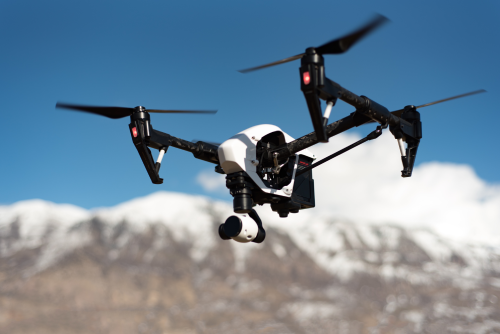
Learning how to capture symmetry from the sky can make your drone photos look instantly cleaner, calmer, and more professional. From stepwells and courtyards to crop rows, sports grounds, and modern housing layouts, symmetry helps viewers understand a scene in one quick glance, but only if you frame it accurately and fly safely.
Quick Take
- Symmetry works best when your drone is truly centred, not “almost” centred.
- The easiest symmetrical drone shot is a straight-down view, also called a nadir shot.
- Look for subjects with clear geometry: courtyards, stepwells, parking grids, farms, tanks, rooftops, sports courts, and circular structures.
- Use grid lines on your screen, keep ISO low, and shoot RAW photos if your drone supports it.
- Rise first, then fine-tune position with tiny left-right and forward-back movements instead of big corrections.
- Check the edges of the frame as carefully as the centre. Most symmetry fails at the edges.
- For video, use slow, deliberate movement. Fast yaw or drifting ruins symmetry quickly.
- In India, always verify current DGCA, Digital Sky, local airspace, site restrictions, and property permissions before flying.
Why symmetry looks so strong in aerial photography
Symmetry gives order to a scene.
From the ground, trees, walls, traffic, and buildings often block your view. From the sky, those same spaces can suddenly reveal clean patterns. Aerial photography removes clutter and shows the shape of a place.
That is why drone symmetry feels so satisfying: – It makes complex scenes easier to read. – It creates a strong focal point. – It gives photos a premium, planned look. – It works well for architecture, real estate, tourism, agriculture, and social media content.
A symmetrical image also feels stable. That matters when you want your shot to look intentional rather than random.
Types of symmetry worth spotting from the sky
Not all symmetry looks the same. Some scenes are perfectly mirrored. Others rely on repetition or circular balance.
| Type of symmetry | What it looks like | Good drone subjects | Best angle | Main challenge |
|---|---|---|---|---|
| Bilateral symmetry | Left and right sides mirror each other | Courtyards, building wings, bridges, formal gardens, long corridors of trees | Straight down or carefully centred oblique angle | Small misalignment becomes obvious |
| Top-bottom symmetry | Upper and lower halves balance | Temple tanks, pools, plazas, certain rooftops | Straight down | Shadows can break the balance |
| Radial symmetry | Elements spread evenly from a centre point | Domes, roundabouts, circular plazas, water tanks, spiral steps, stadium roofs | Directly overhead | Missing the exact centre weakens the shot |
| Repetition and pattern | Similar shapes repeat across the frame | Farm plots, apartment blocks, solar panels, parking lines, fish ponds, salt pans | High top-down shot | Edge clutter and uneven spacing |
| Reflective symmetry | Subject and reflection mirror each other | Lakes, calm water bodies, temple tanks, reservoirs, still pools | Higher oblique or top-down depending scene | Wind and ripples destroy reflection |
| Near symmetry | Mostly balanced, with one small variation | Old courtyards, city blocks, heritage layouts | Any angle that preserves the main geometry | Easy to over-crop or over-correct |
For beginners, start with bilateral or radial symmetry. They are easiest to understand and easiest to improve with practice.
Good subjects to shoot in India
You do not need a famous landmark to capture symmetry from the sky. In fact, some of the best symmetry comes from everyday spaces.
Look for: – Stepwells and geometric courtyards where flying is allowed and permissions are in place – Housing society layouts with central gardens or identical blocks – School or college grounds, when you have proper permission and no privacy issues – Cricket nets, tennis courts, basketball courts, and athletics tracks – Farm plots, orchards, nurseries, and crop rows – Salt pans, fish ponds, and water treatment layouts where access is legal and safe – Office parks with central plazas – Rooftop patterns, skylights, and industrial sheds, only with owner approval – Temple tanks, ponds, or palace courtyards where local rules permit operations – Empty parking grids and marked lots, away from crowds and active traffic
A useful rule: if a place looks well-organised on a map, it will probably look good from a drone.
Before you fly: plan the frame, not just the location
Many failed symmetry shots happen because the pilot spots a good subject, launches too quickly, and starts improvising.
A better approach is to plan the frame before takeoff.
1. Study the shape on a map
Use satellite view to identify: – The centre point – The main axis or line of symmetry – Entry and exit points for your flight – Nearby obstacles like cables, poles, trees, buildings, and birds – Open takeoff and landing space
If the shape is circular, your biggest task is finding the exact centre.
If the shape is rectangular, your biggest task is keeping the frame parallel to the edges.
2. Decide your final composition first
Ask yourself: – Do I want the entire structure in frame? – Do I want perfect symmetry, or symmetry with some surrounding context? – Is this a still photo, a video, or both? – Do I want shadows for texture, or flatter light for cleaner geometry?
For example: – A stepwell may look best in a direct top-down still. – A corporate courtyard may work as both a still and a slow rising video shot. – Crop rows may need more altitude to make the pattern obvious.
3. Check light direction
Light can either support symmetry or fight it.
If one side of your frame is in deep shadow and the other is bright, the image may feel unbalanced even if the geometry is correct.
In many cases: – Early morning and late afternoon give richer texture. – Midday gives flatter light, which can actually help when your top priority is clean, graphic symmetry.
4. Think about wind before you think about camera settings
A small amount of drift can spoil a symmetrical frame. If conditions are gusty: – Choose a larger subject that tolerates slight movement – Shoot faster shutter speeds for stills – Avoid delicate slow video moves
5. Have a safe, legal reason to be there
Do not plan a symmetry shot at a location where you are unsure about permissions, airspace, crowd density, or privacy concerns. In India, many visually attractive places are not automatically suitable for drone operations.
Camera settings that help symmetrical shots
Good symmetry begins with positioning, but the camera settings still matter.
For still photos
Use these as practical starting points: – Shoot RAW if available – Use the lowest practical ISO – Keep shutter speed high enough to freeze small drift – Use photo grid lines on your screen – Choose a taller photo ratio if available, such as 4:3, to give yourself room to crop later – Lock white balance if light is stable, so colours stay consistent across multiple frames – Use exposure compensation or manual exposure if bright roofs, water, or concrete are confusing the camera
If the scene has very bright and very dark areas, exposure bracketing can help. That means taking multiple photos at different brightness levels so you can choose the best one later.
For video
Symmetry in video is harder because even tiny motion is visible.
Helpful settings: – Use a standard frame rate such as 24, 25, or 30 fps – Keep movements slow and smooth – If you want natural-looking motion blur, many creators keep shutter speed roughly around double the frame rate and use an ND filter in bright daylight – If wind is stronger and your drone is drifting, it is fine to prioritise a slightly faster shutter for cleaner frames – Lock white balance when possible – Avoid dramatic auto-exposure changes mid-shot
If you are shooting content for reels or vertical delivery, think about crop space. A frame that looks perfectly symmetrical in horizontal format may feel cramped when cropped vertically later.
How to position the drone for true symmetry
This is the core skill.
Most people try to centre the subject by eye and assume they are close enough. In symmetrical photography, “close enough” is usually not enough.
The best step-by-step method
1. Start wider than you think you need
Take off and rise until the whole subject is clearly visible, plus extra space around it.
This gives you room to: – Understand the geometry – Correct alignment – Crop later without losing key edges
2. Find the dominant centre point
Look for the feature that defines the symmetry: – The middle stair of a stepwell – The courtyard centre – The centre circle of a sports ground – The exact midpoint between building wings – The geometric middle of a tank or plaza
Put that point near the centre of your screen first.
3. Rotate the drone until the subject sits square in frame
Use yaw, which means rotating the drone left or right, to align the structure with the edges of the frame.
For rectangular subjects: – The top and bottom edges should look parallel with the frame – The side edges should not appear to lean
For circular subjects: – Focus less on frame edges and more on equal spacing all around the circle
4. Switch to a straight-down view for the easiest symmetry
A nadir shot means the camera points directly downward.
This is the easiest angle for: – Stepwells – Courtyards – Tanks – Sports courts – Roof patterns – Parking layouts – Fields and rows
Straight-down views remove perspective distortion, which makes symmetry cleaner and easier to judge.
5. Make tiny position adjustments, not big ones
Instead of flying wide circles around the subject: – Nudge left or right – Nudge forward or backward – Recheck the centre after every small move
Big corrections often create new errors.
6. Inspect the edges, not just the centre
This is where many pilots fail.
The centre may look fine, but: – One side has more empty space – A wall is clipped on one corner – Trees enter only one edge – A shadow crosses one side more than the other
Symmetry is judged across the whole frame.
7. Shoot a short burst
Even when hovering, the drone may move slightly between frames.
Take several photos in quick succession. One frame is often cleaner than the others.
8. Change altitude and repeat
Altitude changes the geometry more than many beginners expect.
At lower heights: – Details are stronger – Small misalignment is more obvious
At higher heights: – Patterns become clearer – The scene may look more graphic and balanced
Take the same symmetrical composition at two or three heights. Pick later.
When a straight-down shot is not the best choice
Top-down is the easiest route, but it is not the only one.
A slightly angled view can work better when: – The subject has depth, such as steps or layered architecture – Reflection matters – You want symmetry plus context – You are filming a reveal instead of a static pattern
Examples: – A heritage courtyard may look stronger with a mild angle that shows wall height. – A lake with a reflection may benefit from a higher oblique angle. – A building façade can feel more symmetrical when the camera is carefully centred at a slight angle rather than directly overhead.
The trade-off is perspective distortion. The more you tilt the camera, the harder it becomes to keep both sides equal.
Simple video moves for symmetrical aerial shots
If you are filming rather than shooting stills, keep the motion minimal and intentional.
The safest symmetry-friendly moves are:
Slow rise
Start centred and climb vertically.
Works well for: – Courtyards – Temple tanks – Sports grounds – Rooftops – Stepwells
Slow descent
Begin wider and gently descend toward the centre.
This gives a satisfying reveal of geometry and detail.
Locked overhead hover
Sometimes the best video move is no move at all.
A stable overhead clip lets the viewer study the pattern. It is useful for social media edits, architectural documentation, and real estate cutaways.
Tiny push-in or pull-back
A very gentle forward or backward move can add life without breaking symmetry.
Avoid: – Fast sideways movement – Aggressive yaw – Complex orbit shots for symmetrical subjects – Trying to combine tilt, yaw, and translation all at once
Symmetry rewards restraint.
Light, colour, and weather choices
Best time of day
There is no single best time. It depends on the type of symmetry you want.
Choose morning or evening when: – You want texture – You want long shadows to reveal depth – The location looks dull in flat light
Choose midday when: – You want clean graphic shapes – The subject is more about geometry than depth – Strong side shadows would break the visual balance
Cloudy conditions
Light cloud can be excellent for symmetry because it reduces harsh contrast.
This helps on: – Concrete surfaces – Light-coloured rooftops – Sports courts – Large uniform layouts
Water and reflections
For reflective symmetry, calmer weather matters more than dramatic light.
If the water surface is disturbed, the mirrored effect disappears.
Editing without ruining the symmetry
Editing should strengthen the structure, not fake it badly.
Useful editing steps
- Crop carefully to equalise spacing on all sides
- Straighten the frame if the structure is slightly rotated
- Correct highlights and shadows so one side does not overpower the other
- Use lens correction if your software supports it
- Remove minor distractions only if it remains honest and natural
- Keep colours consistent and realistic
What to avoid
- Over-cropping until the shot feels cramped
- Heavy perspective warping that makes the subject look unnatural
- Excessive sharpening on detailed patterns
- Pushing saturation so far that geometry becomes secondary
A small crop can rescue a good frame. A big corrective crop usually means the original alignment was not good enough.
Safety, privacy, and legal checks in India
Beautiful symmetry is never worth an unsafe or non-compliant flight.
Before flying in India: – Verify the latest DGCA and Digital Sky rules that apply to your drone category and location – Confirm whether the area is permitted, restricted, or otherwise unsuitable for drone operations – Check local site rules, property permissions, and event-specific restrictions – Be especially cautious around airports, military areas, government facilities, dense urban zones, public gatherings, and sensitive infrastructure – Respect privacy around homes, schools, hospitals, religious places, and private campuses – Avoid flying over crowds, active roads, or places where a loss of control could endanger people – Keep visual line of sight and maintain a safe buffer from obstacles like power lines, towers, and trees
For heritage sites, temple complexes, forts, and tourist areas, do not assume access means drone permission. Local authorities, site managers, and special restrictions may apply. Verify before you launch.
Also remember: symmetrical locations often tempt pilots to drift into risky positions because they want a perfect centre. Do not inch the drone over people, roads, or narrow gaps just to improve composition by two percent.
Common mistakes that ruin aerial symmetry
1. Being almost centred
The human eye notices tiny imbalance very quickly in a symmetrical frame.
Fix: take more time aligning than you think you need.
2. Ignoring the edges
A photo can look centred but still feel wrong because one edge is messy.
Fix: scan all four corners before pressing the shutter.
3. Flying too low
At low height, perspective and slight misalignment become exaggerated.
Fix: climb a little higher and compare.
4. Using the wrong light
Heavy shadow on only one side makes symmetry look broken.
Fix: return at a different time if needed.
5. Moving too much in video
Beginners often add dramatic motion that fights the composition.
Fix: choose one simple movement and keep it slow.
6. Shooting only one frame
Even stable drones drift.
Fix: shoot multiple stills and small variations in height.
7. Trusting auto settings too much
Exposure or white balance shifts can make matching shots difficult.
Fix: lock what you can when conditions are stable.
8. Forgetting the story
Perfect symmetry is powerful, but not every scene needs to be mathematically exact.
Fix: decide whether you want graphic perfection or a more human, lived-in image.
FAQ
Do I need an expensive drone to capture symmetry from the sky?
No. Good symmetry depends more on planning, stable hovering, grid lines, and careful framing than on a premium drone. A basic camera can still produce strong symmetrical images in good light.
Is a straight-down shot always the best for symmetry?
Not always, but it is usually the easiest. Straight-down shots remove perspective distortion and are great for patterns, courts, tanks, fields, and courtyards. Slightly angled views can work better for depth or reflection.
What altitude is best for symmetrical aerial photography?
There is no fixed number. Start high enough to see the whole shape clearly, then test two or three heights. Larger subjects often need more altitude before the symmetry becomes obvious.
Should I use a wide lens or zoom lens?
Use the lens your drone provides best, but be aware of distortion. Wide views are convenient for top-down geometry. A mild zoom, if your drone has one, can help simplify the frame and reduce edge distractions.
How can I keep the drone centred in wind?
Choose larger subjects, use small corrections, and take multiple frames. If the wind is strong enough that you cannot hold a stable overhead composition, it may be better to postpone the shot.
Can I fix symmetry later in editing?
A little, yes. Cropping, straightening, and minor rotation help. But if the drone was badly offset or the angle was wrong, editing can only do so much before the image looks forced.
What is the best time to shoot symmetrical drone photos?
Morning and evening are good for texture. Midday can be better for pure geometry because shadows are shorter. For reflective symmetry, calm conditions matter more than golden light.
Are symmetrical shots good for reels and social media?
Yes, especially for quick attention. Clean overhead compositions stop the scroll because they look organised and unusual. Just leave enough room if you expect to crop for vertical formats.
Can I shoot symmetry in crowded city areas?
Be very careful. Dense urban spaces raise safety, privacy, and compliance issues. Even if a place looks attractive from above, it may be unsuitable or restricted. Verify the latest rules and avoid risky flights over people and traffic.
Final takeaway
If you want to capture symmetry from the sky, do three things on your next flight: choose a subject with obvious geometry, switch to a clean overhead view, and spend twice as long aligning as you think necessary. Symmetry is not about fancy tricks; it is about precision, patience, and knowing when a safe, well-centred frame is good enough to land with.
