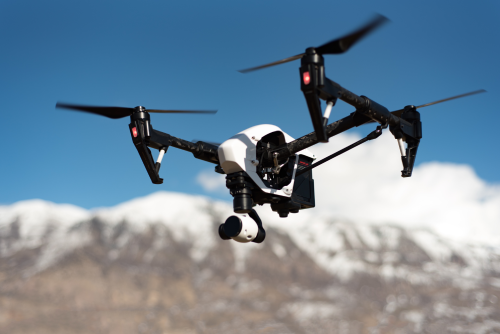
Nature looks magical from the air, but great drone images of forests, coastlines, hills, wetlands, and waterfalls rarely happen by accident. These drone photography tips for nature lovers will help you plan better, fly more responsibly, and capture cleaner photos and smoother video in Indian conditions.
Whether you shoot weekend landscapes near your city or travel to the Western Ghats, Himalayas, deserts, or beaches, the goal is the same: protect the place, respect wildlife, and come back with footage that actually feels calm, cinematic, and useful.
Quick Take
- Shoot in soft light whenever possible: sunrise, early morning, and late afternoon usually look far better than harsh noon light.
- Use RAW for photos if your drone supports it. RAW files keep more image data for editing.
- Keep ISO as low as possible to reduce noise, especially in forests and cloudy weather.
- Fly slower than you think. Nature footage looks better with gentle, deliberate movement.
- Don’t rely only on maximum altitude. Many strong shots happen at low or medium height.
- Look for patterns, leading lines, shadows, textures, and scale rather than just “wide views.”
- Respect wildlife. If birds or animals react to your drone, you are already too close.
- Before every flight in India, verify the latest DGCA guidance, Digital Sky airspace status, and any local restrictions for the exact location.
Start with planning, not takeoff
The biggest difference between average and memorable nature drone photography is planning.
A lot of beginners reach a beautiful place, launch immediately, and then spend battery trying random angles. A better approach is to decide what story you want to tell before the props spin.
A simple pre-flight planning routine
-
Check whether you can legally fly there Verify current airspace and local restrictions. Natural locations can sit close to sensitive zones, protected areas, or private land.
-
Study the light Look at sunrise and sunset time, cloud cover, and direction of light. A valley facing east behaves very differently at 6:30 am than at 5:30 pm.
-
Pick one main subject Don’t try to film everything. Choose the waterfall, ridge line, sand pattern, river bend, or tree canopy that deserves attention.
-
Build a short shot list For example: – One wide establishing shot – One low forward move – One top-down texture shot – One reveal shot
-
Check wind, heat, and return route Flying out with the wind and returning against it can eat battery faster than expected.
-
Scout from the ground first Walk the area if possible. You’ll notice power lines, people, dogs, birds, loose dust, and better launch points.
For many Indian locations, timing matters more than gear. A simple drone flown at the right hour will often beat an expensive drone flown in flat light.
Fly legally and respectfully in India
Drone rules are not something to guess from an old reel or travel vlog. Before flying in India, always verify the latest official guidance from DGCA and check the current Digital Sky airspace status for your location.
Natural areas need extra care because restrictions may come from more than one source.
What to verify before a nature flight
- Airspace restrictions for the exact location
- Nearby airports, helipads, airbases, or security-sensitive zones
- Local restrictions in coastal, border, hill, or forest regions
- Rules for national parks, wildlife sanctuaries, tiger reserves, wetlands, and protected forests
- Private property or resort rules if you are launching from managed land
- Crowd and privacy concerns in tourist spots
Ethical rules matter as much as legal ones
Even where flying is technically allowed, not every shot is worth taking.
- Keep the drone within visual line of sight, meaning you can see it directly with your own eyes.
- Avoid flying over crowds, roads, and busy public areas.
- Do not chase wildlife for dramatic footage.
- Avoid nesting sites, roosting areas, and low flights over birds.
- Respect local communities, especially in villages, farms, and eco-sensitive areas.
- If local staff, forest guards, or land managers ask you not to fly, stop and clarify later instead of arguing on site.
Nature photography should leave the place undisturbed.
Gear that matters more than people think
You do not need a huge kit, but a few simple items make outdoor drone work much easier.
Useful basics for nature trips
| Item | Why it matters |
|---|---|
| Spare batteries | Nature shoots often involve waiting for light and repeating shots |
| Extra propellers | A minor nick can ruin flight stability |
| Landing pad | Helps on sand, dust, grass, and uneven ground |
| ND filters | Like sunglasses for your camera; useful for smoother-looking video in bright light |
| Microfiber cloth | Essential near waterfalls, beaches, mist, and monsoon humidity |
| Fast memory card | Prevents recording issues, especially in high-resolution video |
| Power bank or charger | Useful on road trips and full-day outings |
| Compact backpack | Keeps batteries, controller, and filters organised outdoors |
If you shoot around waterfalls, beaches, or dusty trails, the landing pad and cloth often save more frustration than a fancy accessory.
Camera settings that work well for nature
Good settings will not create a great composition, but bad settings can ruin one.
Photo settings for landscapes
For still photos, start with these habits:
- Shoot RAW if available. This gives you more flexibility to recover bright skies and dark shadows later.
- Keep ISO low, ideally at the lowest native setting your drone allows.
- Watch highlights in clouds, snow, and reflective water. Once bright areas are blown out, they are hard to recover.
- Use manual white balance when possible. White balance controls the warmth or coolness of colour. Locking it avoids weird colour shifts between shots.
- Use exposure bracketing for difficult scenes. Bracketing means taking multiple exposures of the same frame so you can keep detail in bright and dark areas.
- Consider 4:3 for photos if your drone offers multiple aspect ratios. On many drones, this uses more of the sensor than 16:9.
Video settings for smoother results
For video, simplicity helps.
- Use 25 fps or 30 fps for standard motion.
- Use 50 fps or 60 fps only when you want slow motion or when the subject is more dynamic.
- Use an ND filter in bright light if you want natural motion blur. This helps when following the rough rule of keeping shutter speed around double your frame rate.
- Use a flatter colour profile only if you are willing to colour grade later. Otherwise, a normal profile is easier for beginners.
- Record in the highest practical resolution your drone and computer can handle comfortably.
If your footage looks harsh and “video-like,” the problem is often not the drone. It is usually a mix of fast movement, no ND filter, and midday light.
Composition tips that make nature footage feel richer
A drone gives you altitude, but altitude alone does not create composition.
Use scale to make the landscape feel real
Nature can look flat from the air unless something shows size. Try including:
- A winding trail
- A lone tree
- Rock formations
- A boat at a safe distance
- Waves against a shoreline
- Terraced farms or tea rows
Be careful with people. If you include them, do it safely and respectfully, not by flying close overhead.
Search for patterns and textures
Some of the best nature drone images are not the widest ones. They are the most organised.
Look for:
- River curves
- Paddy field geometry
- Tea garden lines
- Desert ripples
- Mangrove shapes
- Sea foam patterns
- Forest canopy texture
Top-down shots work especially well here.
Work with layers
A strong landscape frame often has three parts:
- Foreground
- Middle ground
- Background
For example, in the hills you might frame a ridge in front, a valley in the middle, and misty mountains behind. Layers create depth.
Use shadows early and late in the day
Shadows add shape. At sunrise and sunset, trees, dunes, cliffs, and rock faces show far more texture than they do at noon.
Change altitude with purpose
Try three heights for the same scene:
- Low for intimacy and foreground detail
- Medium for balance and context
- High for patterns and geography
Many beginners go too high too quickly and lose drama.
Five reliable drone moves for nature video
If you are filming, one smooth move is usually better than three fancy ones mixed together.
1. Slow push-in
Fly gently forward toward a subject like a waterfall, ridge, or river bend.
Best for: – Revealing detail gradually – Building calm, cinematic motion
Tip: – Keep the speed slower than feels normal on the controller
2. Lateral slide
Move sideways while keeping the camera pointed at the scene.
Best for: – Tree lines – Cliffs – Coastlines – Tea estates
Tip: – Side movement makes foreground objects separate from the background, adding depth
3. Pedestal rise reveal
Start lower behind a hill, wall, or tree line, then slowly climb to reveal the full landscape.
Best for: – Valleys – Lakes – Sunlit ridges – Beach reveals
Tip: – Pick a clean foreground. Random poles, wires, or messy shrubs can spoil the reveal
4. Gentle orbit
Circle slowly around a subject such as a rock, lighthouse, isolated tree, or temple on a hill.
Best for: – Strong central subjects with open space around them
Tip: – Orbits are harder than they look. If the background is cluttered or the wind is strong, skip it
5. Top-down drift
Point the camera straight down and drift slowly across textures.
Best for: – Waves – Sand patterns – wetlands – fields – tree canopies
Tip: – Keep movement very subtle. This style works because it feels clean and graphic
For beginners, the golden rule is simple: avoid combining too many stick movements at once. Smooth beats complex.
How to shoot different kinds of nature scenes
| Scene | Best approach | Good timing | Watch out for |
|---|---|---|---|
| Mountains and valleys | Use side light, layers, and reveal shots | Sunrise or late afternoon | Strong gusts, sudden fog, poor GPS in deep terrain |
| Waterfalls and rivers | Shoot from a slight angle, not only straight-on | Morning light or overcast weather | Spray on lens, wet rocks, magnetic interference near structures |
| Beaches and coastlines | Mix wide shoreline shots with top-down wave patterns | Early morning, low-tide or patterned surf | Wind, salt, people, coastal restrictions |
| Forests and tree canopies | Use low sun for texture and canopy depth | Early morning | Bird activity, signal obstacles, dark exposure |
| Fields, tea gardens, and farms | Highlight symmetry and leading lines | Morning or evening | Private land, workers, local permission |
| Wetlands and mangroves | Look for shapes, channels, and changing water levels | Soft light, calm wind | Protected-area rules, birds, humidity |
| Desert and dunes | Use shadows, footprints, and curves | Sunrise or sunset | Heat, drifting sand, horizon haze |
A few scene-specific tips
For waterfalls, avoid flying too close to spray. A beautiful composition is useless if the lens fogs or droplets soften every frame.
For mountains, don’t expose only for the dark valley. Protect the bright sky and snow first, then recover shadows later in editing.
For beaches, try one high wide frame and one top-down shot of wave patterns. Also wipe the drone after flying in salty air.
For tea estates, paddy fields, and farms, leading lines are your friend. A simple sideways move can look more professional than a dramatic climb.
Wildlife: the best footage is often the footage you do not chase
Nature lovers often want birds, deer, monkeys, elephants, or other wildlife in drone shots. This is the area where restraint matters most.
If an animal changes direction, looks stressed, scatters, or lifts off because of your drone, you are already affecting its behaviour.
Better wildlife practice
- Stay far away
- Avoid hovering over animals
- Never approach nesting birds
- Don’t descend for a “closer look”
- Use the landscape to tell the story instead of the animal alone
- If wildlife is the main subject, consider whether a ground camera with a long lens is the better tool
A wide aerial shot showing habitat can be more respectful and more powerful than a tight clip that disturbs the subject.
Weather in India can change your shoot quickly
India gives drone photographers every kind of condition: heat, haze, sea breeze, winter fog, mountain gusts, and monsoon humidity. Nature shooting gets easier when you treat weather as part of the plan, not an afterthought.
Wind
Wind is the biggest hidden quality killer.
Even if the drone can technically handle it, footage may still look shaky, especially on small drones. Gusts are often stronger near cliffs, ridges, river gorges, and beaches.
Heat
High temperatures can affect batteries and recording time. Avoid leaving batteries and the drone in direct sunlight inside a parked car.
Humidity and mist
Humidity can fog lenses, especially when moving from air-conditioned transport into warm outdoor air. Give your gear a minute to settle before takeoff.
Monsoon conditions
Most consumer drones are not meant for rain. Light drizzle, spray, and wet takeoff areas can create trouble very quickly. In monsoon season, use extra caution and do not gamble with “just one quick flight.”
Cold mountain mornings
At higher altitudes or winter locations, batteries may drain faster than expected. Keep them warm before flight and leave a larger reserve for return.
A simple editing workflow for natural-looking results
A good edit should preserve the feeling of the place, not turn every forest neon green.
For photos
- Pick the sharpest frame first
- Straighten the horizon
- Recover highlights in clouds or water
- Open shadows carefully
- Adjust white balance for believable colour
- Add contrast lightly
- Use dehaze carefully in misty scenes
- Crop only if it improves composition
For video
- Trim aggressively and keep clips short
- Stabilise only if necessary
- Match colour between clips
- Lower highlights before boosting saturation
- Add contrast slowly
- Sharpen gently
- Export for the platform you actually use
A common beginner mistake is over-editing greens, blues, and sunsets. Nature usually looks best when colour feels believable.
Common mistakes nature drone photographers make
- Flying only at midday because it feels convenient
- Going to maximum height for every shot
- Moving too fast
- Letting auto white balance shift colour from clip to clip
- Shooting JPEG only and losing editing flexibility
- Ignoring wind on the return leg
- Taking off from dusty, sandy, or wet ground without protection
- Chasing birds or animals for dramatic footage
- Forgetting to clean the lens
- Not checking the latest local and airspace restrictions before launch
If your results feel disappointing, fix the basics first: light, speed, composition, and restraint.
FAQ
What is the best time for drone nature photography in India?
Early morning is usually the safest bet. You get softer light, calmer wind, fewer people, and better texture in the landscape. Late afternoon also works well.
Do I need permission to fly in forests, hills, or beaches?
Possibly. Restrictions depend on the exact location, airspace, and local rules. Protected forests, wildlife areas, coastal zones, and security-sensitive regions may have separate restrictions. Always verify current DGCA, Digital Sky, and local authority guidance before flying.
What photo settings should a beginner start with?
Start with RAW, the lowest practical ISO, and a locked white balance. Watch your highlights and use exposure bracketing if the scene has bright sky and dark land.
What video settings are easiest for beginners?
Use 25 fps or 30 fps, keep movement slow, and use an ND filter in bright light if you want smoother-looking motion. A normal colour profile is usually easier than a flat one if you do not plan to grade heavily.
Are ND filters necessary?
Not always for photos, but they are very useful for video in bright daylight. They help you keep shutter speed lower, which makes movement look more natural.
How close should I fly to birds or animals?
As a rule, farther than you think. If wildlife reacts at all, back off immediately. Never chase, circle, or hover above animals for footage.
Can I fly in mist, drizzle, or monsoon weather?
It is usually a bad idea for most consumer drones. Moisture, spray, and wet landing surfaces can damage gear or reduce visibility. If weather is uncertain, wait.
How many batteries should I carry for a nature outing?
For a short local outing, two or three batteries are usually more practical than one. Nature shoots involve waiting, scouting, and repeating takes. For travel days, having a backup battery often makes the difference between rushing and shooting properly.
Final takeaway
For your next outing, don’t try to capture everything. Pick one location, one light window, and three planned shots. Fly legally, stay gentle around wildlife and people, and focus on clean composition over height or speed. That is the fastest way to make your drone nature photography look better.
