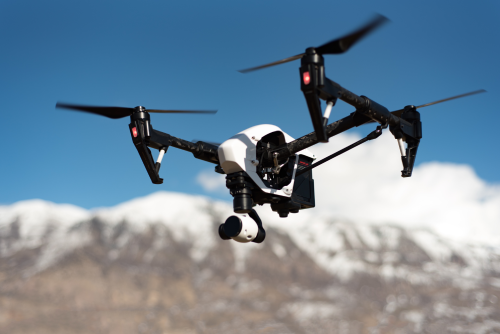
Drone photography composition rules explained simply: good aerial images are not only about flying higher, but about arranging shapes, lines, light, and scale so the viewer knows where to look. If your drone photos feel flat, messy, or “nice but forgettable,” composition is usually the missing piece.
Unlike ground photography, a drone lets you change height, angle, and distance in seconds. That freedom is powerful, but it also makes it easy to shoot everything from above without thinking about framing or visual story.
Quick Take
- Composition is how you arrange elements in the frame so the image feels clear, balanced, and interesting.
- The most useful drone composition rules are:
- rule of thirds
- leading lines
- symmetry
- patterns
- negative space
- depth and layering
- scale
- horizon control
- framing
- colour and light contrast
- In drone photography, altitude changes composition as much as camera angle.
- For video, composition is not just where things sit in the frame, but how they move through it.
- A strong drone image usually has one clear subject, one strong structure, and less clutter.
- In India, always verify the latest DGCA and Digital Sky requirements before flying, and avoid unsafe or privacy-invasive shots just for content.
Why composition matters even more with a drone
A drone gives you a view most people do not normally see. That alone can make an image look impressive at first. But novelty fades quickly. The shots people remember are the ones with structure.
From the air, common ground-level distractions often disappear. That is useful. But a new problem appears: scenes can look flat, random, or over-busy because you are seeing too much at once.
Good composition solves that. It helps you answer three questions:
- What is the main subject?
- What supports that subject?
- What should stay out of the frame?
For example:
- A beach from directly above may show beautiful wave patterns, but without a person, boat, or pier, the image may lack a focal point.
- A fort or temple complex may look impressive from high altitude, but if the horizon cuts through the middle and the frame is full of unrelated buildings, the image loses impact.
- A farm landscape can become striking when field boundaries create lines and geometry that guide the eye.
The most important drone photography composition rules explained
Here is a practical summary before we go deeper:
| Rule | Best used for | What to look for | Common mistake |
|---|---|---|---|
| Rule of thirds | Landscapes, cityscapes, travel shots | Subject placed off-centre on key grid points | Centering everything by default |
| Leading lines | Roads, rivers, coastlines, canals, bridges | Lines that pull the viewer toward the subject | Letting lines lead out of the frame |
| Symmetry | Top-down shots, architecture, reflections | Balanced left-right or top-bottom structure | Being slightly off-centre and ruining the effect |
| Patterns and repetition | Fields, rooftops, boats, umbrellas, steps | Repeating shapes or textures | Including too much empty clutter around the pattern |
| Negative space | Isolated subjects, minimalist scenes | Large calm areas like water, sand, sky, fields | Making the subject too small to matter |
| Depth and layering | Hills, valleys, forts, forests | Foreground, middle ground, background | Shooting too high and flattening the scene |
| Scale | People, vehicles, boats, buildings in landscapes | A small known object that shows size | No reference point, so the scene feels vague |
| Horizon placement | Scenic wide shots | Horizon placed intentionally high or low | Splitting the frame into equal halves without purpose |
| Framing | Structures, trees, gaps, arches | Natural borders around subject | Frame elements that distract more than they help |
| Colour and light contrast | Sunrise, sunset, festivals, urban scenes | Subject separated by tone or colour | Shooting harsh mid-day light without a plan |
Rule of thirds
The rule of thirds means dividing the frame into a 3×3 grid and placing important elements along those lines or where the lines intersect.
Why it works: it usually feels more natural and dynamic than putting everything in the dead centre.
In drone photography, try this with:
- a lighthouse or temple placed on one side of the frame
- the horizon on the upper third if the land is more interesting
- the horizon on the lower third if the sky is dramatic
- a boat or person near a grid intersection in a large open scene
Practical example:
At a beach in Goa or Odisha, instead of centering both the shoreline and the surfer, place the shoreline diagonally and the surfer slightly off-centre. The image immediately gets more energy.
When to break it:
If the scene is strongly symmetrical, central framing may work better than the rule of thirds.
Leading lines
Leading lines guide the viewer’s eye through the image. They can be straight, curved, diagonal, or S-shaped.
Drone photography is perfect for leading lines because aerial viewpoints reveal structure that is hard to see from the ground.
Look for:
- roads
- railway lines
- rivers
- sea walls
- walking paths
- farm boundaries
- bridges
- rows of trees
Why they matter: they create direction and make the image feel organised.
Practical tip:
Do not just find a line. Ask where it goes. The best lines lead toward your subject or into the most interesting part of the frame.
Mini scenario:
A winding mountain road in Himachal or Uttarakhand can be more interesting than the mountain itself if the road leads the eye upward. If the road exits the frame too early, the composition feels unfinished.
Symmetry and central composition
Beginners often hear “never put the subject in the centre.” That is not true. Central composition works very well when the scene is symmetrical.
This is especially strong in drone shots of:
- courtyards
- bridges
- top-down architecture
- rows of houses
- piers
- reflections on still water
- circular structures
The rule here is simple: if you choose symmetry, commit to it. Small misalignment is very noticeable from the air.
Practical tip:
Use your grid and carefully rotate the drone until the lines of the scene align cleanly with the frame.
Example:
A straight jetty extending into water can look powerful when placed dead centre. A slightly off-centre version often looks accidental rather than artistic.
Patterns and repetition
Drones reveal patterns beautifully. Repetition turns ordinary scenes into graphic compositions.
Good subjects include:
- crop fields
- fishing boats
- tiled rooftops
- solar panels
- market umbrellas
- staircases
- parked vehicles
- apartment blocks
Patterns work best when:
- the frame is simple
- the repetition is clear
- one “break” in the pattern adds interest
That “break” could be:
- one red umbrella among blue ones
- one person crossing a patterned courtyard
- one boat angled differently from the others
This gives the eye a place to rest.
Negative space
Negative space is the empty or calm area around your subject. It is not wasted space. It gives breathing room and emphasis.
From a drone, negative space can be:
- open sea
- a large sandy beach
- fog
- snow in mountain regions
- a plain field
- still water
- a wide rooftop
This style works well for minimal, clean images.
Example:
A lone camel cart on a wide Rajasthan salt flat or desert patch can be far more striking if most of the frame is empty land.
The caution: do not make the subject so tiny that the viewer cannot identify it.
Depth and layering
Aerial images often become flat because people fly too high too quickly. Depth and layering solve this.
Layering means arranging:
- foreground
- middle ground
- background
In drone photography, depth appears when there is separation between elements, often helped by side light, haze, shadows, or different elevations.
Ways to create depth:
- shoot at an oblique angle instead of straight down
- include a closer element such as a tree, rooftop, or cliff edge
- use early morning or late afternoon light for shadows
- position hills, water, and settlements in separate layers
Example:
A hill fort shot from a moderate angle, with a ridge in the foreground, the fort in the middle, and distant hills in the back, feels much richer than a very high overhead shot.
Scale and the human element
One of the biggest composition problems in drone photography is scale confusion. The viewer sees a beautiful location but cannot tell how large it is.
Scale fixes that. Include a known-size object such as:
- a person
- a car
- a motorcycle
- a small boat
- a building
- a tree line
This helps the viewer understand size instantly.
Drone shots often become more powerful when the human subject is small but clearly visible. The person does not need to dominate the frame. They just need to anchor it.
Example:
A top-down shot of a person standing at the edge of black rocks near the Arabian Sea can communicate drama and size better than the same shot with no person at all.
Horizon placement
The horizon is one of the first things people notice. If it is crooked or thoughtlessly placed, the shot feels amateur.
Three practical rules:
- Keep the horizon level unless you have a very specific creative reason not to.
- Put the horizon high if the foreground is more interesting.
- Put the horizon low if the sky is the story.
Avoid placing the horizon exactly in the middle unless there is a strong reason, such as perfect reflection or balanced symmetry.
Drone-specific note:
At high altitude, even small tilt errors become obvious. Check your gimbal alignment and frame edges before shooting.
Framing with natural borders
Framing means using elements within the scene to surround or point toward the subject.
From a drone, natural frames can include:
- tree lines
- gaps between buildings
- canyon walls
- courtyard edges
- arches
- bridges
- shadows
This works best when the frame supports the subject instead of competing with it.
Example:
A temple tank or stepwell can be shot so that the geometry of the steps frames the central water or subject. The surrounding structure becomes part of the composition instead of background clutter.
Colour contrast and light contrast
Composition is not only about shape. It is also about separation. If the subject blends into the background, the image feels weak.
Look for contrast in:
- colour
- brightness
- shadow
- texture
Examples:
- a yellow boat in dark water
- white salt pans against earthy ground
- a red roof among green trees
- long shadows across textured fields
Light matters as much as placement. Soft early morning and late afternoon light usually reveal texture and shape better than harsh noon light.
That does not mean midday is useless. Midday works well for:
- graphic top-down shots
- strong shadows in architecture
- clear water with bright colour
- bold geometric scenes
How altitude changes composition
Altitude is one of the most important creative controls in drone photography.
Low aerial perspective
At lower heights, you often get:
- better depth
- stronger foreground
- more cinematic perspective
- clearer subject separation
This is useful for:
- buildings
- people in landscapes
- roads
- trees
- moving subjects
Mid-level perspective
This often gives the most balanced drone images.
You can still see the subject clearly while also showing environment, scale, and context.
Use this for:
- real estate
- travel scenes
- forts
- event venues
- coastlines
- farms
High or top-down perspective
This is where geometry, abstraction, and patterns become the focus.
Use it for:
- fields
- rooftops
- beaches
- river bends
- stepwells
- urban blocks
- construction layouts
The mistake many pilots make is assuming higher always means better. It does not. Higher only changes the story. Sometimes the best composition is just high enough to simplify the frame.
Drone composition for video
Still-photo rules matter for video too, but video adds movement, timing, and shot flow.
Keep one clear idea per shot
Do not combine too many moves at once.
If you are moving forward, climbing, yawing, and tilting the gimbal all together, the composition often becomes messy. A simpler move usually looks more professional.
Give the subject space to move into
If a boat is moving left to right, leave more space in front of it than behind it. This is called lead room.
The same idea works for cyclists, vehicles, and even a person walking along a ridge.
Use reveals carefully
A reveal shot hides part of the scene, then gradually shows the subject.
Examples:
- rising above trees to reveal a lake
- moving sideways past a building to reveal a fort
- pulling back to reveal the scale of a valley
A reveal works best when the end frame is strong on its own.
Slow down
Most beginner drone videos are flown too fast.
Slower movement helps:
- the audience understand the composition
- stabilisation look cleaner
- editing become easier
- the footage feel more premium
Hold the shot before and after movement
Before you start moving, hold for a couple of seconds. After the movement ends, hold again.
This makes editing easier and gives you more usable clips.
A simple workflow to compose better drone shots
If you want more keepers, follow this practical sequence on location.
1. Decide the subject before take-off
Ask:
- What exactly am I shooting?
- Is it the building, the coastline, the road, the pattern, or the person?
If you cannot answer this clearly, the composition will likely feel random.
2. Study light and weather
Notice:
- direction of sun
- cloud cover
- shadows
- haze
- wind
Even a great location looks weak in bad light.
3. Start with safe, simple master shots
Get a clean wide shot first. Do not begin with risky or overly complex moves.
This ensures you come back with something usable even if battery, wind, or crowds become an issue.
4. Change one variable at a time
After your first shot, change:
- only altitude, or
- only angle, or
- only framing
This helps you understand what actually improved the image.
5. Check the edges of the frame
Many drone shots fail because the main subject is fine, but the corners contain:
- cut-off buildings
- distracting roads
- parked vehicles
- empty dead zones
- bright patches that pull attention away
Train yourself to scan the full frame, not just the center.
6. Shoot variations
Try:
- wide, medium, and tight versions
- straight-down and angled versions
- centred and off-centre versions
- still photo and short video clip versions
Often the best composition is not the first obvious one.
India-specific composition ideas that work well
India offers subjects with strong geometry, texture, and scale. A few examples:
Coastlines
Use:
- diagonal shorelines
- wave patterns
- lone walkers or boats for scale
- negative space in sea or sand
Forts, stepwells, and heritage structures
Use:
- symmetry
- central framing
- repeating architecture
- top-down patterns
- side light for texture
Be especially careful about permissions, restrictions, and local sensitivity before flying near heritage or protected areas.
Farms and rural landscapes
Use:
- patchwork fields
- tractor paths as leading lines
- irrigation channels
- a person or vehicle for scale
Urban edges and industrial zones
Use:
- repeating rooftops
- road grids
- colour contrast
- shadows
- strong geometric top-down shots
But be cautious about privacy, power lines, traffic, and local restrictions.
Hills and valleys
Use:
- layered ridgelines
- low sun for shadow depth
- roads or rivers as visual anchors
- atmospheric haze to separate layers
Safety, privacy, and legal checks before you compose
No composition rule is worth unsafe flying or a regulatory mistake.
Before shooting in India, keep these points in mind:
- Verify the latest DGCA and Digital Sky guidance before every serious flight, especially if you fly commercially or in unfamiliar areas.
- Check whether the location falls under a restricted, sensitive, or no-fly area.
- Do not fly carelessly near airports, helipads, defence sites, government-sensitive zones, or other restricted locations.
- Avoid flying over crowds, moving traffic, or busy event spaces unless you are fully compliant, properly planned, and legally permitted.
- Get permission from property owners, event organisers, or local authorities where required.
- Respect privacy. A residential top-down shot may look visually interesting but can still be intrusive.
- Watch for birds, wires, towers, trees, and sudden wind changes.
- Plan a safe take-off and landing zone before focusing on creative framing.
- Keep enough battery margin to return safely. Do not stretch the flight for “one last shot.”
Regulations, categories, permissions, and operational requirements can change. Always verify the current official rules before acting.
Common mistakes beginners make
These errors ruin many otherwise good drone photos:
- Flying too high too soon
- Putting every subject in the center
- Crooked horizon
- No clear focal point
- Too much empty clutter, not useful negative space
- Shooting in harsh light without a graphic composition
- Ignoring shadows
- Letting roads or rivers lead out of the frame
- Making the subject too tiny to understand
- Overediting with unnatural colours
- Using complex movements for video when a simple move would work better
- Forgetting to scan the corners of the frame
- Breaking symmetry by a small amount
- Chasing risky angles near people, traffic, or obstacles
A good habit is to review your images and ask: “What is the first thing my eye sees?” If the answer is “I’m not sure,” the composition probably needs simplification.
FAQ
What is the best composition rule for drone photography?
There is no single best rule, but the rule of thirds, leading lines, and symmetry are the most useful starting points. For top-down images, patterns and symmetry often work especially well.
Should I always shoot from directly above?
No. Top-down shots are popular, but they are only one style. Angled shots often show more depth, scale, and story. If your images feel flat, try lowering altitude or tilting the camera slightly instead of shooting straight down every time.
Why do my drone photos look boring even in beautiful locations?
Usually because there is no clear subject, no strong light, or too much clutter. A beautiful place alone is not enough. You still need shape, balance, scale, and direction in the frame.
Is the rule of thirds better than centered composition?
Not always. Use the rule of thirds for dynamic scenes and centered composition for symmetry, reflections, strong architecture, and certain top-down views. The key is intention, not blindly following a rule.
What is the easiest way to improve composition quickly?
Do three things: 1. Choose one clear subject. 2. Keep the horizon level. 3. Change altitude before changing location.
Many weak drone shots improve just by flying slightly lower or higher and cleaning up the frame.
How do I show scale in drone photography?
Include a familiar-size object such as a person, vehicle, boat, or building. Without scale, viewers may not understand the size or significance of the scene.
Are composition rules different for drone video?
The basic rules are similar, but video adds motion. You must think about lead room, direction of movement, pacing, and how the shot starts and ends. Simpler camera moves usually produce stronger results.
What time of day is best for drone composition?
Early morning and late afternoon are usually the easiest because light is softer and shadows add shape. Midday can still work for graphic top-down shots, patterns, and strong colour separation.
Can I rely on auto modes and fix composition later by cropping?
Cropping can help, but it cannot rescue every bad composition. If the light is poor, the subject is too small, or the frame is cluttered, heavy cropping often reduces image quality and still does not solve the core problem.
Do I need expensive drones to get better composition?
No. Composition is mostly about seeing and deciding, not spending more. Even an entry-level camera drone can produce strong images if you use light, altitude, framing, and subject placement well.
Final takeaway
The best way to understand drone photography composition rules is not to memorise them like school theory, but to use them as a checklist in the field: clear subject, clean frame, strong lines, intentional horizon, visible scale, and suitable light. On your next flight, do not just capture the location from above; shoot the same scene in three ways: off-centre, symmetrical, and top-down. That one exercise will teach you more about composition than a week of random flying.
