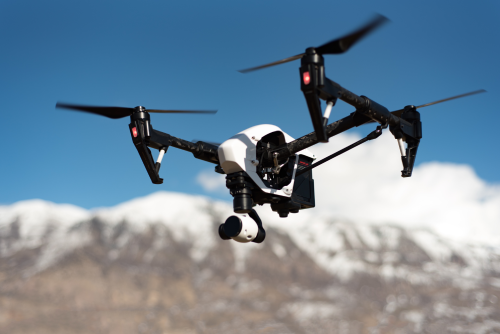
Learning how to frame better drone photos is less about flying higher and more about making clearer choices. The best aerial images usually come from three things: a strong subject, a clean composition, and the discipline to remove distractions.
If your drone photos often look impressive on location but flat on your phone later, framing is usually the missing piece. Here is a practical guide that will help Indian beginners and creators make stronger drone photos with almost any camera drone.
Quick Take
- Start every shot by deciding what the subject is. “The whole view” is usually not a subject.
- Change height and camera tilt on purpose. A difference of a few metres can completely improve composition.
- Use simple framing tools from above: rule of thirds, symmetry, leading lines, negative space, and scale.
- Check the edges of your frame before shooting. Roof tanks, wires, parked vehicles, and random clutter often ruin good photos.
- Early morning and late afternoon light usually give better depth, colour, and shadows.
- In India, haze, dense rooftops, crowds, and privacy concerns matter more than many beginners expect.
- Always verify the latest DGCA, Digital Sky, local airspace, and site-specific restrictions before flying.
Why drone framing feels harder than it looks
A drone gives you a dramatic point of view, but that can create a trap: everything looks interesting from above, so you stop making choices. The result is often a wide, busy image with no clear focal point.
Drone framing is harder than ground photography for three reasons:
- You can move in more directions, so you have too many options.
- Scenes from above can become cluttered very quickly.
- Small camera sensors on many consumer drones are less forgiving when light is harsh or hazy.
This is especially true in Indian environments. Urban rooftops can be full of water tanks, cables, terraces, tin sheets, and parked vehicles. Rural scenes can look beautiful, but midday haze, flat light, or messy field boundaries can weaken the photo. Good framing solves this by simplifying what the viewer sees first.
Start with one clear subject
Before you think about composition rules, decide what the photo is actually about.
A strong drone subject could be:
- A temple tank or stepwell
- A lone tree in a field
- A curving road through hills
- A fishing boat in backwaters
- A fort wall on a ridge
- A cricket pitch in a dense neighbourhood
- A brightly painted building among muted rooftops
- Crop rows, tea gardens, or salt pans with strong patterns
A useful test is this: can you describe the photo in one short sentence?
If you cannot, the framing is probably still too broad.
For example:
- Weak: “It’s a nice aerial view of the city.”
- Better: “It’s a top-down shot of a blue building surrounded by beige rooftops.”
- Better: “It’s a winding road entering morning fog near the fort.”
Once the subject is clear, every other choice becomes easier: – Where should the eye land first? – What should be included? – What should be removed?
Place the subject with purpose
A lot of beginners either centre every subject or place it randomly. Neither works consistently. Better framing comes from choosing placement based on the scene.
When to center the subject
Centering works well when the image is about:
- Symmetry
- Geometry
- Isolation
- Graphic patterns
Examples: – A stepwell seen from directly above – A boat in still water – A circular roundabout – A temple complex with balanced layout
Centered framing feels intentional when the scene itself is balanced.
When to use the rule of thirds
The rule of thirds means placing your subject away from the exact center, often near one-third lines or intersections in the frame. This works well when you want the image to feel more natural and less static.
Use it for: – A fort on one side with valley space on the other – A lighthouse near the edge with sea as negative space – A road entering the frame diagonally – A person or vehicle used for scale
The goal is not to follow a rule mechanically. It is to give the eye a clear landing point without making the photo feel stiff.
Use negative space
Negative space means empty or quieter areas around the subject. From a drone, this could be:
- Calm water
- Sand
- Open fields
- Fog
- Sky reflections
- Plain rooftops
Negative space helps the subject breathe. A small boat in a large expanse of water can feel more powerful than a frame packed with details.
Use lines, shapes, and symmetry to guide the eye
From the air, composition becomes more about geometry than portrait-style framing. Roads, rivers, field divisions, rooftops, shorelines, and shadows can all lead the viewer through the image.
Leading lines
Leading lines pull the eye toward the subject.
Good aerial leading lines include: – Roads – Paths – Bridges – Canal edges – Shorelines – Crop rows – Railway-adjacent geometry viewed from a legal and safe location
A road that enters from one corner and leads to a fort, a lake, or a village usually works better than a road floating without direction in the middle of the frame.
Diagonals and curves
Straight lines feel clean and strong. Curves feel more dynamic.
Try these: – S-shaped rivers – Bending hill roads – Curved beaches – Meandering paths through tea estates
If a scene has a natural curve, do not cut it awkwardly. Give it enough space to flow through the image.
Symmetry and repetition
Drone photography is great for symmetry because many subjects reveal their pattern only from above.
Look for: – Stepwells – Temple courtyards – Housing blocks – Salt pans – Farm rows – Fishing nets – Boats lined in parallel – Repeating rooftops or windows
Top-down framing often works best when the power of the image comes from pattern rather than depth.
Add depth and scale so the photo does not feel flat
One reason drone photos look disappointing later is that they lack depth. Everything feels spread out, but nothing feels dimensional.
You can fix that in three ways.
Include layers
Layers give a photo foreground, middle, and background.
At a tilted angle, you might have: – Foreground: a ridge or rooftop edge – Midground: the fort, road, or subject – Background: hills, lake, or sky haze
Layers make the viewer feel space instead of just seeing information.
Use shadows
Shadows can frame subjects beautifully, especially in early morning or late afternoon. Long shadows reveal shape and texture in:
- Fort walls
- Palm trees
- Dunes
- Temple spires
- Building clusters
- Agricultural patterns
Midday light reduces shadow detail, so if the scene depends on depth, morning or evening is usually better.
Add a scale reference
From high above, size becomes hard to judge. One small element can solve that: – A person – A car – A tractor – A boat – A bus on a road – A group of trees beside a building
Scale works best when the main subject is large and the reference is clearly visible but not dominant.
Choose angle and height deliberately
Many drone users frame badly because they keep changing everything except the two most important variables: camera tilt and height.
A small change in either one can transform the image.
| Camera angle | Best for | Framing effect | Common mistake |
|---|---|---|---|
| Straight down (90°) | Patterns, symmetry, rooftops, fields, stepwells | Clean, graphic, abstract | No sense of depth |
| Around 45° downward | Forts, coastlines, lakes, villages, roads | Balanced mix of subject and surroundings | Busy background |
| Low downward tilt | Hills, sunrise, layered landscapes, large structures | Strong depth and distance | Haze and weak focal point |
A few practical rules help:
- If the image feels cluttered, go higher or go top-down.
- If the image feels flat, lower the altitude slightly or tilt the camera to add layers.
- If the subject is getting lost, move closer before you fly higher.
- Test at least three heights and three tilts for any important scene.
Many great drone photos are not taken from extreme height. They are taken from the height that simplifies the frame.
Let light do part of the framing
Good framing is not only about objects and lines. Light also decides where the viewer looks.
Best times for most drone photos
In most Indian conditions, early morning and late afternoon are the easiest times to make stronger images. You get:
- Softer contrast
- Better colour separation
- Longer shadows
- Less atmospheric harshness
- More texture in land and buildings
When midday can still work
Midday is not always bad. It can work well for: – Top-down geometric compositions – Beaches with clean water colour – Salt pans – Crop patterns – Rooftops with strong shapes
Flat light can actually help when you want a graphic look and do not need depth.
Watch for Indian haze and humidity
In many parts of India, especially plains and coastal areas, haze can reduce detail fast. If distant backgrounds look dull, avoid depending on far horizons. Frame tighter. Use stronger shapes, patterns, and contrast closer to the drone.
Monsoon and winter conditions can also create dramatic mood, but visibility and flight safety come first.
A simple 8-step workflow to frame better drone photos
If you want a repeatable method, use this on your next flight.
1. Decide the final use first
Are you shooting for: – Instagram portrait crop – YouTube thumbnail – Website banner – Print – Real estate listing – Travel portfolio
If you know the final crop, you will leave the right amount of space around the subject.
2. Identify the subject before take-off
Do not launch and then start searching randomly. Know whether you are shooting: – A specific building – A coastline – A road curve – A field pattern – A wedding venue exterior – A resort or property layout
3. Take one slow reconnaissance pass
Once airborne, do not start snapping immediately. Hover safely and study: – What is drawing the eye – Which elements are distracting – Whether a top-down or tilted frame suits the scene better – Where the cleanest background lies
4. Test three heights
Shoot the same composition from: – Lower – Medium – Slightly higher
Often the middle option wins, but you will not know until you compare.
5. Test three tilts
Try: – Straight down – Around 45° – Lower tilt toward the horizon
This quickly shows whether the image needs graphic simplicity or depth.
6. Clean the edges
Before pressing the shutter, inspect all four edges of the frame.
Look for: – Cut-off buildings – Poles or wires – Distracting rooftops – Bright objects in corners – Random vehicles – Empty sky with no purpose
A lot of “almost good” drone photos fail because the edges were ignored.
7. Shoot wide, then tighter
Take: – One establishing frame – One tighter frame – One minimalist frame
This gives you options later, especially if you discover that the wider image has too much clutter.
8. Review before landing
Zoom in on the screen and check: – Is the subject obvious? – Is the horizon level if visible? – Are the edges clean? – Is the photo sharp? – Is the light working for the scene?
If the answer is “almost,” fix it while still in the air.
Framing ideas for common Indian scenes
Dense urban rooftops
Indian cityscapes can become messy fast. Instead of trying to show everything, look for:
- One colour standing out among neutral rooftops
- Repeating terrace patterns
- A strong lane or road line
- Morning shadows between buildings
- Rooftop geometry from directly above
Avoid making crowds or private homes the main subject. Be especially careful with privacy around terraces and balconies.
Forts, temples, ghats, and heritage sites
These subjects often benefit from: – Symmetry – Top-down details – Side light for texture – A single road or stair line leading in – Scale from surrounding landscape
Also be careful. Heritage, religious, and sensitive areas may have local restrictions, security concerns, or permission requirements. Verify before flying.
Farms, tea gardens, and salt pans
These are ideal for pattern-based framing.
Try: – Top-down symmetry – Diagonal rows – A worker path or vehicle for scale – Early light for texture – Tight frames that remove distractions like nearby sheds or roads
Beaches, rivers, and backwaters
Water gives you excellent negative space.
Look for: – Boats isolated in calm water – Shorelines as leading lines – Sandbars and wave patterns – Bridges crossing clean backgrounds – Reflections in still water
Keep the subject simple. Water scenes often become strongest when there is less in the frame, not more.
Hills and ghats
Tilted framing often works better than top-down here.
Use: – Layered ridgelines – Roads as diagonal lines – Forts or towers as focal points – Morning mist for depth – Shadows to separate terrain
Safety, legal, and privacy checks before you frame anything
No photo is worth an unsafe or illegal flight.
Before flying in India, be conservative and verify the latest official guidance from DGCA, Digital Sky, and any local authority or site operator where relevant. Rules, permissions, and restricted areas can change.
A few practical checks matter every time:
- Confirm you are allowed to fly in that location.
- Avoid restricted or sensitive areas.
- Do not fly over crowds, traffic, or gatherings for the sake of a better angle.
- Keep the drone within visual line of sight.
- Be cautious around birds, wires, trees, and changing wind.
- Respect privacy, especially near homes, terraces, hotels, resorts, schools, and religious places.
- Do not pressure people into becoming “scale elements” in your frame.
If a location feels crowded, sensitive, or uncertain, do not force the shot.
Common mistakes that make drone photos look weak
1. No clear subject
If viewers do not know what to look at first, the frame is too loose.
2. Flying too high too quickly
Higher is not always better. Many compositions get weaker as the subject shrinks.
3. Centering everything
Centered framing works only when the scene supports it.
4. Ignoring the edges
A strong subject can be ruined by clutter in one corner.
5. Shooting only one angle
Try top-down, medium tilt, and low tilt before deciding.
6. Using harsh light without a reason
Midday light can work, but only if the scene benefits from clean shapes.
7. Forgetting scale
A fort, dam, or field can feel unimpressive without a reference element.
8. Relying on editing to fix composition
Cropping helps, but bad framing in capture usually stays bad.
9. Including too much horizon
If the sky is dull or hazy, it may be taking space away from the real subject.
10. Taking risks for a “clean shot”
Flying closer to people, roads, or restricted areas is never a composition tip.
FAQ
What is the best angle for drone photos?
There is no single best angle. Straight down works best for patterns and symmetry. Around 45 degrees works best for most general scenes. Lower tilts help with hills and layered landscapes.
Should I always shoot top-down?
No. Top-down is excellent for geometry, rooftops, fields, and water patterns, but it can remove depth. If the scene depends on layers, height differences, or distant terrain, a tilted shot is usually stronger.
How high should I fly for better framing?
Use the lowest safe and legal height that simplifies the scene. Instead of thinking in fixed numbers, compare low, medium, and slightly higher versions of the same shot and choose the cleanest frame.
Why do my drone photos look amazing while flying but disappointing later?
Usually because the scene felt dramatic in real life, but the frame had no clear subject. Review your photos for subject placement, clutter, edge distractions, and scale.
Can I fix bad framing by cropping?
You can improve a decent photo with cropping, but you cannot fully rescue a weak composition. Heavy crops also reduce quality, especially on drones with smaller sensors.
What time of day is best in India for drone photos?
For most scenes, early morning and late afternoon are best. Midday can still work for top-down patterns, beaches, salt pans, and graphic compositions with clean light.
How do I make Indian city drone photos look less cluttered?
Frame tighter, shoot earlier for better shadows, use top-down angles, and look for one strong element like colour, repetition, or a leading line. Avoid trying to show the whole neighbourhood in one image.
Do I need RAW photos for better framing?
RAW does not improve framing by itself, but it gives you more flexibility in editing light, colour, and shadow. If your drone supports RAW, it is usually worth using for serious photography.
Is the rule of thirds still useful for drone photos?
Yes, but not always. It is great for off-center subjects and more natural compositions. For symmetry, patterns, or top-down geometry, centered framing is often better.
Final takeaway
On your next flight, do one simple exercise: pick one subject, shoot it from three heights and three camera tilts, then keep only the version with the cleanest edges and clearest focal point. That habit will improve your drone framing faster than any upgrade in gear.
