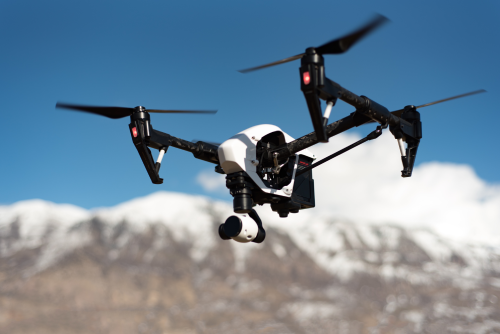
Making drone videos more cinematic is less about buying the most expensive drone and more about how you shoot. If you want to learn how to make drone videos more cinematic, focus on four things first: planning, smooth movement, camera settings, and editing. Even a beginner drone can produce beautiful footage when every shot has a purpose.
Quick Take
- Cinematic drone footage feels intentional, not random.
- Fly slower than you think you need to.
- Use manual or semi-manual camera settings whenever possible.
- Lock white balance and keep ISO low for cleaner footage.
- Shoot during good light, especially early morning or late afternoon.
- Record clips that work together as a sequence, not just standalone “cool shots”.
- Edit with restraint: fewer transitions, cleaner cuts, consistent colour.
- In India, always verify the latest DGCA, Digital Sky, and local location rules before flying.
What makes a drone video feel cinematic?
A cinematic drone video usually has five qualities:
1. Clear subject
The shot is about something: a fort, a road, a river bend, a resort, a farm, a person, a moving vehicle, or a landscape pattern.
If the viewer cannot tell what they are meant to look at, the footage may feel like a random aerial scan.
2. Controlled motion
Cinematic does not mean fast. It means smooth, deliberate movement with stable starts and stops.
Jerky stick inputs, sudden yaw turns, and constant speed changes make footage feel amateur.
3. Strong composition
Composition means how elements are arranged in the frame. A cinematic shot guides the eye.
That could mean: – a road leading into the distance – a temple or building placed off-centre – a subject framed between trees or hills – layers in the foreground, middle ground, and background
4. Good light
Light changes everything. The same location can look ordinary at noon and dramatic at sunrise.
In India, this matters even more because midday sunlight is often harsh, especially in summer. Early morning, late afternoon, and the hour after rain often produce much better drone footage.
5. A sequence, not just a clip
A cinematic video is built from shots that connect. One establishing shot, one approach shot, one side movement, one detail shot, and one closing shot will usually feel more polished than ten unrelated flyovers.
Start before takeoff: plan the story
Most weak drone videos are not ruined by the drone. They are ruined before the flight starts.
Decide what the video is about
Ask one question before you fly:
What is the main subject?
Examples: – a hill fort in Maharashtra – a tea estate in Kerala – a wedding venue – a real estate property – a beach road – a farm layout – a college campus project – a travel reel from Ladakh, Goa, Meghalaya, or Rajasthan
If you try to shoot everything, the final video often feels unfocused.
Build a simple shot list
You do not need a full script. A short shot list is enough.
Try this 6-shot structure:
- Wide establishing shot
- Slow push-in toward the subject
- Sideways parallax shot
- Rise reveal from behind an object
- Top-down detail shot
- Pull-back closing shot
This gives you variety without chaos.
Visit or scout the location first
If possible, scout the location on foot or view it from safe public access points first.
Look for: – obstacles like wires, poles, trees, and cranes – crowd movement – possible takeoff and landing area – direction of sunlight – wind exposure – visual elements that can frame the shot
In Indian cities and towns, wires are a major hazard. In rural areas, birds and open wind corridors can be bigger issues.
Watch the weather
Good cinematic footage depends heavily on weather.
Useful conditions: – soft sunlight after sunrise – golden light before sunset – light mist over hills or water – post-rain clarity
More difficult conditions: – harsh noon light – strong winds – heavy haze or pollution – flat grey skies with no contrast
Monsoon season can produce dramatic visuals, but also slippery launch areas, unpredictable gusts, and poor visibility. Be extra cautious.
Nail your camera settings first
A lot of “cinematic feel” comes from the camera, not just the flying.
Best starting settings for beginners
| Setting | Good beginner starting point | Why it helps |
|---|---|---|
| Resolution | 4K if available | Gives more detail and more room to crop |
| Frame rate | 24 fps or 25 fps | Feels more film-like than high frame rates for normal playback |
| Shutter speed | Roughly double frame rate | Keeps motion natural |
| ISO | Lowest possible | Reduces noise and preserves image quality |
| White balance | Locked, not auto | Prevents colour shifts during a shot |
| Colour profile | Normal if you do not colour grade; flat/log only if you know how to grade | Avoids washed-out footage you cannot fix well |
| ND filter | Use in daylight if supported | Helps maintain proper shutter speed in bright conditions |
Use 24 fps or 25 fps for a cinematic look
Frames per second, or fps, means how many images are recorded each second.
For cinematic drone video, 24 fps is the classic film standard. Many creators in India also use 25 fps, which can be practical under 50 Hz artificial lighting and may reduce flicker in some situations.
Use: – 24 or 25 fps for cinematic normal-speed footage – 50 or 60 fps only if you plan to slow the footage down in editing
Do not shoot everything at high frame rates just because the drone allows it.
Follow the 180-degree shutter rule
This sounds technical, but it is simple.
For natural-looking motion blur: – 24 fps pairs well with about 1/50 sec – 25 fps pairs well with about 1/50 sec – 50 fps pairs well with about 1/100 sec
Why this matters: if shutter speed is too fast in bright sunlight, every frame looks too sharp and motion can feel choppy or harsh.
That is why ND filters help. An ND filter is like sunglasses for the camera. It reduces light so you can keep a slower shutter speed.
Lock white balance
Auto white balance may shift colours mid-shot, especially when the drone turns from a dark area to a bright sky or reflective water.
Set a fixed white balance instead. Even if it is not perfect, consistency is easier to correct in editing than shifting colour.
Keep ISO low
ISO controls brightness, but raising it also increases noise. Noise looks like grainy digital speckling, especially in shadows and low light.
For cleaner footage: – keep ISO as low as possible – avoid pushing low-light drone footage too far – prefer better timing over extreme camera adjustments
Use flat or log colour only if you can grade
Many drones offer a flat or log profile, which captures more dynamic range and gives more flexibility in post-production.
But there is a catch: ungraded log footage often looks dull and grey.
If you are a beginner: – use a normal colour profile for fast, easy results – use flat/log only if you know how to correct and grade it properly
Fly like a camera operator, not a gamer
This is where cinematic drone footage is usually won or lost.
Slow down your stick inputs
Tiny stick movements produce smoother shots.
A good rule: – accelerate gently – hold a steady pace – slow down gently before the shot ends
Do not jam the controls and then brake suddenly.
If your drone app allows it, use cinematic or smooth mode for slower response and gentler control.
Let the shot breathe
Hold the frame steady for one or two seconds before movement starts.
Then move.
At the end of the shot, hold again for one or two seconds.
These “handles” make editing much easier.
Combine only one or two movements at a time
A cinematic shot can include more than one movement, but too many at once becomes messy.
Good combinations: – move forward + slowly tilt gimbal down – move sideways + keep subject framed – rise up + reveal the landscape – pull back + gain a little altitude
Bad combination for beginners: – turning, climbing, moving forward, and tilting the gimbal all at once
Six reliable cinematic drone moves
1. The slow push-in
Fly gently toward the subject.
Best for: – buildings – monuments – cliff edges – venues – boats – lone trees
Why it works: It creates focus and feels immersive.
2. The pull-back reveal
Start close, then move backward to reveal the wider environment.
Best for: – resorts – forts – beaches – valleys – campuses
Why it works: It adds scale.
3. The rise reveal
Begin behind trees, rocks, walls, or terrain, then rise slowly.
Best for: – landscapes – architecture – sunrise scenes
Why it works: It gives a strong sense of discovery.
4. The side parallax shot
Move sideways while keeping the subject in frame.
Parallax means closer objects appear to move faster than distant ones. This creates depth.
Best for: – roads – buildings – people standing still – ridgelines
5. The orbit
Circle around a subject slowly.
Best for: – isolated structures – statues – towers – vehicles in open space
Use carefully. It is easy to overdo, and it requires a safe, obstacle-free area.
6. The top-down descent or climb
Shoot straight down for patterns and geometry.
Best for: – farms – coastlines – boats – staircases – rooftops – market textures, where legal and safe
This works well when the scene has strong shapes.
Composition: how to make each frame look better
Good drone pilots collect footage. Good drone filmmakers compose shots.
Use the rule of thirds
Imagine the frame divided into nine equal boxes. Place the main subject near the intersecting lines instead of dead centre every time.
This usually makes the shot feel more natural and balanced.
Keep the horizon level
A tilted horizon is one of the fastest ways to make footage look unprofessional.
Check it before flying and again during editing.
Show depth
Depth makes a shot feel richer.
Try to include: – foreground: tree branch, rooftop, ridge – middle ground: your main subject – background: hills, skyline, sea, clouds
A drone shot with only flat background can look lifeless.
Use leading lines
Roads, rivers, coastlines, railway lines, rows of trees, and canals naturally guide the eye.
India offers excellent leading-line locations: – mountain roads – ghats – riverside steps – tea garden rows – agricultural plots – coastal curves
Choose altitude for emotion, not just height
Beginners often think higher is better.
Usually, it is not.
Lower-altitude shots often feel more dramatic because they preserve detail and motion. Very high shots can be beautiful for geography and scale, but they can also make everything look distant and generic.
Ask yourself: – Do I want intimacy? – Do I want scale? – Do I want pattern?
Then choose altitude accordingly.
Light matters more than your drone model
If your budget is limited, chase better light before better gear.
Best times to shoot
Usually best: – shortly after sunrise – late afternoon before sunset – blue hour for city lights, where legal and safe
These times give: – longer shadows – softer contrast – warmer colours – more texture in landscapes
Midday is not always useless
Noon light is harsh, but it can still work for: – top-down shots – strong patterns – turquoise water – architecture with bold geometry
So the answer is not “never shoot at noon”. It is “shoot the right type of shot at noon”.
Use weather creatively
Some of the best cinematic drone footage comes from imperfect weather: – low clouds in the hills – soft haze over lakes – fresh colour after rainfall – dramatic cloud shadows on farmland
But poor weather also increases risk. If visibility, wind, or moisture is a problem, do not push the flight.
Build sequences, not random highlights
A cinematic video becomes stronger when one shot leads logically to the next.
A simple sequence you can film almost anywhere
Let’s say you are filming a fort, resort, homestay, farm, or campus.
Use this order:
-
Opening wide shot
Show the full location and surroundings. -
Slow approach
Move toward the main subject. -
Side parallax
Add depth and variety. -
Detail-oriented top-down or low-altitude shot
Show texture, shape, paths, or activity. -
Reveal shot
Lift above trees, walls, or terrain. -
Closing pull-back
End by expanding the world again.
This gives you a beginning, middle, and end.
Shoot for the edit
While recording, ask: – What shot will come before this? – What shot can follow this? – Does the direction of movement make sense?
If one clip moves left to right and the next suddenly moves right to left for no reason, the sequence may feel awkward.
Edit for cinematic feel, not just social media speed
Editing is where many videos either become elegant or become noisy.
Trim aggressively
Cut dead space.
If the interesting part of the shot lasts four seconds, use four seconds. Do not force ten.
Keep transitions simple
Straight cuts are often better than flashy transitions.
Use transitions only when they support the story.
Match clip speed to the mood
Slow, scenic footage works well with calm pacing.
Travel reels or sports clips may need faster cuts, but “cinematic” still benefits from moments of pause.
Correct colour before grading
These are different:
- Colour correction: fixing exposure, white balance, contrast, and consistency
- Colour grading: giving the footage a creative look
First make all shots look natural and consistent. Then apply a style.
Avoid over-editing
Common editing mistakes: – too much saturation – crushed blacks – unrealistic teal-orange looks – too much sharpening – too many speed ramps – fake film grain on already compressed footage
Subtlety usually looks more expensive.
Add sound design
Drone propeller sound is rarely useful for the final video.
Instead, consider: – ambient nature audio – water sounds – crowd ambience – wind in trees – city atmosphere – carefully chosen music
If you are shooting a place for a client, good ambient sound can make the video feel far more immersive.
Plan for multiple platforms
If the final video is meant for both YouTube and Instagram: – keep the main subject away from the frame edges – leave space for vertical cropping – shoot a few dedicated vertical clips if your drone supports it
A cinematic video can still work in vertical format if framing is intentional.
Safety, legal, and compliance checks in India
Cinematic footage is never worth an unsafe or illegal flight.
Before you fly, verify the latest rules
Drone operations in India can involve: – DGCA requirements – Digital Sky airspace checks – location-specific restrictions – property owner permissions – event permissions – privacy concerns – local law and order instructions
Rules and operational requirements can change, and they may differ based on your drone, location, and whether the flight is recreational or commercial. Always verify the latest official guidance before acting.
Be especially careful around these situations
- airports and controlled airspace
- military or strategic areas
- crowded public events
- religious gatherings
- monuments and protected sites
- wildlife habitats and bird-heavy zones
- private property without permission
- urban areas with wires, traffic, and rooftops
Safety habits that also improve footage
Good safety habits often produce better cinematic results too.
Use a checklist: – inspect props and battery – confirm home point and return settings – check wind conditions – maintain visual line of sight – avoid flying over uninvolved people – keep enough battery reserve to land calmly – use a spotter when the location is complex – stop the shoot if the environment feels unsafe
A rushed pilot rarely captures their best footage.
Common mistakes that make drone videos look amateur
Flying too fast
Speed can be exciting, but cinematic footage usually needs smoothness first.
No clear subject
A beautiful landscape is not enough if the viewer does not know where to look.
Using auto everything
Auto exposure and auto white balance may shift during the shot and ruin consistency.
Moving in too many directions at once
Beginners often try to prove they can do everything in one clip. That usually weakens the footage.
Shooting only from high altitude
Variety matters. Mix low, medium, and high perspectives.
Ignoring light
Even great flying cannot fully fix bad light.
Overusing orbit shots
An orbit is useful, but when every second shot is an orbit, the video becomes repetitive.
Poor horizon and framing
Small errors become very noticeable in wide aerial shots.
Using flat colour without proper grading
If you do not grade it well, normal profile footage can look better.
Editing with too many effects
Cinematic is usually cleaner, quieter, and more controlled than viral-style editing.
A beginner workflow for your next drone shoot
If you want a repeatable process, use this:
- Pick one main subject.
- Decide the best time of day.
- Check airspace, permissions, and local restrictions.
- Create a 5 to 6 shot list.
- Set frame rate, shutter, ISO, and white balance.
- Record slow, stable takes with clean starts and ends.
- Select only the best clips.
- Edit for flow, colour consistency, and simple storytelling.
If you do just this on every flight, your footage will improve quickly.
FAQ
Do I need an expensive drone to make cinematic videos?
No. A better drone can help with image quality, wind handling, and camera options, but cinematic footage mainly comes from planning, light, movement, and editing.
Should I shoot at 24 fps or 30 fps?
For a classic cinematic feel, 24 fps or 25 fps is a better starting point. Use 30 fps if your delivery requires it, but keep the look consistent across the project.
Are ND filters necessary?
In bright daylight, they are very helpful. They let you keep a slower shutter speed so motion looks smoother and more natural.
Is cinematic mode on the drone enough?
It helps, but it is not enough by itself. Smooth mode can soften controls, but framing, light, sequencing, and editing still matter more.
How high should I fly for cinematic footage?
There is no single best height. Lower heights often create more depth and drama, while higher shots show scale and geography. Choose height based on the story, not just for the sake of altitude.
Can I make cinematic drone videos in harsh afternoon light?
Yes, but choose shots wisely. Top-down, pattern-based, and graphic compositions can work well at noon. For softer and more emotional footage, sunrise or sunset is usually better.
Should I use flat or log colour profiles as a beginner?
Only if you are ready to colour-correct and grade properly. Otherwise, a normal colour profile is often the smarter choice.
How long should each drone clip be?
For most cinematic edits, 5 to 10 seconds of usable motion is enough. Record slightly longer so you have clean handles at the start and end.
What should I verify before flying in India?
Verify the latest official airspace and operational rules, any location restrictions, property permissions, event permissions if relevant, and local safety conditions. Do not rely on old screenshots, social media posts, or outdated advice.
Can vertical drone videos still look cinematic?
Yes. Cinematic does not depend on horizontal format alone. If you frame carefully, control movement, and edit with purpose, vertical drone footage can also look polished and premium.
Final takeaway
If you want to make drone videos more cinematic, do not start by chasing new gear. Start by slowing down, picking one subject, shooting in better light, locking your settings, and capturing a short sequence of purposeful shots. On your next flight, aim for just five clean clips that match each other well; that will improve your video far more than twenty random aerial passes.
