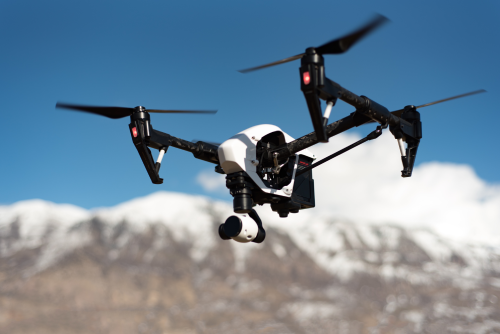
The best drone shot ideas for real estate agents are not the flashiest ones. The shots that actually help sell property show buyers where the home sits, how big it feels, how the approach looks, and what surrounds it. In India, where listings often compete on location, access, amenities, and view, a well-planned drone shoot can make a property look more trustworthy and easier to understand.
Quick Take
- Good real estate drone footage should answer four questions fast: Where is the property, how does it sit on the plot, how do I reach it, and what is around it?
- For most listings, the most useful shots are the hero reveal, 45-degree master shot, context reveal, entrance approach, and one view or amenity shot.
- Apartments need neighbourhood context and amenities. Villas need frontage, plot feel, and approach. Plots and land need top-down and boundary shots.
- Slow, steady movement beats aggressive cinematic tricks. Real estate buyers want clarity more than drama.
- Early morning and late afternoon usually give the best results in Indian light conditions.
- Before every shoot, verify current DGCA and local rules, check Digital Sky where relevant, and get property-level permission from the owner, developer, or society management.
What real estate buyers want from drone footage
A drone is useful in property marketing because it reduces uncertainty.
Most buyers are trying to judge:
- Location context: Is the building on a wide road, inside a gated project, near open space, or squeezed into a dense lane?
- Scale and layout: How large does the property feel from outside? How does the plot sit? Where are the parking, lawn, pool, or terrace?
- Access: Is the approach neat and convenient? Is there room for cars? Does the entry feel premium?
- Lifestyle: Are there parks, clubhouse areas, open views, or usable outdoor spaces?
- Honesty: Does the listing match reality?
That last point matters. The best drone footage for real estate does not exaggerate. It shows the property clearly enough that a serious buyer feels more confident booking a site visit.
Before the shoot: build a property-specific shot list
The biggest mistake in real estate drone work is flying first and thinking later.
Use this simple process before the propellers start.
- Define the listing angle
Ask what makes the property saleable: – apartment with clubhouse and balcony view – villa with corner plot and lawn – farmhouse with open land – plot with road frontage – commercial unit with visibility and parking
- Walk the site once
Look for: – best front elevation – cluttered angles – water tanks, cables, scaffolding, solar panels – parked cars that block the facade – trees or poles that can help with a reveal shot
- Choose the right time
In India, this matters a lot. – Early morning works well for softer light and lower traffic. – Late afternoon to sunset gives warmer colours. – Harsh noon sun often creates ugly shadows and flat-looking concrete. – In monsoon season, wait for stable weather and dry surfaces. – In winter haze, especially in North India, long context shots may look weak.
- Get the place camera-ready
A drone will show everything: – loose construction material – terrace clutter – drying clothes – bins and debris – random vehicles at the entrance
A 15-minute cleanup can improve the final footage more than expensive editing.
- Write a short shot list
Do not try to capture every possible move. For most properties, 6 to 10 planned shots are enough.
- Decide the final deliverables
One shoot can produce: – a 30 to 45 second vertical reel – a 60 to 90 second horizontal listing video – 5 to 10 drone photos for portals and brochures – short clips for WhatsApp sharing
If you are a real estate agent hiring a pilot, this shot list is the brief. Without it, the footage often looks generic.
Safety, privacy, and compliance in India
Real estate shoots are often done in dense residential areas, gated projects, and city outskirts. That means legal and practical checks matter.
Keep these points in mind:
- Verify the latest official rules before flying. Drone rules, airspace restrictions, and permission workflows can change. Check current DGCA guidance, Digital Sky requirements where applicable, and any relevant local restrictions before each shoot.
- Use compliant equipment and operations. If current rules require specific registration, permission, or platform steps for your drone or use case, follow them. If you are unsure, verify from official sources instead of guessing.
- Get property-level approval. Owner permission is essential. In apartment complexes and gated communities, the builder, RWA, society office, or security team may also require prior approval.
- Respect privacy. Do not hover outside neighbouring balconies, windows, terraces, or rooftops. Avoid capturing people in a way that feels intrusive.
- Avoid risky flights. Busy roads, crowds, schools during active hours, public gatherings, and tight cable-filled spaces raise risk quickly.
- Watch for Indian urban hazards. Overhead wires, telecom poles, cranes, birds, rooftop rods, and narrow lanes are common.
- If the site is near an airport, helipad, defence area, or other sensitive zone, verify carefully. Many premium real estate areas in large Indian cities can fall near controlled or restricted airspace.
- If you are hiring a freelancer, ask basic questions. What drone are they using, how do they handle permissions, and do they carry appropriate insurance if needed?
When in doubt, choose a safer ground-based camera angle over a risky aerial move.
12 best drone shot ideas for real estate agents
1) Hero front reveal
This is often the best opening shot.
Start with the property partly hidden by a gate, wall, tree line, or entrance feature, then rise or slide gently to reveal the full facade. It creates curiosity and gives the building a clean first impression.
This works especially well for: – villas and bungalows – low-rise apartments – boutique commercial spaces – farmhouse entrances
Keep the movement slow. Make sure the gate area is clean and parked vehicles are moved if possible. If the project name is on a signboard, end the move with the sign visible.
2) 45-degree corner master shot
If you can shoot only one drone still for a listing, this is often the one to capture.
Position the drone at a front corner, slightly above the building height, so the buyer can see two sides at once. It shows frontage, side depth, parking, and the building shape better than a flat straight-on view.
It is especially useful for: – independent homes – corner plots – villas with side setbacks – commercial buildings with road exposure
This angle is also a strong thumbnail for portal listings and social posts.
3) Straight-up context reveal
Begin with the facade or roof in frame and rise vertically to show the surroundings. This helps buyers understand what sits around the property: internal roads, green areas, neighbouring towers, schools, open plots, or skyline.
Use it when: – the apartment tower alone looks generic – the project has a strong gated community layout – the property benefits from open surroundings – the nearby context is genuinely attractive
Do not go unnecessarily high. At extreme height, every property starts looking the same.
4) Top-down layout shot
A top-down shot means the camera points straight down. It is one of the clearest ways to show site layout.
This is valuable for: – plots and land parcels – villas with lawns or pools – farmhouses – warehouses and large commercial units – homes with interesting roof terraces or courtyards
A top-down image can show driveway placement, usable outdoor space, and overall geometry in one frame. If you later add boundary lines in editing, only do so when the boundaries are verified from documents or visible site markers. Never estimate.
5) Slow orbit around the property
An orbit is a circular move where the drone goes around the subject while keeping it centered.
For real estate, keep it subtle. A half-orbit or even a quarter-orbit is often enough. This move adds depth and shows side elevations without confusing the viewer.
Best for: – standalone villas – clubhouses – farmhouses – detached commercial buildings
In dense Indian neighbourhoods, a full orbit may be unsafe or visually messy because of balconies, cables, and trees. If the space is tight, skip it.
6) Pull-back and rise
Start close to a premium detail, then fly backwards while gaining height. This move is excellent for moving from detail to context.
Use it to reveal: – a balcony with a view – a pool and lawn – a grand entrance – a terrace deck – a clubhouse beside the main tower
This is one of the best closing shots in a property video. It leaves the viewer with a sense of space.
7) Entrance and driveway approach
A property is not just the structure. The arrival experience matters, especially in premium listings.
Fly slowly toward the main gate or from the gate inward toward the house. This shows: – gate width – driveway condition – landscape at entry – the “arrival feel” of the listing
This works especially well for villas, plotted developments, resorts, and farmhouses. Coordinate with the site so security barriers, staff, and parked vehicles do not spoil the frame.
8) Amenity connection shot
Instead of shooting random clips of the pool, garden, clubhouse, and jogging track separately, show how they relate to the building.
A single linking move can capture: – tower to clubhouse – villa cluster to park – entrance to open green – parking area to main building
This is especially effective in apartment projects, where the lifestyle story matters almost as much as the unit itself. Keep privacy in mind around children’s play areas and pool decks.
9) Road-connectivity shot
Many Indian buyers care deeply about approach roads, traffic flow, and actual access. A road-connectivity shot shows how the property sits relative to internal roads or a main access road.
This is a strong choice for: – plotted developments – warehouses – commercial properties – projects in outskirts growth corridors – villas in gated communities
Use this shot honestly. Do not frame a distant highway, metro station, or landmark in a way that makes it seem much closer than it is.
10) Balcony or terrace view reveal
If the listing has a strong view, sell it properly.
Start near the balcony railing or terrace edge, then rise or tilt the camera up to reveal the skyline, lake, sea, hills, golf course, or large open park. This works especially well for premium apartments, penthouses, and holiday homes.
The success of this shot depends on visibility. If the air is hazy, polluted, or flat-looking, the “view shot” may disappoint. Choose a day with better clarity.
11) Boundary trace for plots and land
Land buyers want certainty.
A boundary trace shot follows one or two plot edges or corner markers so the buyer can understand the parcel width, length, and orientation. Pair it with a top-down shot and one wider context shot.
This is useful for: – residential plots – farmland – resort land – industrial land – development parcels
Only do this when the boundary markers are clear and verified. A misleading land video can create serious trust problems later.
12) Golden-hour closing shot
Your final shot should leave the viewer with a premium impression, not just more information.
Shoot one clean closing frame in soft light at sunrise or just before sunset. White facades, glass, landscaping, and long shadows often look far better at this time than under harsh afternoon sun.
This shot is ideal for: – the last 3 to 5 seconds of a reel – the banner visual for a listing video – premium stills for social media
Golden hour improves mood, but it cannot fix clutter or weak composition. Set the frame properly first.
Best shot mix by property type
| Property type | Must-have drone shots | Best purpose | Main caution |
|---|---|---|---|
| Apartment in a gated project | Context reveal, amenity connection, balcony view, road-connectivity shot | Show community, access, lifestyle | Avoid privacy issues with nearby balconies |
| Villa or bungalow | Hero reveal, 45-degree master, driveway approach, slow orbit | Show frontage, plot feel, arrival experience | Watch wires, trees, and parked cars |
| Plot or land parcel | Top-down shot, boundary trace, road-connectivity shot, high context reveal | Show exact layout and access | Never guess boundaries |
| Commercial building | 45-degree master, road-connectivity shot, entrance approach, context reveal | Show visibility, frontage, parking | Avoid misleading scale or traffic conditions |
| Farmhouse or holiday home | Hero reveal, top-down layout, pull-back and rise, golden-hour shot | Show openness, landscape, lifestyle | Wind and tree cover can complicate flight paths |
Camera, timing, and movement tips that improve real estate footage
Good shot ideas still need good execution.
A few settings and habits make a big difference:
- Use 4K video if your drone supports it. It gives more room to crop and stabilise.
- Shoot at 25 fps or 30 fps for normal property videos. That keeps motion natural.
- Keep shutter speed roughly around double the frame rate for smoother motion blur. In bright daylight, a neutral density filter, or ND filter, helps. Think of it as sunglasses for the camera.
- Keep ISO low to avoid noise.
- Lock white balance so colours do not shift mid-shot.
- Reduce yaw and gimbal speed if your app allows it. The gimbal is the stabilised camera mount. Slower movement looks more premium.
- Avoid shooting everything ultra-wide. Wide angles can make buildings look stretched. If your drone offers a slightly tighter view, test it for facade shots.
- Capture still photos during the same session. A few strong aerial stills are useful for portals, brochures, and thumbnails.
- Frame for both horizontal and vertical use. In India, many agents need a reel for Instagram and a horizontal video for YouTube, property portals, or builder presentations.
A simple 45-second real estate drone edit
If you want a clean, usable property reel, this sequence works well:
- 0 to 4 seconds: Hero front reveal
- 4 to 8 seconds: 45-degree master shot
- 8 to 14 seconds: Straight-up context reveal
- 14 to 20 seconds: Entrance or driveway approach
- 20 to 28 seconds: Amenity connection shot or balcony view reveal
- 28 to 36 seconds: Top-down shot or boundary trace, depending on property type
- 36 to 45 seconds: Pull-back and rise or golden-hour closing shot
Add only essential text: – property type – key size or configuration – location area – one or two standout features
Do not overload the frame with too much copy. The footage should do most of the work.
Common mistakes real estate agents make with drone shoots
Flying too high
Very high shots may look dramatic, but they often stop showing useful detail. Buyers need understandable scale, not just a Google Maps effect.
Using fancy moves that distract from the property
Rapid spins, aggressive tilts, and FPV-style movement may work for entertainment content, but not for most real estate listings.
Showing only the building and not the approach
Many buyers care just as much about road width, entry feel, parking, and surroundings as they do about the facade.
Ignoring clutter
Rooftop tanks, construction material, tarpaulins, cars, and laundry can ruin a premium impression. Clean first, then fly.
Overstating location benefits
Do not use drone perspective to imply that a highway, mall, metro station, or lake is closer than it really is.
Forgetting privacy
Neighbours did not agree to become part of your marketing video. Frame carefully.
Shooting at the wrong time
Harsh noon light, haze, heavy wind, or monsoon drizzle can flatten the entire shoot.
Not planning the final edit
If you collect random clips with no sequence in mind, the result will feel repetitive and confusing.
FAQ
Do small apartments need drone shots?
Not always, but many do benefit from them. If the building is part of a gated community, has useful amenities, or offers a good view, drone footage can add context that interior videos cannot.
What are the minimum five drone shots for most listings?
Start with these: – hero front reveal – 45-degree master shot – context reveal – entrance or driveway approach – one amenity or view shot
That basic set is enough for many apartment, villa, and commercial listings.
Can I fly a drone inside a residential society or gated community in India?
Do not assume you can. Even if the airspace is permissible under current rules, the society, builder, or site management may require prior approval. Always verify current DGCA rules and get local site permission before flying.
Should I show nearby landmarks like metro stations, schools, or highways?
Yes, but only if the relationship is accurate and genuinely helpful. Use such shots to explain access and context, not to exaggerate convenience.
How long should the final real estate drone video be?
For social media, 30 to 45 seconds is often enough. For full listings, 60 to 90 seconds works well if the footage is varied and clearly structured.
Is one battery enough for a typical property shoot?
Sometimes for a small villa or simple apartment exterior, yes. But for most professional shoots, extra batteries are safer because you need time for retries, stills, and different light angles.
What if the property is near an airport or another sensitive area?
Do not guess. Check the latest official airspace guidance and permissions workflow before the shoot. If the location is restricted or unclear, do not fly until the position is confirmed.
Should I shoot vertical or horizontal video?
Ideally both. Vertical is useful for reels and mobile sharing. Horizontal is better for YouTube, presentations, property portals, and longer listing videos. If you can only choose one, decide based on where the listing will actually be used.
Can drone footage replace interior walkthroughs?
No. Drone footage sells context, access, plot feel, and views. Interior walkthroughs are still necessary to show room flow, finishes, ceiling height, and actual living experience.
Final takeaway
If you want better property marketing, do not chase flashy drone moves. Start with a tight shot list: hero reveal, 45-degree master, context reveal, entrance approach, and one strong view or amenity shot. Shoot in soft light, keep the movement slow, verify permissions before every flight, and your real estate content will look clearer, more credible, and far more useful to serious buyers.
