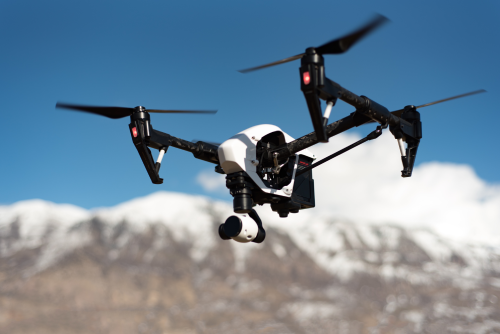
An orbit shot is one of the most useful drone moves in photography and videography: the drone circles around a subject while keeping the camera pointed at it. If you want to learn how to shoot orbit shots with a drone, the real skill is not just pressing a smart-flight button, but planning the circle, controlling speed, and keeping the subject cleanly framed.
For Indian creators, orbit shots can work beautifully around homes, resorts, statues, farms, boats, landscapes, and outdoor portraits, but they also demand more care than they seem to. A smooth orbit combines flight control, camera settings, safety awareness, and location judgment.
Quick Take
- An orbit shot means circling a subject while the camera stays locked on it.
- The best orbit shots are slow, smooth, and intentional, not fast and flashy.
- Start with a large radius. Wider circles are safer and look smoother.
- Use an automated orbit mode if your drone has one, but learn manual orbiting too.
- Shoot in calm weather, ideally early morning or late afternoon.
- Lock exposure, white balance, and focus before the move if possible.
- Avoid crowded areas, wires, trees, and narrow spaces.
- In India, always verify the latest DGCA and Digital Sky requirements before flying, especially near sensitive zones, heritage areas, roads, and populated locations.
- Record longer than you think you need. Editors love extra handle at the start and end.
What is an orbit shot?
An orbit shot is a circular camera move around a subject.
The subject can be: – A person – A building – A car parked safely on private property – A tree – A monument where flying is permitted – A landscape feature like a rock, hill, or watchtower
The drone moves around the subject in a circle or partial circle, while the camera stays pointed toward the center. The result creates parallax, which means the subject appears stable while the background shifts around it. That movement gives the shot depth and a cinematic feel.
A good orbit can: – Introduce a location – Reveal surroundings around the subject – Add movement to an otherwise static scene – Make small locations feel more dynamic – Turn a plain subject into a visually interesting shot
Why orbit shots often go wrong
Orbit shots look easy because many drones offer a Point of Interest or Circle mode. But beginners often get shaky, awkward results because they ignore three things:
-
Radius – Flying too close makes every correction visible. – It also increases the risk of hitting branches, poles, wires, or walls.
-
Speed – Fast orbits make footage look nervous and amateur. – Slow movement usually looks more premium.
-
Background – A great subject with a messy background still gives a weak orbit. – Orbit shots work best when the surroundings add context, layers, or scale.
Think of an orbit shot as a combination of flight path, framing, and storytelling.
Best subjects for orbit shots
Not every subject deserves an orbit. Choose something that looks good from multiple sides.
Good orbit subjects: – A villa, farmhouse, or resort with open space around it – A lone tree in a field – A statue or structure with clean background separation – A wedding couple standing in an open lawn, if local permission and safety allow – A person standing on a hilltop or safe viewing point – A boat anchored in calm water, where local flying rules and safety allow – A temple or fort only if drone use is legally permitted and safe
Poor orbit subjects: – Anything surrounded by wires – Subjects under trees – Moving traffic on public roads – Crowds – Cramped balconies or terraces – Subjects close to airports, military areas, or restricted zones – Sensitive public places where privacy or local restrictions may apply
Before you fly: plan the shot on the ground
The best orbit shot starts before takeoff.
Check the airspace and local restrictions
For India, do not assume a location is flyable just because it looks open.
Before you go: – Verify the latest official DGCA guidance – Check Digital Sky or other official airspace information where applicable – Confirm local restrictions at the location – Get property permission if flying on private land – Be extra cautious near forts, heritage sites, government buildings, coastal security areas, dams, rail lines, and urban zones
Rules and procedures can change, so always verify the latest official requirements before flying.
Walk the location first
If possible, inspect the area on foot.
Look for: – Trees and branches at different heights – Electric wires – Mobile towers – Flagpoles – Uneven ground – Animals – People who may walk into your orbit path – Wind direction – Sun position
A location may seem clear from the takeoff point but still have hidden obstacles on one side of the circle.
Decide the story
Ask yourself one question: what should the viewer feel?
Examples: – A farmhouse orbit can show scale and isolation. – A person on a hill can suggest freedom or travel. – A resort orbit can show architecture and surrounding greenery. – A business property orbit can present location and layout.
Your answer affects: – Height – Distance – Speed – Direction – Lens choice if your drone offers multiple cameras
The best light for orbit shots
Orbit shots are all about shape and depth, so lighting matters a lot.
Best times
Usually best: – Early morning – Late afternoon – Golden hour
These times give: – Softer shadows – Better texture – Less harsh contrast – More flattering skin tones for people
Avoid harsh midday light if possible
Midday sun can cause: – Flat-looking buildings – Harsh shadows under eyes – Blown highlights on roofs, roads, or white clothing – Less pleasing color
That said, if you are shooting real estate, industrial property, or agricultural land for documentation, midday may still be usable if visibility is more important than mood.
Watch wind conditions
Many orbit shots fail because of wind.
Common India-specific challenge areas: – Coastal regions with gusty sea breeze – Hill stations with shifting wind – Open farmland with sudden crosswind – Rooftops and terraces with turbulence
Even if your drone can technically fly, strong gusts can make a smooth orbit difficult. If you see constant sideways corrections, either widen the circle, slow down, or postpone the shot.
Camera settings for smoother-looking orbit footage
Flight smoothness matters, but camera setup matters just as much.
Frame rate
For regular cinematic motion: – 24 fps or 25 fps works well
For flexibility in editing: – 50 fps or 60 fps lets you slow the shot down later
If you are a beginner, 4K at 25 fps or 30 fps is a practical starting point. If the movement feels too quick, you can slightly slow it in editing.
Shutter speed
A natural-looking orbit usually benefits from some motion blur. If shutter speed is too fast, the footage can look choppy or overly sharp during movement.
A common filmmaking approach is to keep shutter speed roughly around double the frame rate. To do that in bright daylight, creators often use an ND filter, which is like sunglasses for the camera lens.
You do not need to obsess over perfect numbers on day one. The practical goal is simple: avoid footage that looks stuttery in motion.
ISO
Keep ISO as low as possible to reduce noise.
White balance
Do not leave white balance on auto if the light is changing within the orbit. Auto white balance can cause color shifts during the shot.
Set it manually when possible.
Exposure
If the subject and background brightness are stable, lock exposure before the orbit. This avoids distracting brightness jumps.
Focus
Many drones handle focus automatically, but for an orbit shot, confirm your subject is sharp before starting. If your drone allows tap-to-focus or focus lock, use it carefully.
Recommended starting setup
This is not a strict rule, but it is a useful beginner baseline.
| Subject | Suggested altitude | Suggested radius | Speed | Why it works |
|---|---|---|---|---|
| Single person in open ground | Low to medium | Wide | Slow | Keeps movement graceful and safer |
| House or villa | Medium | Medium to wide | Slow | Shows subject and surroundings together |
| Tree or statue | Medium | Medium | Slow to medium | Gives clear shape and parallax |
| Farm or property feature | Medium to high | Wide | Slow | Better context and layout reveal |
If you are unsure, go wider, slower, and higher rather than tighter, faster, and lower.
Two ways to shoot orbit shots
Method 1: Use your drone’s orbit or Point of Interest mode
Many camera drones offer a smart-flight mode that automatically circles a selected subject.
When it is useful
Use it when: – You are a beginner – The subject is stationary – The area is open – GPS signal is strong – You want a repeatable movement
How to do it
- Take off and hover safely at a reasonable height.
- Position the drone so the subject is clearly visible.
- Select the subject or set the point of interest if your drone supports it.
- Set the orbit direction: clockwise or anti-clockwise.
- Choose a radius that gives plenty of clearance.
- Set a slow speed.
- Start the orbit and keep your hands ready to cancel if needed.
- Watch the drone, not just the screen.
Important caution
Automated orbit modes are helpful, not magical.
Do not trust them blindly around: – Trees – Thin branches – Wires – Poles – Building corners – Crowds – Water reflections – Low light
Obstacle sensors may not detect everything. Always be ready to stop the move manually.
Method 2: Fly the orbit manually
Manual orbiting gives you more control and often better results.
Why learn manual orbiting?
Because you can: – Adjust framing mid-shot – Change altitude during the move – Create imperfect but more natural cinematic motion – Work even when smart modes are unavailable or unreliable
The basic idea
To manually orbit: – The drone moves sideways around the subject – You rotate the drone to keep the camera aimed at the subject – You make small corrections to distance and height
Useful term: – Yaw means rotating the drone left or right.
In simple terms, a manual orbit is usually a mix of: – Side movement – Gentle yaw – Tiny forward or backward corrections
Step-by-step manual orbit practice
-
Pick a large, safe subject – A lone tree in an open field is better than a person near a building.
-
Start farther away than you think you need – A wide circle is easier to control.
-
Choose one direction – Start with clockwise or anti-clockwise and stick to it.
-
Begin with slow sideways movement – Do not rush into a fast arc.
-
Add gentle yaw to keep the subject framed – Make very small inputs.
-
Watch the subject position in the frame – If it drifts too far, correct slowly.
-
Maintain your radius – Avoid creeping closer without noticing.
-
Finish the move smoothly – Hold the final frame for a second or two before stopping recording.
A simple beginner drill
Practice this before trying client work or social media content:
- Put a bag, cone, or chair in an open field
- Orbit it at a wide distance
- Do only a quarter circle
- Then try a half circle
- Then a full circle
- Review footage after every attempt
This is one of the fastest ways to build control.
How to frame orbit shots so they look cinematic
A technically correct orbit is not always a good-looking orbit.
Keep the subject slightly off-center sometimes
Perfect dead-center framing can look mechanical. For a more polished look, you can place the subject slightly off-center if the background is interesting on one side.
This works well when: – Revealing a valley, lake, beach, or skyline – Showing the approach to a building – Creating space for text in a commercial edit
Use background layers
Orbit shots are strongest when the background changes in a meaningful way.
Look for: – Hills behind a subject – Roads leading away from a house – Rows of crops near a farm – Water behind a jetty – City skyline beyond a rooftop, where flying is legal and safe
A plain background reduces the effect of parallax.
Change altitude deliberately
A flat orbit is fine, but a slight climb or descent can add polish if done smoothly.
For example: – Start lower and rise gently to reveal surroundings – Start at roof level and climb to show property layout – Start with a person dominant in frame and lift to reveal the landscape
Do not combine too many moves at once as a beginner. Nail the circle first.
Think about the final edit
Ask: – Is this a hero shot? – A reveal shot? – A transition shot? – An establishing shot?
That decides how long it should be and how dramatic the movement needs to feel.
Safety, legal, and privacy considerations in India
Orbit shots often tempt people to fly close to subjects. That is exactly when risk increases.
Safety basics
Do: – Maintain visual line of sight – Keep a safe distance from people, roads, vehicles, and structures – Use a spotter if the environment is busy – Check return-to-home settings before takeoff – Ensure battery is more than enough for multiple attempts – Abort the shot if the wind feels inconsistent
Do not: – Orbit over crowds – Fly close to power lines – Shoot near airports or sensitive zones without proper permissions – Assume a heritage or tourist site allows drone flying – Fly in a narrow area just because obstacle sensing is available – Prioritise the shot over safety
Privacy matters
Even if a location is technically flyable, filming people without care can create problems.
Be respectful around: – Residential areas – Private events – Religious places – Resorts and hotels – Beaches with public activity
If people are your subject, take consent seriously.
Compliance reminder
Drone rules in India may vary depending on: – Drone category – Airspace classification – Location type – Purpose of use – Equipment requirements
Always verify the latest official DGCA and Digital Sky information before flying. If you are doing commercial work, also confirm any insurance, permission, or client-side compliance requirements that may apply.
Common mistakes when shooting orbit shots
1. Flying too close
This is the most common mistake.
Why it happens: – Beginners want the subject to look “big” – They trust the screen more than real-world distance
Why it hurts: – More jerky corrections – Higher collision risk – Less elegant movement
Fix: – Start wider – Crop slightly in post if needed
2. Orbiting too fast
Fast circles often look cheap unless you are going for an aggressive FPV style.
Fix: – Slow down – Let the background move gently
3. Leaving everything on auto
Auto exposure and auto white balance can shift during the shot.
Fix: – Lock settings when possible
4. Ignoring the background
A subject may be interesting, but if the background is full of clutter, the orbit will still look weak.
Fix: – Move your takeoff point – Change altitude – Reverse orbit direction – Reposition the subject
5. Choosing the wrong direction
Sometimes one side has better light, cleaner background, or more dramatic reveal.
Fix: – Test both clockwise and anti-clockwise – Review quickly before committing
6. Trying to orbit moving subjects too early
Orbiting a walking person, moving car, or boat is much harder than it looks.
Fix: – Master stationary subjects first
7. Not checking obstacle height
Beginners often check around the drone, but not above and below the full orbit path.
Fix: – Scan the entire circle mentally before starting
8. Stopping the shot abruptly
A hard stop ruins an otherwise smooth clip.
Fix: – Ease in – Ease out – Hold a stable final frame
Simple editing tips for orbit footage
Good editing can improve a decent orbit, but it cannot fully save a badly flown one.
Trim the wobble at the start and end
Most orbit clips contain small corrections right after movement begins and just before it ends. Cut those out.
Slow it down slightly
If you shot at a higher frame rate, a small slow-motion adjustment can make the orbit feel smoother and more cinematic.
Stabilise carefully
Some editing tools offer extra stabilisation. Use it lightly. Too much can create strange warping.
Match color across clips
If you shot multiple orbits from different angles, consistent color makes the sequence feel professional.
Do not overuse orbit shots
One orbit can be powerful. Six back-to-back orbits can become repetitive. Mix them with: – Push-ins – Pull-backs – Top-downs – Static wide shots – Short reveals
A practical orbit workflow for beginners
If you want a repeatable routine, use this checklist:
- Verify the location is legal and appropriate to fly.
- Walk the area and identify obstacles.
- Choose the best subject side and light direction.
- Decide whether the orbit should be wide, medium, or tight.
- Set camera resolution, frame rate, exposure, and white balance.
- Do one slow test orbit at a safe distance.
- Review the clip.
- Adjust radius, height, and speed.
- Shoot 2 to 4 more takes with small variations.
- Land before battery stress affects smoothness.
This is how you build reliable results quickly.
FAQ
Is automatic orbit mode better than manual flying?
For beginners, yes, it is often easier and safer in open areas. But manual orbiting gives more creative control and helps when smart modes struggle or are unavailable.
What is the best speed for an orbit shot?
Usually slower than beginners expect. A slow orbit feels more cinematic, shows more background detail, and makes small mistakes less obvious.
How far should I be from the subject?
Far enough that you have clear obstacle margin and smoother control. For most beginners, a wider circle is better than a tight one.
Should the subject stay in the exact center of the frame?
Not always. Center framing is clean and simple, but slightly off-center framing can look more natural and cinematic if the background supports it.
Can I shoot orbit shots in windy conditions?
Only if the wind is mild and the drone remains stable. If the drone keeps fighting crosswind, your orbit will likely look uneven. In gusty weather, postpone or simplify the shot.
Is 4K necessary for orbit shots?
Not strictly, but higher resolution helps with cropping and delivery flexibility. If your drone handles it well, 4K is a practical choice for most creators.
Do I need ND filters?
Not always, but they can help create more natural motion blur in bright daylight. They are especially useful if your footage looks too sharp or stuttery during movement.
Can I orbit around people?
Only with proper caution, consent, and enough clearance. Avoid close passes, crowded environments, and any setup where a mistake could endanger someone.
Are orbit shots good for real estate videos?
Yes, very good. A slow orbit can show both the property and its surroundings. Just ensure legal flying conditions, clear airspace, and respect for neighboring privacy.
Should I shoot clockwise or anti-clockwise?
Choose the direction with better light, cleaner background, and fewer obstacles. Test both if you have time.
Final takeaway
If you want to shoot better orbit shots with a drone, do three things first: choose an open location, fly a wider circle than feels necessary, and keep the movement slow. Once you can consistently orbit a simple subject smoothly and safely, every other variation, lower, higher, closer, or more dramatic, becomes much easier.
