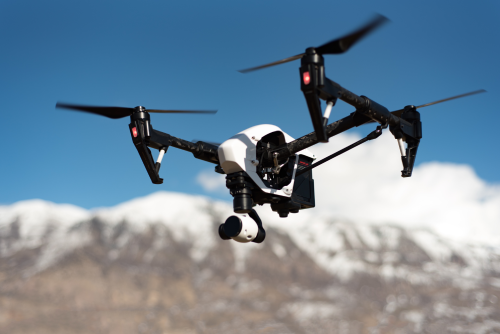
The best drone movements for cinematic storytelling are rarely the fastest or the most complicated. What makes a shot feel cinematic is simple: the movement supports the story, guides the viewer’s eye, and adds emotion, scale, or tension without calling too much attention to itself.
For Indian creators shooting travel reels, weddings, real estate, campus films, resort promos, and YouTube videos, this matters a lot. A small beginner drone in skilled hands can tell a stronger story than an expensive drone flying random, flashy moves.
Quick Take
- Choose drone movement based on the job of the shot:
- reveal a place
- follow action
- add scale
- create emotion
- transition between scenes
- Slow, smooth movement usually looks more cinematic than fast flying.
- For beginners, one shot should usually have one main idea. Do not push, rise, orbit, and tilt wildly all at once.
- The three most useful movements to learn first are:
- slow push-in
- pull-back reveal
- sideways track
- Use foreground elements like trees, walls, gates, or terrain to create depth.
- Lock exposure and white balance when possible so the shot does not brighten or change colour mid-flight.
- In India’s bright daylight, an ND filter can help maintain natural-looking motion blur.
- Always verify the latest DGCA, Digital Sky, airspace, and local permission requirements before flying.
What makes a drone movement feel cinematic
A cinematic drone shot is not just “smooth footage from the sky.” It usually has four qualities:
It has a clear subject
The viewer should know what to look at. It could be a person, a house, a road, a cliff edge, a field pattern, or a moving vehicle in a controlled, safe environment.
It has a purpose
Ask: why is the drone moving?
- A push-in adds emotional focus.
- A pull-back reveals scale.
- A sideways move adds depth.
- An orbit makes the subject feel important.
- A top-down shot shows shape and pattern.
If the movement does not add meaning, it often feels like filler.
It uses depth
Depth is what makes drone footage feel rich rather than flat. You create it with layers:
- foreground: tree, wall, pole, roof edge, hill
- middle ground: subject
- background: landscape, skyline, water, buildings
When these layers move relative to each other, you get parallax, which means objects at different distances appear to move at different speeds. That is a big reason some drone shots feel “premium.”
It starts and ends cleanly
A good shot needs an edit-friendly beginning and end. Hold the frame steady for a second before moving, and hold again at the end if possible. That gives you room to cut cleanly in post.
Match the movement to the story beat
| Story need | Best movement | Why it works |
|---|---|---|
| Introduce a location | Pull-back reveal, crane rise | Starts with detail and expands to context |
| Focus on emotion or importance | Slow push-in | Draws attention inward |
| Show travel or progress | Follow shot, lead shot | Gives a sense of journey |
| Make a place feel larger | Pull-back + rise, top-down ascent | Adds scale and geography |
| Add visual depth | Sideways track, parallax arc | Creates layered motion |
| Make a subject feel heroic or central | Orbit | Builds presence and drama |
| Show geometry, symmetry, or layout | Top-down descent or ascent | Strong for patterns and design |
| Move from hidden to revealed | Foreground reveal | Adds curiosity and payoff |
The best drone movements for cinematic storytelling
1. Slow push-in
This is one of the most useful drone moves and one of the easiest to overdo. A slow push-in means flying gently forward toward the subject.
Use it when you want the viewer to feel closer to something important:
- a person standing still
- a villa or homestay exterior
- a temple tank or fort wall from a permitted distance
- a lone tree, boat, or structure
- a groom/bride portrait in a controlled open lawn
Why it works: it feels intimate. It tells the viewer, “pay attention to this.”
How to do it better:
- Fly slowly in cine mode if your drone has it.
- Keep the horizon level.
- Do not keep accelerating through the shot.
- Compose the subject slightly off-centre if the background is interesting.
- If the scene is emotional, avoid aggressive gimbal tilts.
A push-in is ideal when the scene is quiet and you want mood over energy.
2. Pull-back reveal
This is the opposite move: start closer and fly backward, often while rising slightly. It is one of the best ways to show scale.
It works especially well for:
- resorts and real estate
- hills, valleys, coastline, and ghats where flight is legal and safe
- campuses, farms, and large properties
- travel videos where you want a “wow” opening
Why it works: it begins with focus, then expands into context. The viewer first sees the subject, then understands where that subject belongs.
How to do it better:
- Start with a strong foreground frame.
- Add only a small rise at first; too much climb can feel mechanical.
- Watch the edges of the frame for trees, poles, and wires.
- Keep the speed consistent.
A great trick is to begin with the subject partly hidden and then pull back to reveal the whole environment.
3. Sideways track
A sideways tracking shot means flying left or right parallel to the subject. This is one of the most cinematic moves because it creates parallax naturally.
Best for:
- buildings and property exteriors
- people walking through a space
- rows of crops or tea gardens
- roads, riverbanks, walls, and ridgelines, from a safe distance
- industrial or institutional campuses with permission
Why it works: the foreground and background shift differently, so the image feels deep and alive.
How to do it better:
- Keep a constant distance from the subject.
- Let foreground objects pass through the frame when safe.
- Avoid correcting too much mid-shot.
- Pick a clean line and stick to it.
If your footage often looks flat, this is the movement to practise. Even a simple subject becomes more cinematic when the frame has layers.
4. Orbit
An orbit is a circular move around a subject while keeping that subject roughly framed. It can look elegant, dramatic, or grand depending on speed and radius.
Best for:
- isolated buildings
- statues or architectural features on private property or permitted locations
- couples in open wedding venues
- lone trees, hilltop structures, boats at anchor, or landscape anchors where legal and safe
Why it works: the subject feels important, and the background keeps changing.
How to do it better:
- Start with a wider orbit than you think.
- Keep altitude and distance as consistent as possible.
- Move slowly. Fast orbits often look amateur.
- If your drone has a Point of Interest mode, test it first in a wide open area.
Orbit shots fail when the subject is not interesting enough, or when the drone drifts in and out of the circle. Clean geometry matters here.
5. Follow shot
A follow shot tracks the subject from behind. It is easier than a lead shot and often safer in controlled environments.
Best for:
- a person walking on a beach, trail, or pathway
- a cyclist on private land or a closed route
- a vehicle moving slowly in a controlled, permitted area
- travel sequences that suggest movement toward a destination
Why it works: the viewer feels like they are going somewhere with the subject.
How to do it better:
- Keep the subject lower in the frame so the viewer sees where they are headed.
- Maintain safe clearance from trees, poles, and terrain.
- Fly slightly above and behind unless the path is very open.
- Record a few versions: wide, medium, and slightly higher.
Do not attempt follow shots over public traffic, crowded roads, or unpredictable areas. Cinematic is never worth unsafe flying.
6. Lead shot
A lead shot places the drone in front of the moving subject while flying backward. It can look fantastic, but it is harder than it seems.
Best for:
- runners, walkers, or cyclists in a clear, open, controlled area
- vehicles only on private property or properly managed shoots
- brand films or sports content with a spotter and a safe route
Why it works: it puts the viewer face-to-face with the subject and creates anticipation.
How to do it better:
- Use a spotter whenever possible.
- Walk or drive the route first.
- Start higher and wider than you think.
- Keep enough distance so small subject movement does not ruin the framing.
- If you are new, do not combine backward flight with low altitude.
This shot can become unsafe quickly. If you cannot see the route clearly and maintain a safe buffer, skip it.
7. Crane rise or crane drop
This move imitates a crane shot from traditional filmmaking. The drone rises or descends vertically or nearly vertically, sometimes with a slight push or pull.
Best for:
- opening a location
- transitioning from detail to geography
- revealing a property, courtyard, lawn, or shoreline
- ending a scene on a larger visual note
Why it works: it changes perspective cleanly without feeling flashy.
How to do it better:
- Start behind a foreground object if you want a reveal.
- Keep the climb smooth and not too fast.
- Pair it with a subtle gimbal tilt only if you can control both cleanly.
- Watch for changing wind at different altitudes.
A crane rise is one of the most useful transition shots in wedding films, resort films, campus videos, and travel edits.
8. Top-down ascent or descent
A top-down shot points the camera straight down. The drone can hold position, rise, or descend slowly.
Best for:
- fields, boats, courtyards, pools, roads, and geometric spaces
- architecture and layout shots
- patterns, symmetry, colour blocks, and movement paths
- agriculture and land overview footage where allowed
Why it works: it turns the world into design. The shot feels graphic and intentional.
How to do it better:
- Use it when the ground itself is visually interesting.
- Keep subject movement simple.
- Avoid cluttered scenes where nothing stands out.
- Descend slowly to create immersion, or ascend to show layout.
Do not use top-down shots over crowds or anywhere a loss of control would endanger people below. It looks simple, but safety margins still matter.
9. Foreground reveal
This is one of the easiest ways to make a beginner drone shot look more cinematic. Start with a foreground object partially blocking the view, then rise, slide, or push out to reveal the subject.
Best for:
- villas, resorts, cafes, and wedding decor
- landscapes seen through trees, rock edges, gates, or walls
- travel intros and hero location reveals
Why it works: the viewer gets curiosity first, then payoff.
How to do it better:
- Rehearse the path carefully before recording.
- Leave more clearance than you think you need.
- Keep the reveal deliberate, not rushed.
- Use obstacle sensing only as a backup, not as a reason to fly carelessly.
This move adds production value quickly, but it is also where beginners get too close to objects. Respect the margin.
10. Parallax arc
A parallax arc is a more advanced move. You combine sideways motion with slight yaw, or a gentle forward move, so the subject stays framed while the background shifts dramatically.
Best for:
- premium-looking property films
- music videos
- travel montages
- static subjects surrounded by layered scenery
Why it works: it combines subject focus with strong depth.
How to do it better:
- Choose a subject with background separation.
- Keep the move slow.
- Practise the stick inputs at a higher altitude first.
- Do not try this in tight spaces until your control is consistent.
This is the shot that often makes viewers think, “that looks expensive,” even when the drone is not.
Camera and flight settings that help these moves look better
Movement alone will not save bad exposure or jerky controls. A few setup choices make a big difference.
Use a consistent frame rate
For normal playback, 24 fps or 25 fps both work. In India, many editors prefer 25 fps timelines, and staying consistent across a project matters more than chasing a magic number.
Use 50 or 60 fps only if you know you want slow motion.
Keep shutter speed natural
A common rule is to keep shutter speed roughly double your frame rate for natural motion blur. In bright Indian sunlight, that often means you may need an ND filter, which is basically sunglasses for the camera.
Without motion blur, drone footage can look too sharp and jittery.
Lock exposure and white balance
Auto exposure and auto white balance can change mid-shot when the camera turns toward water, sky, sand, or dark trees. That makes footage look amateur.
If your drone allows it:
- lock exposure once the scene is set
- lock white balance to a suitable Kelvin value or preset
- avoid mixing sun and shade in the same move if possible
Use the slowest smooth flight mode
Cine mode, tripod mode, or softened control settings help a lot. If your app allows, reduce:
- yaw speed
- yaw sensitivity
- gimbal pitch speed
That makes turns and tilts feel less robotic.
Shoot a little wider than you think
A wider frame gives you room to stabilise, crop, or reframe in editing. It also reduces the feeling of shaky overcorrection.
A simple shot-planning workflow before take-off
Good drone storytelling usually starts before the drone leaves the ground.
-
Decide the purpose of the shot.
Ask what the shot needs to do: reveal, follow, isolate, transition, or show scale. -
Walk the location.
Check wind, people movement, wires, trees, birds, reflective surfaces, and take-off/landing space. -
Choose one main movement.
Beginners get better results when each shot has one clear move. -
Define start and end frames.
Imagine the first second and last second of the clip, not just the middle. -
Rehearse without pressure.
Do a slow dry run, or a safe higher-altitude version first. -
Record at least three variations.
Shoot one safe version, one slower version, and one slightly wider version. -
Hold at the beginning and end.
Those extra seconds make editing much easier.
A practical sequence for a short cinematic edit could be:
- pull-back reveal of the location
- sideways track of the subject moving through the space
- slow push-in for emotional emphasis
- follow shot for journey
- crane rise to end
That alone can build a clean 20 to 40 second story.
Safety, legal, and privacy checks for Indian pilots
Drone filming in India is regulated, and the right rule depends on aircraft type, location, purpose, and current airspace restrictions. Rules and procedures can change, so verify the latest official DGCA and Digital Sky guidance before every important shoot.
Keep these points in mind:
- Do not assume a tourist spot, wedding venue, farm, resort, or private property is automatically okay to fly.
- Check whether the area is restricted, sensitive, or requires prior permission.
- Avoid airports, military and government-sensitive areas, dense crowds, and wildlife-sensitive zones unless you are specifically authorised.
- Maintain visual line of sight and a safe distance from people, vehicles, roads, and buildings.
- Be extra cautious near coastlines, valleys, and hills, where wind can shift quickly.
- For paid shoots, get clear permission from the property owner or organiser.
- Respect privacy. Do not fly low over homes, private gatherings, or people who have not agreed to be filmed.
If the shot needs risky flying, low passes near people, or guessing about permissions, the correct decision is to change the shot.
Common mistakes that make drone footage look amateur
Flying too fast
Speed often feels exciting while flying, but looks cheap in the edit. Slow down more than you think.
Using too many inputs at once
If you are pushing forward, turning, rising, and tilting the gimbal together, the shot usually becomes messy. Master one or two-axis moves first.
Having no clear subject
A pretty view is not always a story. Decide what the viewer should notice.
Ignoring foreground
Open sky and distant land alone can feel flat. Add layers whenever safe and practical.
Letting exposure change mid-shot
A good move loses impact if brightness keeps shifting. Lock exposure when possible.
Cutting the shot too short
Drone shots need a moment to breathe. Give yourself usable handles at the start and end.
Overusing orbit shots
Orbits are attractive, but if every second shot is an orbit, the edit starts to feel repetitive. Use them as emphasis, not as default.
Flying low near obstacles too early
Many beginners attempt reveal shots too close to trees or buildings. Build skill in open areas first, then bring that control to tighter locations.
FAQ
Which drone movement should beginners learn first?
Start with three: slow push-in, pull-back reveal, and sideways track. These cover emotion, scale, and depth, and they are easier to execute cleanly than lead shots or complex arcs.
What speed looks cinematic?
There is no fixed number, but slower is usually better. The subject should have time to breathe, and the viewer should be able to read the frame without feeling rushed.
Should I use 24 fps or 25 fps in India?
Either can work, but 25 fps is practical for many Indian creators and editors. The key is consistency across the whole project.
Are intelligent flight modes enough for cinematic shots?
They can help, especially for simple orbits and tracking in open spaces. But they are tools, not guarantees. Always test them first, monitor safety closely, and do not rely on them in cluttered areas.
How low should I fly for dramatic footage?
Low shots can look dramatic, but only if the area is open, legal, and safe. Never fly low near people, vehicles, wires, or unpredictable obstacles just for effect.
What is the best movement for real estate videos?
Usually a mix of pull-back reveals, sideways tracking, and crane rises works best. These show both the property and its surroundings without making the edit feel gimmicky.
Can a small beginner drone create cinematic footage?
Yes. Story, light, framing, and smooth control matter more than brand prestige. A modest drone flown well can easily outperform an expensive drone flown without intention.
How many takes should I record for one shot?
At least three if conditions allow: your planned version, a slower version, and a wider safer version. Editors often discover later that the most usable take was the calmest one.
Final takeaway
On your next shoot, do not try ten fancy moves. Pick three: a slow push-in, a sideways track, and a pull-back reveal. Practise them in a safe open area until each one feels intentional, because cinematic drone storytelling is not about flying more tricks, it is about making every movement mean something.
