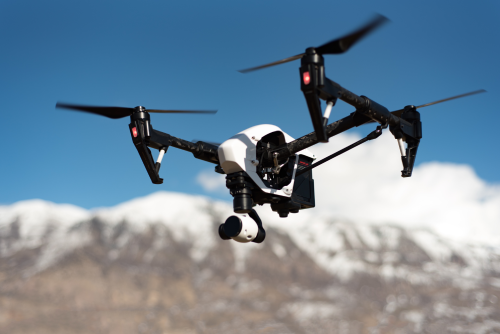
Most of the top mistakes to avoid in drone photography have nothing to do with buying a better drone. In India, beginners usually lose shots because of poor planning, harsh light, weak composition, rushed flying, and avoidable safety mistakes. Fix those habits, and even a modest camera drone can produce images that look far more professional.
Quick Take
- Do not take off just because the battery is full. Decide your subject, angle, and first three shots before launch.
- Soft light usually beats harsh midday sun for landscapes, buildings, and travel photos.
- Flying higher is not always better. Many drone photos improve when you stay lower and closer to the subject, while remaining safe and legal.
- Auto mode is useful, but do not trust it blindly. Watch exposure, white balance, and focus.
- A clean lens, calm weather, and steady hovering matter more than many beginners realise.
- Respect Indian airspace rules, privacy, local restrictions, and crowd safety. Always verify the latest official guidance before flying.
- Shoot more than one version of the same scene: wide, medium, top-down, and one tighter frame.
- Edit with restraint. Over-saturated skies and fake-looking HDR quickly ruin otherwise good images.
| If your drone photo looks… | The likely mistake | What to do instead |
|---|---|---|
| Flat and boring | Flying too high in harsh light | Fly lower, shoot earlier or later in the day |
| Soft or blurry | Wind, poor hover, dirty lens, wrong exposure | Clean the lens, check wind, slow down, watch settings |
| Too bright or washed out | Highlights blown in Auto mode | Monitor exposure and preserve highlights |
| Cluttered | No clear subject or messy frame edges | Simplify the composition and reframe |
| Odd colours | Auto white balance shifting | Set a fixed white balance when possible |
Why beginners make these mistakes
Drone photography feels easy because modern drones do so much on their own. GPS stabilisation, obstacle sensing, smart modes, and auto exposure can create the impression that the drone will “figure it out.”
It will not.
A drone is just a flying camera platform. The image still depends on light, framing, timing, safety, and judgment. That is why two people can fly the same model at the same location and come back with completely different results.
Top mistakes to avoid in drone photography
1. Taking off without a shot plan
This is the most common beginner mistake.
You arrive at a fort, beach, farm, resort, or lake, launch immediately, and start wandering in the air. The result is usually random footage, average photos, low battery, and no clear keeper shot.
Before you fly, answer three questions:
- What is the subject?
- What is the best angle for it?
- What are the three shots I must get before landing?
A simple plan might look like this:
- One wide establishing shot
- One lower-angle image with foreground
- One top-down or geometric shot
This matters even more in India, where weather, people, security staff, and local restrictions can change your window quickly. A shot plan keeps you efficient.
2. Ignoring airspace rules, permissions, and privacy
A beautiful location is not automatically a legal or appropriate place to fly.
Beginners often assume that a beach, hill station, temple town, tourist point, or open field is fine because other people are taking photos there. Drone flying is different. Airspace, local restrictions, event permissions, and privacy issues may still apply.
Be especially careful around:
- Airports and sensitive areas
- Government buildings and strategic locations
- Crowded tourist spots
- Religious spaces and events
- Residential neighborhoods
- Weddings and private properties
- Wildlife areas and bird habitats
If your drone, use case, or location involves DGCA compliance, Digital Sky processes, NPNT-related requirements, or commercial operations, verify the latest official rules before flying. Do not rely on old YouTube videos, social media comments, or what “someone at the location” says.
Also remember: legal does not always mean respectful. Avoid hovering near balconies, homes, hotel windows, or people who clearly did not consent to being filmed.
3. Shooting in bad light and expecting cinematic results
Light matters more than camera specs.
Many beginners fly in the middle of the day because that is when they are free. Unfortunately, strong overhead sun often creates:
- Harsh shadows
- Flat colours
- Bright roofs and roads
- Washed-out skies
- Less texture in landscapes
For better drone photos, softer light usually works best:
- Early morning for cleaner light and calmer wind
- Late afternoon or sunset for warmer tones and longer shadows
- Slightly overcast days for even exposure in some city and real-estate scenes
India adds a few location-specific challenges:
- Summer heat can create haze and shimmer
- Winter in many cities can reduce clarity
- Coastal areas can turn windy very quickly
- Monsoon skies can be dramatic, but conditions can also change fast
If you must shoot at noon, look for scenes that suit it, such as top-down patterns, bright water, long roads, or graphic urban layouts.
4. Flying too high for every photo
New drone pilots love altitude. The problem is that many photos become less interesting as you go higher.
From too high up, the scene often turns into a flat map. You lose depth, texture, and subject separation. A building looks small, a road loses scale, and a lake becomes just another blue shape.
A better rule: do not ask “How high can I go?” Ask “How low can I safely and legally fly while keeping the subject clear?”
Often, the strongest image is not the highest one. It may be:
- Slightly above treetop level for a travel landscape
- Just high enough to reveal the shape of a property
- Low enough to keep a road, shoreline, or field pattern strong in the frame
Beginners often discover that dropping lower instantly makes the photo look richer and more immersive.
5. Trusting Auto mode too much
Auto mode is useful, especially when you are learning. But if you leave everything to the drone, the camera may make choices that do not match the scene.
Common problems include:
- Bright clouds becoming overexposed
- Shadows becoming too dark
- White balance shifting from shot to shot
- Focus not being where you expect
- ISO rising too much and adding noise
At minimum, learn these basics:
- ISO: The sensor’s sensitivity to light. Lower ISO usually means cleaner images.
- Shutter speed: How long the sensor captures light. It affects brightness and, in some cases, sharpness.
- White balance: How warm or cool the image looks. Auto white balance can change unpredictably.
- Exposure compensation: A quick way to brighten or darken the image in Auto mode.
A practical beginner habit is to use Auto to get close, then check the result and lock in what you can. A fixed white balance alone can make your set of photos look much more consistent.
6. Not watching exposure and dynamic range
Drone screens can be misleading in bright sunlight. A shot may look fine on the controller and disappointing later on a laptop.
The biggest exposure mistakes are:
- Blown highlights in clouds, water reflections, white buildings, and roads
- Deep blocked shadows in trees or under structures
- Underexposed scenes that get noisy when brightened later
If your drone supports it, use tools such as:
- Histogram
- Exposure warning or highlight warning
- RAW photo capture
- Bracketing for high-contrast scenes
A good beginner habit is to protect highlights, especially during sunrise, sunset, or scenes with reflective surfaces. It is usually easier to recover some shadow detail than fully blown highlights.
7. Ignoring composition because “the view is already amazing”
A drone gives you a new angle. It does not automatically give you a good composition.
Many weak drone photos have one thing in common: no clear subject. The frame shows “everything” but says nothing.
Look for:
- A dominant subject: a building, road, river bend, boat, cliff, field pattern
- Leading lines: roads, coastlines, bridges, canals
- Shapes and symmetry: farms, rooftops, pools, courtyards
- Foreground and depth: trees, rocks, ridges, structures
- Negative space: open areas that make the subject stand out
Also check the edges of the frame. Unwanted poles, half-cut buildings, random vehicles, and messy rooftops often slip in unnoticed.
A simple fix is to pause for two extra seconds before pressing the shutter and scan all four edges.
8. Flying too fast and reframing carelessly
Even for still photography, rushed flying creates poor photos.
When you race to a spot, stop abruptly, and grab the image immediately, you often end up with:
- Slightly tilted horizons
- Imperfect framing
- Motion blur in lower light
- Uneven hover in wind
- Weak timing
Instead:
- Slow down before reaching the final position
- Let the drone settle
- Fine-tune the frame
- Capture two or three small variations
- Recheck the horizon
If your drone has a slower flight mode such as Cine or Tripod mode, use it when composing carefully. It reduces sudden movement and helps with precision.
9. Skipping weather, wind, battery, and home-point checks
A lot of poor photos happen because the pilot was busy thinking about the shot and forgot the basics.
Always check:
- Wind at ground level and likely wind at altitude
- Battery health and remaining charge
- GPS lock and home point accuracy
- Return-to-home settings
- Satellite visibility in your environment
- Nearby obstacles such as wires, poles, cranes, and trees
This matters a lot in Indian conditions:
- Coastal wind can rise suddenly
- Hills and valleys can create unpredictable gusts
- Heat can affect battery performance
- Dust can reduce visibility and dirty the lens quickly
Do not use the last part of the battery for “just one more shot” over water, traffic, or a crowded area. That extra shot is rarely worth the risk.
10. Forgetting basic drone and lens prep
Sometimes the reason your photo looks bad is embarrassingly simple: the lens is dirty.
Before takeoff, check:
- Lens for fingerprints, dust, or haze
- Filter for smudges if you use one
- Propellers for damage or warping
- Gimbal movement
- Memory card space
- Battery seating
A tiny smear can make contrast drop and highlights bloom. Damaged props can create vibration, which affects hover stability and image sharpness. These are easy mistakes to avoid if you slow down for 60 seconds on the ground.
11. Using the wrong file settings for the job
Beginners often leave the camera on whatever setting was used last time.
That leads to problems like:
- JPEG only, when you later need editing flexibility
- A crop mode you forgot was enabled
- Wrong aspect ratio
- Very high frame rate for no reason when you actually wanted photos
- Panorama mode in a scene with movement that stitches badly
For drone photography, a good starting approach is:
- Shoot RAW if your drone supports it
- Keep JPEG as a quick preview if available
- Check aspect ratio before every flight
- Confirm photo mode versus video mode before takeoff
This becomes important on paid work, college projects, real-estate shoots, and travel once-in-a-lifetime locations. Discovering later that you captured the wrong format is painful.
12. Shooting only one angle and trying to fix everything in editing
Editing cannot rescue a weak image forever.
Another big mistake is taking one photo of a scene, assuming it is enough, and leaving. Later, you try heavy HDR, saturation, sharpening, and clarity to make it look “professional.”
Usually, that just creates:
- Fake-looking colours
- Haloes around buildings and trees
- Over-sharpened edges
- Plastic-looking water and sky
- Noise in shadows
A better approach is to capture options in the field:
- One high angle
- One lower angle
- One top-down
- One wider frame for context
- One tighter frame for detail
Then edit lightly. Good drone photos usually look natural, clean, and intentional. If the edit is doing all the work, the capture was probably weak.
A 5-minute pre-flight routine that prevents most mistakes
Use this every time, even for a casual outing.
-
Check whether the flight is appropriate – Verify airspace status, local restrictions, and property or event permission if relevant. – If in doubt, do not fly until you confirm.
-
Check the environment – Wind, weather, people, obstacles, birds, and takeoff/landing space.
-
Check the drone – Battery, props, lens, memory card, gimbal, home point.
-
Check the camera – Photo mode, RAW/JPEG, white balance, exposure, aspect ratio.
-
Decide the first three shots – Establishing shot, hero angle, and one creative variation.
This short routine saves battery, reduces stress, and improves the hit rate of good images.
Safety and legal mistakes that are never worth the shot
Some mistakes are not just bad for image quality. They are bad decisions, full stop.
Avoid these:
- Flying over crowds for dramatic event shots
- Chasing vehicles, trains, or boats too aggressively
- Hovering close to homes, windows, or private spaces
- Flying near power lines or communication towers
- Disturbing birds or wildlife for “epic” nature content
- Launching in high wind because the sky looks pretty
- Continuing the flight when the app, compass, GPS, or battery status is not normal
For Indian pilots, it is especially important not to assume that a location is usable just because it is popular on social media. Verify current official guidance, local restrictions, and site-specific rules before acting.
If you shoot for clients, also confirm:
- Location permission
- Client expectations
- Deliverables
- Whether your operation requires any compliance steps based on the drone type and use case
- Insurance or liability needs, if applicable
Common beginner mistakes in Indian shooting scenarios
Beaches, lakes, and backwaters
These locations look easy but often create trouble.
Common mistakes:
- Underestimating wind
- Overexposing reflections
- Flying too far over water on low battery
- Ignoring birds
- Taking only generic top-down shots
Better approach: Shoot early, keep a strong battery margin, protect highlights, and capture both shoreline geometry and one lower-angle frame for depth.
Cities, forts, and tourist spots
Common mistakes:
- Launching without checking restrictions
- Framing cluttered rooftops and wires
- Shooting at noon when everything looks flat
- Overlooking privacy and crowd issues
Better approach: Verify whether you should fly there at all, choose cleaner angles, and look for symmetry, roads, courtyards, or urban patterns instead of trying to show the entire city in one frame.
Hills, valleys, and forest edges
Common mistakes:
- Flying in gusty conditions
- Letting haze flatten the scene
- Going too high and losing depth
- Ignoring fast battery drain in difficult conditions
Better approach: Use ridgelines, layers, roads, and shadows to create depth. Fly conservatively and do not chase dramatic weather if you are not experienced.
Weddings, resorts, and private events
Common mistakes:
- Flying above people
- Skipping permissions
- Expecting great low-light quality from a small drone camera
- Relying on one rushed aerial shot
Better approach: Treat these as controlled shoots. Confirm permission first, stay away from crowds, choose safe takeoff zones, and plan a few simple, elegant frames instead of risky hero shots.
FAQ
Is Auto mode bad for drone photography?
No. Auto mode is fine for learning and for quick changes in light. The mistake is trusting it without checking exposure, white balance, and focus.
What is the best time of day for drone photography in India?
Usually early morning or late afternoon. These times often give softer light, better shadows, and calmer flying conditions than midday.
Should beginners shoot RAW or JPEG?
If your drone supports RAW, use it. RAW gives you more flexibility to recover highlights and adjust colour, while JPEG is useful for quick sharing.
Why do my drone photos look blurry even when the drone is stable?
Common causes are wind, a dirty lens, wrong exposure, missed focus, or slight movement while framing. Also check propeller condition and avoid rushing the shot.
Do I always need to fly high for good drone photos?
No. Many strong drone images are made at relatively lower, safer, legally appropriate heights where the subject still has shape, texture, and depth.
Can I fly at tourist spots in India if the area looks open?
Not automatically. Scenic and open do not mean permitted. Verify current airspace status, local restrictions, and any site-specific rules or permissions before flying.
How many photos should I take of one scene?
More than one, but with purpose. A good habit is to take at least three to five variations: wide, lower, top-down, tighter, and one alternate composition.
Do I need filters for drone photography?
Not always. For still photos, filters are situational. What you always need is a clean lens and correct exposure. If you use a filter, make sure it is actually helping and not degrading image quality.
What is the easiest way to improve my drone photos quickly?
Plan the shot before takeoff, shoot in better light, fly lower than you think, simplify the frame, and stop over-editing. Those five changes usually improve results immediately.
How do I avoid making legal mistakes with my drone in India?
Do not rely on memory or online hearsay. Verify the latest official guidance for your drone type, location, and purpose before flying, especially for commercial work, sensitive areas, or travel to unfamiliar places.
Final takeaway
If you want better drone photos, do not start by upgrading your drone. Start by fixing your habits: plan the shot, verify the location, fly conservatively, watch the light, compose with intention, and edit lightly. On your next flight, aim for just three well-planned images instead of 50 random ones.
