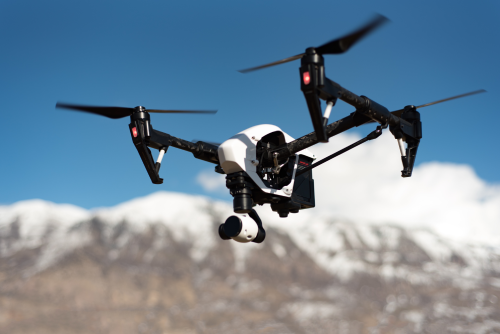
Learning how to shoot night drone footage safely is less about dramatic flying and more about disciplined planning. After dark, you lose depth perception, obstacle visibility, and often legal certainty too, so the best results come from simple shots, conservative camera settings, and knowing when not to launch.
Quick Take
- Before anything else, verify whether your night flight is legal and permitted for your location and use case in India.
- For most beginners, blue hour is a much safer and better-looking starting point than full darkness.
- Scout the location in daylight and mark wires, trees, towers, poles, rooftops, and landing hazards.
- Keep the drone close, slow, and within visual line of sight, not just visible on the screen.
- Do not rely on obstacle sensing alone. Many drone sensors work worse in low light.
- Use simple shots: slow climbs, gentle pans, and locked hovers with gimbal tilts.
- Remove ND filters, lock white balance, keep ISO low, and avoid fast frame rates unless the scene is very bright.
- If the area is crowded, near roads, full of cables, or you are unsure about airspace or permissions, skip the flight.
First check: is night flying allowed for your mission in India?
This is the part many creators rush past.
Drone operations in India are regulated, and night flights can carry additional restrictions, operational limits, or permission requirements depending on the drone, location, category of operation, and purpose of the shoot. DGCA guidance, Digital Sky processes, local administrative restrictions, and temporary security rules can change.
Before planning any night shoot, verify the latest official position on:
- whether your operation is allowed at that time of day
- airspace status for the location
- any required permissions or authorisations
- proximity to airports, helipads, defence areas, strategic sites, or other restricted zones
- property permissions for private venues
- local police or district-level restrictions if applicable
- privacy concerns around homes, hotels, terraces, and events
If you cannot clearly confirm the legal status of the flight, do not take off. In many cases, a safer alternative is to shoot during blue hour, use a tripod-based ground camera, or create a night look in post-production from legal low-light footage.
Why night drone work is much riskier than it looks
On the controller screen, a city at night can look bright and inviting. In the air, it is usually the opposite.
Here is what changes after dark:
- Obstacle visibility drops sharply. Wires, poles, cranes, flagpoles, and branches can disappear into the background.
- Depth perception gets worse. A lit building may look closer or farther than it really is.
- Orientation becomes harder. It is easier to lose track of the drone’s heading and position.
- Sensors may not save you. Obstacle avoidance and the visual positioning system, or VPS, often perform worse in low light, over dark surfaces, or above reflective water.
- Wind is harder to judge. City lights can make drift less obvious on screen.
- Glare and haze reduce contrast. In Indian cities, smog, dust, humidity, and mixed lighting can make the image look flatter than expected.
- You are more likely to overfocus on the image. That can make you ignore real-world safety around the aircraft.
Night footage is not just daytime flying with a darker exposure. It is a different kind of operation.
Start with blue hour, not full darkness
If you want night-looking drone footage safely, blue hour is your friend.
Blue hour is the short window after sunset, or before sunrise, when the sky still holds some colour and ambient light. Streetlights, car lights, signs, and buildings start to glow, but the environment is not yet completely black.
Why it helps:
- the sky keeps detail instead of becoming a blank black mass
- city lights stand out without clipping as badly
- autofocus and exposure behave more predictably
- the drone is easier to see and orient
- obstacles are easier to identify
- footage often looks more premium and less noisy
For beginners, the best “night” footage often comes from this period, not from flying much later. In India, where many areas have mixed LED lights, sodium vapour lamps, dust, and haze, blue hour usually gives cleaner results than late-night shooting.
One caution: even if there is still light in the sky, verify whether flying at that time is permitted for your mission. Do not assume “almost dark” is automatically fine.
Plan the shot in daylight
The safest night footage starts hours before takeoff.
Do a daylight recce
Visit the location in daylight and walk the exact launch, flight, and landing area. Look for:
- power lines and cable bundles
- telecom towers
- water tanks and terrace railings
- trees and thin branches
- unlit poles and signboards
- cranes, scaffolding, or construction equipment
- bird activity at dusk
- traffic, pedestrians, and gathering points
- smoke, fog, or dust sources
- nearby water that could affect orientation
In India, overhead wires are one of the biggest hidden hazards. Many of them are hard to see even in daylight, let alone at night.
Pick a conservative launch and landing zone
Your takeoff point should be:
- flat and stable
- away from roads and moving vehicles
- clear of people
- not directly under trees, cables, or terraces
- easy to return to visually
- usable for a controlled landing if GPS accuracy shifts slightly
For beginners, rooftops are usually a poor choice at night. Water tanks, parapet walls, railings, and nearby buildings add unnecessary risk.
Decide the shot before takeoff
Do not improvise your first night mission.
Write down one to three shots only, such as:
- slow vertical rise above an open field
- locked hover with gimbal tilt toward a lit building
- gentle yaw pan over an empty waterfront or open ground
If you launch first and “see what looks nice,” you are much more likely to overfly the wrong area or drift into obstacles.
Set home point and return settings carefully
Before takeoff:
- confirm the home point is correct
- set a return-to-home height that safely clears known obstacles
- check map orientation and telemetry
- make sure the app does not show warning messages you have ignored
Do not guess the tallest obstacle. Measure conservatively during your daylight scout.
Use a spotter if possible
A second person is extremely useful at night.
A spotter can:
- keep eyes on the aircraft
- warn you about people entering the landing area
- help confirm direction and altitude
- monitor surroundings while you focus on framing
For any meaningful night shoot, especially near urban areas, a spotter is a smart safety layer.
Night shoot checklist
Before you arm the motors, confirm all of this:
- legal status and permissions verified
- weather and wind checked
- daylight recce completed
- launch and landing area clear
- home point confirmed
- return-to-home height set
- batteries healthy and fully charged
- propellers undamaged
- lens cleaned
- ND filter removed
- maps loaded on the controller
- shot list fixed
- white balance locked
- focus checked
- spotter briefed, if present
If even one of these feels uncertain, pause the shoot.
Set up the drone and camera for low light
Drone setup
A few small setup choices make a big difference at night:
- Clean the lens carefully. Tiny smudges create ugly flares around streetlights.
- Remove ND filters. Neutral density filters are useful in bright daylight, but at night they usually block light you cannot afford to lose.
- Use healthy batteries only. Night is not the time to fly on an old battery with inconsistent performance.
- Avoid a fresh firmware gamble. Do not make your first night flight right after a major update.
- Check orientation lights. If your drone supports visible position lights or an approved strobe option, it may help you keep orientation, but it does not replace legal compliance or line of sight.
- Do not overtrust obstacle sensing. Consider it backup, not permission to fly close.
Also remember that some drones hover less confidently over very dark ground or reflective surfaces because the downward sensing system has less visual detail to work with.
Camera settings that usually work better at night
Small drone sensors struggle in low light, so the goal is not to make night look like daylight. The goal is to get a clean, stable image with controlled highlights.
| Setting | Safer starting point | Why it helps |
|---|---|---|
| Frame rate | 24 fps or 25 fps | Lower frame rates allow slower shutter speeds and more light. In India, 25 fps often works well under 50 Hz street lighting. |
| Shutter speed | Around double the frame rate, such as 1/50 for 25 fps | Gives natural motion blur without forcing ISO too high. |
| ISO | Keep it as low as practical | High ISO creates noise very quickly on drone cameras. |
| White balance | Lock it instead of using auto | Prevents colour shifts when the drone turns toward different lights. |
| Focus | Set focus on a bright subject and lock if possible | Stops hunting and soft clips mid-shot. |
| Picture profile | Normal or a mild flat profile | Heavy log-style profiles can look noisier and need more work in editing. |
| Exposure | Slightly protect highlights | Blown streetlights and signboards are hard to recover later. |
A few practical notes:
- If your drone has an adjustable aperture, open it wide first.
- If your footage smears when you move, increase shutter a little and accept a darker image.
- Avoid 50 or 60 fps unless the area is very bright. Higher frame rates demand faster shutter speeds, which usually means more noise at night.
- Do not use digital zoom. It makes low-light footage look worse.
- Slight underexposure is often better than overexposed lights and muddy shadows.
Fly simple, slow, and within sight
At night, boring flying is good flying.
A safe flying pattern
- Take off and hover low first. Check stability, GPS lock, exposure, and control response.
- Climb to a safe working height slowly. Do not rush to the shot.
- Pause and assess orientation. Make sure you know exactly where the drone is facing.
- Fly the shot with gentle stick input. Smooth is safer and looks better.
- Keep the aircraft closer than you think you need to. Video quality is useless if you lose situational awareness.
- Return early. Leave a generous battery reserve for re-approach and landing.
What to avoid at night
Avoid these, especially if you are new:
- sport mode
- fast orbits around buildings
- backward flight
- low passes near trees, poles, or terraces
- flying over roads, crowds, or active events
- tracking vehicles or people
- flying beyond comfortable visual line of sight
- long flights that push battery confidence
Visual line of sight means you can see and orient the aircraft with your own eyes, not just on the app screen. If you cannot reliably do that, the flight is no longer comfortably under control.
If you lose orientation
Do not stab at the sticks.
Instead:
- stop and let the drone hover
- check the map and heading indicator
- yaw slowly to re-identify direction
- return using the clearest, pre-planned route
- land and reset if needed
Panic causes most bad decisions.
Safer night shot ideas for beginners
Some night shots are naturally more forgiving than others.
| Safer shot type | Why it works | Avoid for now |
|---|---|---|
| Locked hover with slow gimbal tilt | Minimal aircraft movement, easy to control | Low sweeps close to buildings |
| Gentle yaw panorama in an open area | Predictable and easy to track visually | Fast orbits around structures |
| Slow vertical rise over clear ground | Good sense of space and easy clearance planning | Flying between poles, trees, or rooftops |
| Straight reveal with lots of side clearance | Simple flight path | Reverse flight near obstacles |
| High, static establishing shot over an empty area | Stable and cinematic | Chasing traffic, crowds, or event processions |
A good rule: if the shot needs aggressive lateral movement, tight spacing, or perfect sensor performance, it is a bad beginner night shot.
Post-production can improve the image, not the safety
Editing should help you polish a careful flight, not rescue a reckless one.
Useful night workflow tips:
- apply light noise reduction before heavy colour work
- reduce highlights and whites first
- avoid lifting shadows too aggressively
- add contrast carefully so the image does not get crunchy
- keep sharpening low
- crop a little if needed instead of flying too close in the first place
- if you shot during blue hour, deepen blacks slightly for a stronger night feel
Many beginners ruin decent night footage by trying to brighten everything. Let the scene stay dark where it should be dark.
Common mistakes
1. Flying the first night shoot in a complex city location
Dense city centres look attractive, but they bring cables, buildings, reflections, crowds, security concerns, and airspace complications. Start in a simple, open, legal location.
2. Trusting obstacle avoidance too much
Low light can reduce the reliability of obstacle sensors. They are a backup layer, not a guarantee.
3. Shooting too late instead of at blue hour
Midnight may sound cinematic, but blue hour is usually easier to expose, easier to fly, and easier to grade.
4. Leaving everything on auto
Auto ISO, auto white balance, and continuous autofocus can cause flicker, colour shifts, and pulsing exposure. Lock what you can.
5. Overexposing lights
Streetlights, headlights, signboards, and decorative lighting clip fast. Protect highlights and accept some darkness.
6. Launching from a bad spot
Road edges, terraces, crowded sidewalks, and dusty construction areas create unnecessary takeoff and landing risk.
7. Flying over people, traffic, weddings, or public gatherings
This is unsafe, often legally sensitive, and a privacy risk. In India, avoid festival areas, baraats, fireworks, religious gatherings, and packed public spaces entirely unless you are specifically authorised and professionally prepared.
8. Staying up too long
Night makes people hesitant to land, then suddenly overconfident once the shot looks good. Land earlier than you normally would in daylight.
FAQ
FAQ
Can beginners shoot night drone footage safely?
Yes, but only in a conservative way. Start with blue hour, choose an open location you already know well, keep the shot simple, and verify legal permission first. If the site is urban, crowded, or unfamiliar, it is not a good beginner night mission.
Is it legal to fly a drone at night in India?
Do not assume it is. Night operations may have additional restrictions, conditions, or permission requirements depending on the mission and location. Always verify the latest official DGCA, Digital Sky, airspace, and local authority guidance before flying.
Is blue hour better than full darkness?
For most creators, yes. You get better detail in the sky, cleaner footage, easier orientation, and a more forgiving exposure range. It often looks more cinematic too.
What frame rate should I use for night drone video?
Usually 24 fps or 25 fps. In India, 25 fps is often a smart choice because many artificial lights operate in a 50 Hz environment, which can help reduce visible flicker when paired with an appropriate shutter speed such as 1/50.
Should I use ND filters at night?
Usually no. ND filters reduce light, which is the last thing you want after dark. Remove them unless you have a very specific creative reason and enough light to support it.
Can obstacle avoidance protect me at night?
Not reliably enough to trust it blindly. Low light, dark surfaces, reflections, and thin objects such as wires can all reduce effectiveness. Fly as if obstacle sensing might not save you.
Why does my night footage look noisy even when the scene seems bright?
Because bright point lights do not mean the whole scene is bright. Most of the frame is still dark, so the camera raises ISO or uses slower shutter speeds. Small drone sensors show noise quickly in those conditions.
Can I shoot weddings, traffic, or crowded public events at night?
That is a poor idea for most hobbyists and beginners. It adds serious safety, privacy, and compliance concerns. If the area is crowded or unpredictable, do not fly unless the mission is properly authorised, controlled, and professionally managed.
What should I do if I lose orientation?
Stop moving, hover, check the map and heading, yaw slowly, and return on a safe route you already planned. Do not panic and do not keep experimenting with stick inputs.
Final takeaway
To shoot night drone footage safely, think like a cautious pilot first and a filmmaker second: verify the legal status, scout in daylight, start with blue hour, use simple camera settings, and fly slow in open space. If anything feels uncertain, such as airspace, obstacles, crowd density, or your ability to maintain visual line of sight, do not launch. The best night footage comes from restraint, not risk.
