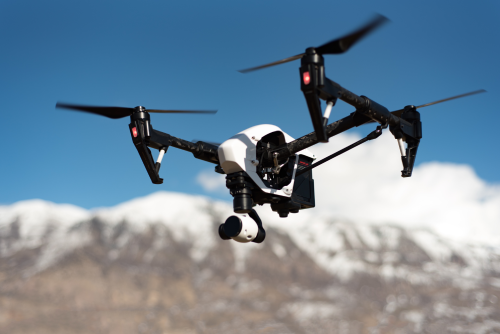
Wind is one of the fastest ways to ruin otherwise good drone footage. If you want to know how to shoot drone videos in windy conditions, the answer is not just “fly carefully” but to plan differently, simplify your shots, and know when to cancel. For Indian creators shooting beaches, hills, terraces, farms, real estate, or travel videos, wind management is as important as camera settings.
Quick Take
- Wind is usually stronger higher up than it feels on the ground.
- Treat the manufacturer’s published wind-resistance figure as a limit, not a target.
- For windy shoots, fly out into the wind first so the return leg is easier.
- Keep the drone lower, closer, and in open space.
- Use simple moves: straight pushes, gentle reveals, and short clips.
- Avoid forcing “cinematic” slow shutter settings if the drone is being buffeted. A faster shutter often gives cleaner usable footage.
- Watch groundspeed and battery together. A drone with plenty of battery can still struggle to come home in a headwind.
- If the drone cannot hold a clean hover near you, the footage farther away will usually be worse, not better.
First decide if you should fly at all
The best windy-day technique is sometimes not to fly.
A lot of drone losses happen because pilots judge conditions from ground level, where buildings, trees, walls, or parked vehicles block the wind. Once the drone climbs above those windbreaks, it may face much stronger air.
Good reasons to postpone
Cancel or delay the shoot if you notice any of these:
- Gusts are inconsistent and keep changing direction.
- Tall trees are bending noticeably.
- Dust, loose leaves, plastic, or sand are blowing across the takeoff area.
- The drone leans heavily just to hold position during a low hover test.
- You are near the coast, on a hilltop, beside cliffs, or between buildings where turbulence is common.
- Rain, lightning, a dust storm, or a thunderstorm is possible.
- You need precise movements close to people, structures, vehicles, or wires.
In India, this matters even more during monsoon transitions, coastal sea-breeze hours, hill-station weather shifts, and pre-storm evenings. Conditions can change quickly.
Use the drone’s wind rating carefully
Many drones list a maximum wind resistance. Use that figure only as a rough ceiling in ideal conditions with a healthy battery and an experienced pilot. For beginners, a smart rule is to stay well below it.
Why? Because the published number does not guarantee good footage. A drone may technically remain airborne while still producing shaky, tilted, or inconsistent video.
Why wind affects drone video so much
Even if a modern drone has a stabilised gimbal, wind still shows up in your footage.
Here’s how:
- The drone tilts harder to fight the wind. That can create jerky movement or visible corrections.
- The gimbal reaches its limits in stronger gusts, especially during yaw turns or sideways movement.
- Micro-corrections become visible as small twitches, drifting, or uneven speed.
- Battery drain increases because the motors work harder.
- Return performance drops if the drone is flying into a headwind.
- Your original shot plan breaks down because wind changes timing, framing, and subject distance.
This is why windy footage often looks less “cinematic” even when it seems stable on the phone screen in the field.
Plan windy shoots differently
If you want usable footage, your shoot plan should change before takeoff.
1. Check both average wind and gusts
A steady breeze is easier to handle than sudden gusts. When checking weather, look at:
- Wind speed
- Gust speed
- Direction
- Rain probability
- Nearby storm activity
You do not need a perfect forecast, but you do need a realistic one. If gusts are much stronger than the average wind, expect the drone to behave unpredictably.
2. Understand the terrain
Wind behaves differently depending on the location.
Common Indian locations where wind gets tricky
- Beaches and coasts: Sea breeze can build quickly in places like Goa, Chennai, Kochi, or Visakhapatnam.
- Hill stations and valleys: Wind funnels through gaps and rises over ridges in places like Himachal, Uttarakhand, or the Western Ghats.
- Urban rooftops and terraces: Air bounces off buildings and creates turbulent pockets.
- Open farmland: Steady wind is common, but gusts can be stronger than expected because there is little shelter.
- Lakes, dams, and open water: Wind over water is often smoother but stronger.
Avoid launching right beside walls, parked cars, terraces with parapets, or building corners. Turbulence near obstacles can be worse than the open area just a few metres away.
3. Build the shot list around safer moves
A windy-day shot list should favour reliability over ambition.
Good options:
- Slow forward push
- Gentle backward reveal in open space
- Low-altitude top-down pass
- Static hover with a slow gimbal tilt
- Short rise-and-reveal in mild wind
Poor options:
- Tight orbits around a subject
- Sideways tracking close to obstacles
- Fast backward pull-outs
- High panoramic hovers
- Gap flying or precision moves between structures
4. Fly out into the wind first
This is one of the simplest and best habits.
If you fly away from yourself with the wind behind the drone, it may look fine on the outbound leg. But when you turn around, the drone may face a strong headwind and struggle to return.
Flying out into the wind first gives you a safer margin on the way back, when the battery is lower.
5. Keep batteries, props, and the aircraft in top shape
Wind punishes weak hardware.
Before flying:
- Use a fully charged, healthy battery
- Check props for chips, cracks, or bends
- Make sure the gimbal clamp and cover are removed
- Confirm the home point is correct
- Check compass and GPS status as the manufacturer recommends
- Calibrate only when actually needed, not randomly in a poor location
A small prop defect that might be manageable in calm weather can become a bigger problem in wind.
Camera settings that help in windy conditions
Camera settings cannot fix bad flying, but they can make the footage more usable.
Use a slightly faster shutter than your “cinematic” habit
Many drone shooters follow the 180-degree shutter rule for natural motion blur. That works well in stable conditions.
In wind, too much motion blur can make tiny jolts look worse. If the drone gets bumped during a move, the blur smears the frame and feels messy.
So on windy days:
- Do not force a very slow shutter just because it is “cinematic”
- Use a faster shutter if needed for a cleaner image
- Use a lighter ND filter, or no ND filter at all, if the wind is causing visible instability
For beginners, slightly sharper footage is often easier to salvage in editing than blurry, wobbly footage.
Shoot higher frame rates if your drone allows it
If the drone supports it cleanly, recording at 50fps or 60fps can help because:
- You can slow footage down in post
- Small bumps feel less harsh
- Motion becomes easier to smooth in the timeline
If you are delivering at 25fps or 30fps, this gives you flexibility.
Lock white balance
Auto white balance can shift during a cloudy, windy day as the drone changes angle and the light changes between sky, ground, and water.
Set white balance manually when possible. This keeps colour more consistent across clips.
Keep ISO under control
Windy conditions often come with haze, cloud cover, or late-evening light. Do not raise ISO carelessly just to keep a slow shutter. Noise plus shakiness is a bad combination.
Prioritise:
- Safe flight
- Clean exposure
- Usable motion
Use gentle control settings
If your drone allows custom stick sensitivity, expo, yaw speed, or gimbal tilt speed, a softer setting can help smooth your hands.
But remember the trade-off:
- Softer controls improve smoothness
- Faster controls improve the ability to react to gusts
For most pilots, a balanced setup works best. Do not make the drone so sluggish that you cannot correct quickly.
Flight mode choices in wind
Different modes behave differently.
Cine mode
Useful for:
- Smoother stick response
- Slow, deliberate movements
- Mild wind
Not ideal when:
- The drone needs more speed and authority to fight a headwind
- You are farther away and need quicker control response
Normal mode
Usually the best all-round choice in windy conditions. It gives better control and speed without becoming too aggressive.
Sport mode
This can help if the drone is struggling to make progress into the wind on the way home.
But be careful:
- On many drones, safety features may be reduced in sport mode
- Braking distance increases
- Small mistakes become bigger mistakes quickly
Use it only if you know your drone well and have open space.
Step by step: how to shoot drone videos in windy conditions
1. Do a low hover test
Take off in an open area and hover low for a short moment.
Check for:
- Excessive drift
- Constant heavy leaning
- Gimbal twitching
- Horizon tilt
- Warning messages
- Odd motor sound
If the drone already looks stressed near the ground, do not continue upward hoping it will improve.
2. Climb slowly and watch the change
Wind often gets stronger with altitude. Climb gradually, pause, and assess.
Ask yourself:
- Is the drone still holding position well?
- Has the gimbal started to jerk?
- Is the aircraft angle noticeably more aggressive?
- Is the live view still stable enough for the shot?
If the answer is no, come lower or abort.
3. Stay lower than you normally would
A lower altitude often gives better footage on windy days anyway.
Benefits:
- Less exposure to stronger wind aloft
- Better texture in roads, crops, rooftops, and landscapes
- Easier judging of movement speed
- Safer recovery if something changes
This does not mean flying too low near obstacles. It means avoiding unnecessary height.
4. Keep the drone closer than usual
Distance hides problems until it is too late. In wind, keep a tighter working radius.
When the drone is closer:
- You can see attitude changes faster
- You notice drift sooner
- You use less battery getting back
- The signal link is less likely to be stressed by buildings or terrain
5. Use simpler movement patterns
Windy footage improves when the pilot reduces complexity.
Try this order of difficulty:
- Static hover with gimbal tilt
- Straight forward or backward move
- Gentle rise or descent
- Combined move with light yaw
- Orbit or side track
If conditions are not calm, stop before step 5.
A practical example
Suppose you are filming a fort, farm, resort, or villa on a breezy afternoon.
Instead of trying a dramatic orbit around the structure, do this:
- Start lower and wider
- Fly a straight, slow approach
- Add a small gimbal tilt upward
- Stop the clip early
That single clean move will often look better than a longer, wind-affected orbit.
6. Avoid sideways shots unless the air is calm
Side tracking is one of the first shots to break in wind. The drone must fight crosswind while maintaining speed and direction, and the corrections become visible.
If you need the feeling of sideways motion, consider:
- Repositioning so the drone flies more into or away from the wind
- Using a slower shot
- Cropping slightly in post and adding mild stabilisation
7. Watch groundspeed, not just battery percentage
Battery percentage alone is misleading in wind.
A more useful question is: how fast is the drone actually moving over the ground on the return leg?
If the drone is pointing home but making slow progress, come lower, reduce distance, and be ready to prioritise return over filming.
8. Land early
In wind, do not squeeze out the last few minutes.
Land while you still have margin for:
- A missed first landing attempt
- A sudden gust
- A manual reposition
- A go-around if the landing zone becomes unsafe
That extra buffer matters more than one more clip.
Best shots and worst shots in wind
| Shot type | In windy conditions | Why |
|---|---|---|
| Static hover with slow gimbal tilt | Good | Minimal aircraft movement, easier for gimbal to manage |
| Straight push-in or pull-back in open space | Good | Predictable path and speed |
| Low top-down pass | Good | Lower altitude often means less wind |
| Short rise-and-reveal | Fair | Works in mild wind if kept simple |
| Sideways tracking shot | Poor | Crosswind corrections become visible |
| Orbit around a subject | Poor | Constant direction changes expose instability |
| High panoramic hover | Poor | Stronger wind at height, more drift |
| Tight backward move near obstacles | Very poor | Reduced margin and harder visual judgement |
If the conditions are marginal, choose only from the top half of the table.
Takeoff and landing tips for windy days
Takeoff and landing are where many windy flights become messy.
For takeoff
- Use the widest, cleanest open area available
- Face the drone into the wind if practical
- Avoid loose dust, sand, or dry grass getting into motors or the gimbal
- Do not launch from a terrace edge or right beside a building corner
- Wait a few seconds after takeoff to judge stability
For landing
- Land into the wind when possible
- Descend slowly and expect a small drift correction
- Keep the area clear of people
- Be ready to pause auto-landing if the drone gets pushed off line
- Do not try hand-catching in wind unless you are highly experienced and the drone design and manufacturer guidance allow it
For most beginners, a proper ground landing in a clear space is the safer choice.
Safety, legal, and compliance notes for India
Windy conditions reduce your safety margin, so your legal and operational judgement should become more conservative, not less.
Keep these points in mind:
- Verify the latest DGCA, Digital Sky, and local site restrictions before every shoot.
- Be extra careful near airports, helipads, government or military areas, critical infrastructure, and temporary event restrictions.
- Do not fly over crowds, moving traffic, or densely occupied spaces just because the shot looks dramatic.
- If you are shooting commercially, confirm site permissions and check whether your insurance or client agreement has weather-related conditions.
- Respect privacy. Wind can push a drone off the line you intended, so give extra distance from homes, balconies, and people.
If the weather is unstable, a postponement is often the professional decision.
Common mistakes people make
Trusting the conditions at ground level
Calm takeoff air does not mean calm air at shooting height.
Flying downwind first
This is a classic mistake. The outbound shot feels easy, but the return becomes the real problem.
Going too high for no reason
Higher is not automatically more cinematic. On windy days, higher often means shakier.
Chasing motion blur too hard
A heavy ND filter and slow shutter can make gust-induced bumps look worse.
Using Cine mode when the drone needs power
Cine mode is smooth, but it may not give you enough speed to fight wind cleanly.
Attempting orbits in marginal conditions
Orbit shots reveal instability quickly. Many pilots keep trying them because they look great in calm weather.
Ignoring return-to-home behaviour
A return-to-home setting that feels fine on a calm day may be less useful in stronger wind, especially if the drone climbs into rougher air. Review your settings before takeoff.
Trying to save a bad flight in post
Editing can improve windy footage, but it cannot turn a badly buffeted, badly exposed clip into a premium result.
Editing tips for windy drone footage
Good editing can rescue a usable clip, but only if the original footage is reasonably clean.
What helps
- Trim aggressively and keep only the smoothest portion
- Apply mild stabilisation, not extreme stabilisation
- Slightly crop if needed to hide edge wobble
- Slow the footage down if you recorded at a higher frame rate
- Correct small horizon shifts carefully
- Cut before and after visible gust hits rather than trying to hide everything
What usually makes it worse
- Over-stabilising until the image warps
- Adding strong speed ramps to already uneven movement
- Pushing sharpness too far on noisy clips
- Using motion blur plugins to fake smoothness
The best edit strategy is simple: keep the clip short, controlled, and believable.
FAQ
How windy is too windy for drone video?
There is no single number for every drone or every pilot. Start with the manufacturer’s guidance, then stay well below it if you are inexperienced. If the drone struggles to hold a clean low hover, it is already too windy for quality video.
Should I use ND filters in windy conditions?
Only if the drone is flying smoothly enough to benefit from them. In gusty wind, a lighter ND or no ND is often better than forcing slow shutter speeds and ending up with smeared motion.
Is Cine mode best for windy flying?
Not always. Cine mode can smooth your inputs, but it also reduces responsiveness and speed. In moderate wind, Normal mode is often the better balance.
Can I trust Return to Home in strong wind?
Use it as a tool, not a guarantee. In stronger wind, especially if the drone climbs higher during return, conditions may worsen. Know your settings and be ready to intervene manually.
Why does my horizon tilt in windy footage?
Because the drone is leaning and the gimbal is working harder to compensate. Minor tilt can sometimes be corrected in editing, but repeated tilt is a sign the conditions may be too rough.
Is it safer to fly lower in wind?
Often yes, because wind usually increases with height. But low flying near trees, poles, terraces, or buildings can create turbulence, so choose open lower space rather than obstacle-filled lower space.
What shots work best on windy real-estate or travel shoots?
Short forward moves, gentle reveals, and static hovers with gimbal tilt are usually the safest. Avoid long orbits and side tracking unless the air is stable.
Should beginners hand-catch a drone in wind?
No. It adds risk at exactly the moment the aircraft is already harder to control. A clear ground landing area is the better option for most pilots.
Final takeaway
If you want clean drone video in wind, stop thinking like a calm-day pilot. Test low, fly into the wind first, keep the drone closer and lower, use simpler shots, and land early. And if the aircraft cannot hold a steady hover near you, do not try to force a cinematic result farther away.
