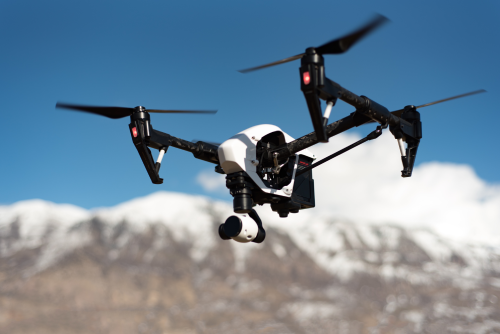
Agriculture in India is becoming more time-sensitive, data-driven, and expensive to manage. That is why drones are transforming agriculture in India: they help farmers and agri-service providers spray faster, inspect crops earlier, map fields more accurately, and respond to problems with less guesswork. The real value comes when drones are used for the right job, in the right crop, with proper training, planning, and compliance.
Quick Take
- In Indian farming, drones are most useful today for spraying, crop scouting, field mapping, plant health checks, stand counting, and documentation after weather damage.
- Their biggest advantage is not just speed. It is timely action, more consistent coverage, and reduced human exposure to chemicals during spraying.
- Drones are especially useful in wet fields, uneven terrain, orchards, and time-sensitive pest or nutrient management windows.
- They are not a magic fix. A drone cannot correct poor agronomy, wrong pesticide choice, bad irrigation, or weak on-ground diagnosis.
- Small farmers do not always need to buy a drone. In many cases, hiring a trained service provider or working through an FPO is the better option.
- Before flying or spraying, verify the latest DGCA, Digital Sky, airspace, pilot, equipment, and local agriculture-related rules. For chemical application, also follow product labels and safety instructions.
Why Indian agriculture is ready for drones
Indian agriculture has a few practical challenges that make drones especially relevant.
First, farm work is increasingly time-sensitive. A pest outbreak, nutrient deficiency, or irrigation failure can spread fast, especially when weather is unstable. If action is delayed by even a few days, yield and quality can drop.
Second, labour is not always available when needed. Manual spraying in particular is difficult, tiring, and often unsafe. In crops like paddy, cotton, sugarcane, and many horticulture crops, farmers may struggle to find enough labour exactly when a spray window opens.
Third, input costs matter more than ever. Water, chemicals, fertilisers, fuel, and labour all affect margins. Drones cannot eliminate these costs, but they can help farmers apply inputs more carefully and identify weak spots before the whole field suffers.
Fourth, Indian farms are diverse. Conditions can vary sharply between one plot and the next. In one section of a field, there may be waterlogging. In another, nutrient stress. In orchards, some trees may be healthy while others lag behind. Drone imaging helps reveal these patterns quickly.
There is one more reason adoption is rising: many Indian farms are small and fragmented, but service models are improving. Farmer Producer Organisations, or FPOs, cooperatives, agri-startups, and local drone operators can cluster nearby farms and make drone use more practical.
What agricultural drones actually do
Not every farm drone does the same job. Some are built mainly for spraying. Others are used for mapping, photography, and crop analysis.
| Use case | What the drone helps with | Best fit in India | Main caution |
|---|---|---|---|
| Spraying | Applies crop protection or other approved inputs over fields or orchards | Paddy, cotton, soybean, maize, sugarcane, orchards, vineyards, clustered farms | Requires calibration, weather checks, chemical safety, and rule compliance |
| Crop scouting | Captures images to spot stress, patchy growth, standing water, lodging, or visible pest/disease patterns | Medium to large fields, cluster farming, orchards, plantations | Images must be checked against ground reality |
| Field mapping | Measures area, field shape, drains, bunds, rows, gaps, and terrain patterns | Land development, irrigation planning, farm records | Not every map is legal survey proof |
| Plant counting and stand assessment | Detects missing rows, poor emergence, survival after transplanting | Maize, cotton, vegetables, nurseries, orchards | Accuracy depends on crop stage and image quality |
| Irrigation and drainage monitoring | Finds waterlogging, blocked channels, uneven moisture patterns visible from above | Paddy, low-lying fields, canal-fed areas, heavy rain periods | Drone images show symptoms, not always the root cause |
| Documentation | Creates before-and-after records after storms, flooding, hail, or field operations | Insurance support, advisory records, project monitoring | Acceptance depends on the organisation requesting the evidence |
The biggest transformation: spraying is becoming faster and safer
For most people, the first visible change in agricultural drone use is spraying.
A spray drone is usually a multirotor drone that carries a tank and applies liquid through nozzles while flying a planned route. In practical terms, this changes farm operations in three important ways.
It reduces drudgery
Manual spraying is exhausting. Workers carry heavy tanks, walk through muddy or dense fields, and may still be exposed to chemicals even when using basic protection. A drone operator stands outside the crop area and works from the edge of the field.
That does not remove all risk, but it can reduce direct exposure for field workers when the operation is done properly.
It improves timing
In agriculture, timing often matters more than perfection.
If a paddy field is too wet to enter, or if rain has narrowed the spray window, a drone may let the farmer act sooner than a manual team could. The same is true in crops where pest pressure rises suddenly and delay becomes costly.
A simple example: after a few humid days, a cotton grower notices early signs of trouble in some sections. Instead of waiting for a larger labour team, a drone service operator can cover the affected area quickly, provided the field is suitable and all safety and compliance checks are done.
It can improve consistency
When a drone is well-calibrated and the operator uses the right flight height, speed, nozzle setup, and overlap, application can be more consistent than uneven manual walking patterns.
But this is where many people overestimate drones. Good spraying depends on more than the drone itself. It depends on:
- the crop stage
- canopy density
- weather
- droplet size
- correct dosage
- water quality
- product suitability
- operator skill
A drone cannot make a bad spray plan good.
Where spray drones make the most sense
Spray drones tend to be most useful when:
- fields are wet or hard to access
- labour is short during peak spray windows
- crops are planted in clusters
- the crop has time-sensitive pest or disease management needs
- orchards or uneven terrain make manual work slower
- the farmer wants to reduce repeated foot traffic through the field
Drones are improving crop scouting and early problem detection
The second major shift is in how farmers and advisors inspect fields.
Traditionally, crop scouting means walking through a field, checking leaves, stems, soil moisture, weed patches, and visible symptoms. That still matters. But walking only gives a limited view at ground level.
A drone adds the top view.
Standard camera scouting
Many agricultural inspections can be done with a normal high-resolution camera, often called an RGB camera. This is the same basic kind of image you see in a standard photo, but from above.
These images can help spot:
- patchy growth
- waterlogging
- lodged crop after wind or rain
- missing rows
- visible weed patches
- uneven plant colour
- damaged field bunds or blocked drainage lines
In a soybean field after heavy rain, for example, a drone image may quickly show where water is standing longer than it should. That lets the farmer or advisor focus labour on clearing the right drain first instead of searching the whole field.
Multispectral imaging
Some farm drones or payloads use multispectral cameras. These capture light beyond what the human eye normally sees and can help assess plant vigour patterns.
This is useful, but it is often oversold.
A vigour map can show where plants are weaker or stronger. It cannot, by itself, tell you exactly why. The cause may be nutrient stress, pest pressure, disease, poor germination, salinity, irrigation issues, or something else.
That is why drone data should be combined with ground checks. This is often called ground truthing, meaning you confirm the drone’s findings by physically inspecting selected spots.
Field mapping is helping farmers plan better
Another important transformation is planning.
A drone can quickly create a top-down stitched image of a field and help measure area, shape, slope patterns, rows, bunds, and surface features. For Indian farms, that can be useful in several practical ways.
Better irrigation and drainage planning
In many fields, the problem is not lack of water alone. It is uneven water movement.
Drone maps can help identify:
- low spots where water collects
- damaged channels
- poor levelling
- bund weak points
- runoff patterns after rain
This is especially valuable in low-lying or flood-prone regions, as well as fields where drainage problems return every season.
Better planting and layout decisions
For orchards, vineyards, and large row-based planting, drone maps can help with:
- row spacing checks
- missing plant identification
- field boundary planning
- road and access route design
- irrigation line planning
Better records
Area measurement and visual documentation can support farm records, project reporting, and contractor verification.
However, readers should be careful here: not every drone map is a legal land survey. If the purpose is legal documentation, boundary dispute resolution, or official submission, verify what level of accuracy and approval is required.
Orchards, plantations, and high-value crops often see benefits sooner
Drones are especially attractive in orchards and other high-value crop systems because the value of each plant is higher and visual variability is easier to act on.
In crops such as mango, pomegranate, grapes, citrus, tea, coffee, and similar plantation or orchard setups, drones can help with:
- tree health comparison
- canopy gap detection
- missing plant count
- spraying on uneven land
- hard-to-reach block inspection
- season-to-season visual records
In hilly or uneven terrain, the advantage is even clearer. Manual movement is slower, and certain sections may be difficult to inspect frequently.
That said, dense canopies can limit what a top-down image reveals. If the problem is hidden deep inside the plant structure, a drone may only show a symptom, not the full story.
Drones are making farm decisions more targeted
The real long-term value of drones is not flying for the sake of flying. It is making decisions more targeted.
Instead of treating an entire field as one uniform block, drones help farmers and advisors ask better questions:
- Which section is under stress?
- Which area needs closer scouting first?
- Is the issue spreading or staying localised?
- Are certain rows lagging behind?
- Did the spray or irrigation operation cover the intended area?
- Is damage worse on one side of the field?
This shift matters because Indian farming conditions are often variable even within the same village. The more variable the field, the more useful a fast aerial view becomes.
What a practical farm drone workflow looks like
A useful agricultural drone operation usually follows a simple process.
1. Define the problem first
Do not start with the drone. Start with the need.
Examples:
- “We need to spray this field quickly before the next rain.”
- “We want to identify weak patches in the crop.”
- “We need to map drainage issues.”
- “We want to count missing plants in the orchard.”
A clear objective helps decide whether the right tool is a spray drone, a mapping drone, or no drone at all.
2. Check the field and crop conditions
Review:
- crop stage
- field size and shape
- nearby obstacles
- power lines
- trees
- weather
- access for refilling and battery changes
Small, scattered plots with many obstacles may reduce efficiency unless several nearby farms are grouped together.
3. Verify compliance before flight
Before any commercial or agricultural operation, verify the latest official requirements related to:
- DGCA rules
- Digital Sky procedures
- airspace restrictions
- pilot eligibility or training
- drone registration or applicable approvals
- equipment compliance, including NPNT where required
NPNT stands for No Permission, No Takeoff. Because rules and workflows can change, always check the latest official guidance before operating.
4. Calibrate properly
For spraying, this is critical.
The operator needs to ensure the right settings for:
- flight height
- speed
- nozzle type
- flow rate
- swath width
- droplet behaviour under current weather conditions
For imaging, good calibration and correct flight planning improve map quality.
5. Fly the mission and maintain discipline
Professional operations rely on checklists, battery planning, safe takeoff and landing areas, and clear communication with people nearby.
6. Verify results on the ground
If the mission was for crop scouting, inspect the weak or unusual areas physically.
If it was for spraying, review whether the field coverage, weather, and outcome were acceptable.
7. Record and improve
The best operators keep records. Over time, this helps improve consistency, compare crop response, and make better decisions next season.
Should farmers buy a drone or hire a service?
This is one of the most important questions in India.
For many individual farmers, especially those with small holdings, hiring a service is more practical than buying a drone outright.
| Farmer or business profile | Usually better choice | Why |
|---|---|---|
| Small farmer with limited acreage | Hire a service | Lower upfront cost, no maintenance burden, no need to manage batteries and operator training |
| FPO or cooperative | Shared service or shared ownership | Better utilisation across multiple member farms |
| Orchard manager or high-frequency user | Depends on season-wise need | Ownership may make sense if usage is frequent and trained staff are available |
| Agri entrepreneur or rural service provider | Buy only after demand validation | Success depends on local demand, training, after-sales support, compliance, and operations planning |
A simple rule: if the drone will sit idle for most of the season, buying it may not make sense.
What drones still cannot fix
It is easy to get carried away by marketing. Drones are useful, but they have clear limits.
They cannot fix:
- wrong agronomy
- poor seed quality
- an unsuitable pesticide or nutrient plan
- bad diagnosis
- poor irrigation design
- extremely windy or rainy weather
- dense tree cover that blocks visibility
- weak maintenance and spare support
They also do not remove the need for agronomists, experienced operators, or physical field checks. A drone improves visibility and access. It does not replace farm judgment.
Safety, legal, and compliance checks in India
Agricultural drone use combines aviation safety with farm safety. That means readers should take both seriously.
Before flying
- Verify the latest DGCA and Digital Sky rules that apply to your drone and operation.
- Check whether the airspace is permitted for the planned flight.
- Stay clear of airports, heli routes, defence-sensitive areas, crowded spaces, and local hazards.
- Mark obstacles such as power lines, towers, trees, and poles.
- Keep bystanders, children, and animals away from the operating area.
Before spraying
- Use only approved products in line with current instructions and local guidance.
- Follow the product label, recommended dosage, and application precautions.
- Avoid spraying in strong wind, rain, poor visibility, or conditions that increase drift.
- Protect water sources, nearby homes, neighbouring crops, and livestock areas.
- Ensure the operator and support staff use proper protective gear when handling chemicals.
Operational discipline matters
- Do pre-flight and post-flight checks.
- Monitor battery health.
- Keep maintenance records.
- Do not rush repeated flights without checking weather and system condition.
- If insurance or liability cover is relevant to your work, verify the latest available options and requirements.
Because rules and permitted workflows can change, the safest advice is simple: check the latest official requirements before every serious commercial or agricultural operation.
Common mistakes farmers and operators make
These mistakes reduce the value of drones more than the technology itself.
- Choosing a drone before defining the actual farm problem
- Assuming drone images give a full diagnosis without ground inspection
- Spraying in poor weather, especially windier parts of the day
- Ignoring calibration and relying on default settings
- Using drone spraying on every field even when plot size and layout make it uneconomical
- Underestimating refill, battery, transport, and turnaround time
- Forgetting after-sales support, spare availability, and repairs
- Not briefing workers and landowners before operations
- Treating compliance as a formality instead of a core part of operations
- Believing the drone alone will increase yield without better overall crop management
FAQ
Are agricultural drones only useful for large farms?
No. They can also help smaller farms when nearby fields are grouped together through an FPO, village cluster, cooperative, or local service provider. For one small isolated plot, the economics may be weaker.
Can drones reduce pesticide use?
Sometimes they can improve targeting and reduce waste, but results depend on the product, crop, canopy, calibration, and operator skill. Do not assume automatic savings without field validation.
Which crops in India benefit the most?
High-value horticulture, orchards, plantation crops, and crops with time-sensitive spray needs often see benefits sooner. Paddy, cotton, soybean, maize, sugarcane, grapes, pomegranate, citrus, and similar systems are commonly discussed, but suitability depends on field conditions and management goals.
What is the difference between RGB and multispectral imaging?
RGB is a normal photo from above. Multispectral imaging captures additional light bands that can help show plant vigour patterns. RGB is enough for many practical tasks; multispectral is useful when you need deeper crop analysis and know how to interpret it.
Should a small farmer buy a drone?
Usually, not as a first step. Hiring a trained service for one season is often smarter. Buy only if usage will be frequent enough and you have access to training, maintenance, batteries, and compliant operations.
Do drones replace manual spraying and tractor sprayers completely?
No. They are another tool. In some crops and conditions, drones are more practical. In others, ground equipment may still be better. The right method depends on field access, crop type, terrain, weather, and operational scale.
Are drone maps enough to diagnose a nutrient deficiency or disease?
No. They can show where something is wrong, but not always exactly why. Use drone data to target field visits, sampling, and agronomy decisions.
Can agricultural drones operate during the monsoon?
Only when conditions are safe and permitted. Rain, low visibility, wet electronics, and unstable wind can make operations unsafe or ineffective. Always check weather and postpone if needed.
What kind of training matters most?
Pilot skill is important, but so are crop understanding, spray calibration, mission planning, battery handling, and safety procedures. In agriculture, domain knowledge matters almost as much as flying skill.
Final takeaway
If you want to see how drones are transforming agriculture in India, look beyond the drone itself and focus on the farm problem being solved. For most farmers, the smartest next step is to try a reputable drone service on one clear use case, such as spraying a clustered set of fields or mapping a recurring problem area. If the results are useful, measurable, and compliant, then scale the practice, not the hype.
