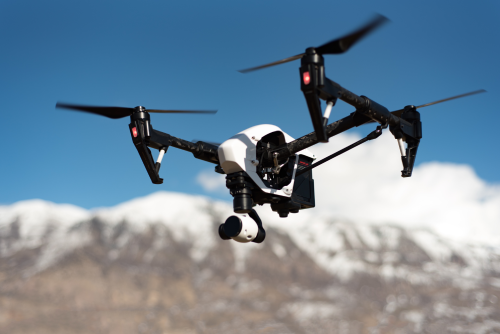
Municipal bodies need current, usable ground data: where roads have narrowed, which drains are blocked, how public works are progressing, and what has changed on public land. That is why drone mapping is becoming an important part of municipal surveys in India. Done properly, drones can make surveys faster and more visual, but they work best when paired with good planning, ground checks, and proper compliance.
Quick Take
- Drones are used in municipal surveys to create up-to-date maps, inspect civic assets, monitor projects, and detect changes on the ground.
- Common municipal use cases include property tax mapping, road and drain surveys, encroachment checks, water body monitoring, landfill measurement, and disaster assessment.
- The most useful drone outputs are orthomosaics, 3D models, contours, digital surface models, and GIS-ready asset layers.
- Multirotor drones usually suit dense urban areas and smaller sites. Fixed-wing drones are better for larger peri-urban coverage.
- Drone data is valuable, but it is not a substitute for every type of ground survey. Legal boundaries, underground utilities, and title disputes usually need additional methods.
- In India, always verify the latest DGCA and Digital Sky requirements, airspace permissions, pilot requirements, NPNT rules, and local administrative approvals before flying.
What municipal surveys actually include
A municipal survey is not just one kind of inspection. Local bodies and urban agencies need many types of location-based data for day-to-day administration and planning.
Typical municipal survey work includes:
- Mapping roads, lanes, footpaths, drains, culverts, and junctions
- Updating building footprints and land-use patterns
- Identifying encroachments on public land, drains, or road margins
- Monitoring construction of civic projects
- Surveying lakes, ponds, storm-water channels, and flood-prone areas
- Recording parks, playgrounds, streetlights, solid waste points, and other assets
- Estimating landfill or debris volumes
- Assessing damage after flooding, fire, or structural collapse
Traditionally, much of this work was done through field teams using tape measurements, total stations, GNSS receivers, and manual note-taking. Those methods are still important. Drones simply add a faster aerial layer of information that can cover an area in one mission and then be checked on the ground.
Why municipalities use drones
Municipal departments are interested in drones for a simple reason: cities and towns change faster than old maps do.
Here is where drones help most:
- Speed: Large areas can be documented much faster than manual walking surveys.
- Visual clarity: A stitched aerial map often makes issues obvious, such as blocked drains, missing shoulders, or informal extensions.
- Repeatability: The same area can be flown again after a month, a quarter, or before and after monsoon.
- Safety: Teams do not need to physically enter every risky location, such as unstable dumping grounds or waterlogged zones.
- Measurement support: With the right workflow, drone imagery can support area calculation, length measurement, contour generation, and volume estimation.
- Better communication: Engineers, planners, contractors, councillors, and citizens often understand aerial evidence faster than spreadsheets.
The biggest advantage is not the drone itself. It is the combination of current imagery, measurable outputs, and GIS integration.
Main ways drones are used in municipal surveys
| Municipal task | What the drone captures | Why it is useful |
|---|---|---|
| Property tax base mapping | Building footprints, plot-level visible changes, roof extents | Helps update records, identify new constructions, and cross-check field data |
| Encroachment checks | Road margins, drains, water channels, public land edges | Gives visual evidence of obstruction or unauthorised occupation |
| Road and drain surveys | Road width, shoulders, side drains, intersections, missing links | Supports maintenance planning and pre-monsoon work |
| Water body and flood mapping | Ponds, lakes, nalas, storm-water paths, low-lying areas | Helps identify siltation, blockage, shrinkage, and flood risk zones |
| Construction monitoring | Ongoing civic works such as roads, bridges, STPs, parks | Tracks progress, site conditions, and visible deviations over time |
| Solid waste and landfill monitoring | Dumpsites, transfer stations, waste heaps | Useful for volume estimation, boundary monitoring, and compliance reporting |
| Asset inventory | Street furniture, parks, open spaces, public buildings | Helps create GIS layers for planning and maintenance |
| Disaster assessment | Flooded neighborhoods, damaged roads, collapsed structures | Speeds up situational awareness and response planning |
Property tax and building footprint updates
One of the most practical uses of drones in municipal surveys is updating the base map used for property records. In fast-growing wards, many structures change quickly: extra floors, extensions, merged plots, temporary roofing, and new access roads.
A drone map can help a municipality:
- See current building extents across an entire ward
- Compare visible structures against existing records
- Prioritise field verification visits
- Improve GIS-based property databases
Important caution: visible roof area is not the same as legal property title or taxable built-up area in every case. Municipal teams still need local rules, field checks, and records verification before taking action.
Encroachment detection
Drones are especially useful where encroachments affect public movement or drainage. Aerial imagery can show whether a drain has been narrowed, a road shoulder has been occupied, or a water channel has been blocked.
This helps when:
- Identifying choke points before monsoon
- Recording the condition of a public right-of-way
- Supporting notices or internal review with date-stamped imagery
- Tracking whether a cleared area remains clear over time
Again, drone imagery should support decision-making, not replace the full legal process.
Road, drain, and utility corridor surveys
Many municipal complaints are basic but persistent: waterlogging, broken shoulders, missing drain covers, uneven road widening, or bad junction geometry.
A drone survey can provide:
- A current corridor view of roads and side drains
- Length and width measurements from processed maps
- Spotting of low areas and flow interruptions
- Before-and-after evidence of repair works
For narrow lanes or heavily covered areas, however, ground teams may still be needed.
Water bodies and storm-water management
Urban flooding often has local causes: blocked channels, reduced pond area, encroached inlets, or low-lying colonies that fill up quickly.
Drones help municipalities by:
- Mapping the exact visible spread of lakes, ponds, and drains
- Checking embankment condition
- Identifying silted or choked sections
- Comparing pre-monsoon and post-monsoon conditions
- Supporting contour and surface model creation for drainage planning
This is one of the strongest use cases because the aerial view reveals water movement paths that are hard to understand from street level alone.
Construction monitoring of civic works
A municipal engineer or project management consultant can use periodic drone flights to monitor:
- Road widening work
- Bridge or flyover progress
- Sewerage treatment plant construction
- Park development
- Water tank or pumping station sites
- Boundary wall and public building works
Instead of depending only on site photos taken from the ground, drone records give repeatable visual checkpoints from similar angles and dates.
Landfill, debris, and waste management
At dumpsites and landfill areas, drone surveys are useful for:
- Measuring the visible spread of waste heaps
- Estimating stockpile or mound volume
- Tracking changes over time
- Checking slopes, access roads, and drainage around the site
- Documenting legacy waste remediation progress
Volume estimation is a strong drone application because repeated surveys make changes easy to quantify.
Post-disaster and emergency assessment
After heavy rain, a fire, a wall collapse, or a localised disaster, time matters. Drone teams can quickly create a top view of the affected area and help officials decide where to send crews first.
Typical uses include:
- Mapping flood spread
- Spotting road breaks and culvert damage
- Checking building roof damage
- Identifying accessible routes for response vehicles
- Documenting conditions for later review
In emergency settings, safety and airspace restrictions become even more important.
What a municipality actually receives from a drone survey
Beginners often think a drone survey only produces photos. In reality, the most useful deliverables are processed outputs.
Common outputs
- Orthomosaic: A stitched aerial image corrected to behave like a map, so distances and positions can be measured more reliably.
- Digital Surface Model (DSM): A height model that includes buildings, trees, and other objects on the ground.
- Digital Terrain Model (DTM): A model of the bare earth surface, where possible, used for terrain and drainage analysis.
- Point cloud: A dense set of 3D points representing surfaces in space.
- Contours: Height lines that help understand slope and low-lying areas.
- 3D mesh or 3D model: Useful for site visualisation and some engineering reviews.
- Asset layers in GIS: Road edges, drains, building footprints, water bodies, poles, parks, and more, converted into usable map layers.
- Volume report: Often used for stockpiles, landfill heaps, or excavation areas.
For most municipal users, the real value lies in getting these outputs into a GIS, not just storing image files in folders.
How a municipal drone survey usually works
A good municipal drone survey follows a process. The drone flight is only one step.
1. Define the exact objective
Start with a specific question, such as:
- Do we need a ward base map for property verification?
- Are we inspecting drains before monsoon?
- Are we tracking contractor progress every month?
- Do we need volume estimation at a dumpsite?
The clearer the goal, the easier it is to choose the right drone, altitude, output, and accuracy level.
2. Collect existing records and base maps
Before flying, gather whatever is already available:
- Existing ward maps
- Road and drain drawings
- GIS layers
- Parcel or property records
- Utility maps
- Previous survey reports
This avoids duplicate work and helps define the survey boundary.
3. Check permissions, airspace, and local coordination
In India, drone operations must follow the current regulatory and airspace framework. Depending on the location, the operator may also need coordination with local administration, police, site authorities, or other agencies.
This is also the right stage to:
- Inform local staff and residents where appropriate
- Plan safe takeoff and landing points
- Avoid peak traffic or crowded hours
- Review any nearby sensitive locations
4. Set ground control and checkpoints
If the survey needs reliable measurements, ground control points and checkpoints matter. These are known locations measured on the ground that help improve and verify map accuracy.
Without proper control, a drone map may look impressive but still be weak for engineering or administrative use.
5. Fly with the correct survey settings
A survey flight is not the same as casual aerial photography. It typically needs:
- Planned flight lines
- Consistent image overlap
- Stable altitude
- Suitable time of day to reduce harsh shadows
- Safe weather conditions
- Battery planning and mission logs
6. Process the data and check quality
The captured images are processed into mapping outputs. This stage includes:
- Photo alignment
- Point cloud generation
- Orthomosaic creation
- Surface model generation
- Accuracy checks using checkpoints
- Cleaning obvious errors
Quality control is critical. Problems such as blurred photos, poor overlap, reflective roofs, deep shadows, or moving vehicles can reduce output quality.
7. Convert results into action
The final step is often the most neglected. Municipal value comes when the outputs are used for:
- GIS updates
- Engineering review
- Tender planning
- Maintenance scheduling
- Tax database correction
- Encroachment follow-up
- Project monitoring reports
A survey that stays as a few JPEG files is not a successful municipal survey.
Choosing the right drone and sensor setup
Not every municipal survey needs the same equipment.
Multirotor drones
Best for:
- Dense city areas
- Small to medium project sites
- Short corridor inspections
- Construction monitoring
- Locations needing vertical takeoff and landing
Why they work well: – More precise hovering – Easier operation in tight spaces – Better for repeated site progress shots
Fixed-wing drones
Best for:
- Large peri-urban areas
- Long linear corridors
- Wider regional mapping tasks
Why they work well: – Longer endurance – Faster coverage of large areas
Trade-off: – Usually need more open space for operation and a more planned workflow
Common sensor choices
- RGB camera: Standard visible-light camera. This handles most municipal mapping and inspection work.
- RTK/PPK-enabled system: These improve positioning accuracy when used properly. RTK means Real-Time Kinematic, and PPK means Post-Processed Kinematic.
- Thermal camera: Useful only for specific tasks, not a default municipal mapping sensor.
- LiDAR: Advanced and more expensive. It can be useful in certain terrain or vegetation conditions, but it is not necessary for every municipal job.
For many Indian municipalities, the most practical starting point is a good RGB survey workflow with proper control and GIS integration.
Accuracy: what makes a drone survey reliable
A drone map is only as good as its survey method.
Factors that affect accuracy
- Flight altitude
- Camera quality and calibration
- Image overlap
- Use of RTK or PPK
- Ground control points
- Checkpoint verification
- Processing workflow
- Shadow, glare, and surface texture
- Obstructions like trees and wires
A useful rule of thumb
If the survey will influence engineering quantities, taxation decisions, encroachment action, or dispute-sensitive records, do not rely on aerial imagery alone. Use drone data together with ground survey methods, record checks, and professional validation.
This is especially important in India where land records, municipal records, and on-ground occupation may not always match neatly.
Safety, legal, and compliance points in India
Municipal drone surveys are not exempt from basic responsibility. Before any operation, verify the latest official rules.
What to check
- Current DGCA and Digital Sky requirements
- Airspace status for the survey location
- Whether the drone and operation fall under NPNT requirements
- Registration, operator, and pilot compliance as applicable
- Any local administrative, police, or site permissions needed
- Restrictions around airports, strategic locations, and other sensitive areas
Privacy and public communication
Municipal surveys often happen over inhabited areas. That creates privacy concerns.
Good practice includes:
- Capturing only what is needed for the stated purpose
- Avoiding unnecessary zoomed-in collection over private spaces
- Defining who can access the data
- Securing raw imagery and processed files
- Informing local stakeholders where practical
- Being careful before publicly sharing detailed imagery
If the survey is outsourced
The contract should clearly state:
- What outputs are required
- Accuracy expectations
- Data ownership
- Data storage and retention
- Confidentiality obligations
- Update frequency, if repeat surveys are planned
When drones are the wrong tool or only part of the solution
Drones are useful, but they do not solve every municipal survey problem.
They are weaker when:
- The issue is underground, such as buried utilities
- Tree canopy hides the ground
- Narrow covered lanes prevent a clear top view
- The site is indoors or under structures
- Weather is poor or wind is too strong
- The task is a legal boundary demarcation requiring formal records and ground survey
- The municipality lacks a system to use GIS outputs afterward
A practical approach is to combine drones with:
- Ground survey instruments
- GIS
- Existing engineering drawings
- Asset registers
- Field verification teams
- Citizen complaint data
Common mistakes in municipal drone surveys
These mistakes reduce value more than most people realise.
1. Flying before defining the problem
A survey without a decision purpose usually produces attractive images but weak outcomes.
2. Using casual drone photos as survey evidence
Visual inspection and measured survey are not the same thing.
3. Ignoring ground control and checkpoints
Without verification, accuracy claims may be unreliable.
4. Flying at the wrong time of day
Long shadows, glare from roofs, and poor lighting can hurt interpretation.
5. Expecting the drone to reveal everything
Underground pipes, internal building details, and legal ownership cannot be solved from the air.
6. Not integrating the outputs into GIS
If results stay as isolated images, departments cannot reuse the data effectively.
7. Skipping local communication
Residents may worry about surveillance if they are not informed.
8. Overlooking repeatability
One survey is useful. A repeatable survey schedule is often where the real municipal value appears.
9. Storing data badly
Poor file naming, missing metadata, and no backup policy can make the survey hard to use later.
FAQ
Is a drone survey accurate enough for municipal work?
It can be, depending on the job and the workflow. For mapping, asset inventory, progress monitoring, and visible change detection, drones can be very effective. For legal boundaries, title disputes, or high-stakes engineering decisions, ground verification and formal records are still important.
Which type of drone is best for municipal surveys?
Multirotor drones are usually best for dense urban areas and site inspections. Fixed-wing drones are better for larger area coverage. The right choice depends on site size, airspace, accuracy needs, and available takeoff space.
Can a municipality use a normal camera drone for mapping?
For basic visual inspection, yes. For measurement-focused work, it is better to use a proper survey workflow with planning, control points or RTK/PPK, and processing software.
How often should municipal drone surveys be repeated?
It depends on the use case. Construction monitoring may be monthly or milestone-based. Pre-monsoon drainage surveys may be seasonal. Property and asset updates may be annual or tied to specific redevelopment activity.
Can drones detect underground drainage or water pipes?
No. Drones mainly capture visible surface information. Underground utilities usually require other tools, records, or field investigation.
Are drone surveys cheaper than traditional surveys?
They can be more cost-effective for area coverage and repeat monitoring, but not always cheaper in every situation. Total cost depends on permissions, field control, processing, required accuracy, and how the output will be used.
Can drone data be used for tax notices or encroachment action?
Drone data can support administrative decisions and field verification, but it should not be treated as the only basis without checking applicable rules, records, and due process.
What should a municipal department ask for in the final deliverables?
At minimum, ask for an orthomosaic, GIS-ready layers if needed, metadata, date of capture, survey boundary, accuracy statement, and a short method note. For some projects, contours, DSM/DTM, 3D outputs, and volume reports may also be needed.
Final takeaway
If you want to use drones in municipal surveys, start with one clearly defined problem: a drainage map before monsoon, a road asset inventory, a landfill volume check, or a construction progress workflow. Insist on compliance, ground verification, and GIS-ready outputs from day one. That is what turns a drone flight from a flashy demo into a genuinely useful municipal tool.
