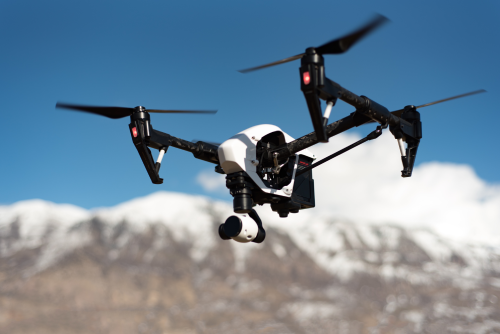
Drones are increasingly used in accident reconstruction because they can document a crash scene quickly, from angles that are difficult or unsafe to capture from the ground. In India, that can mean faster scene mapping on busy roads, safer evidence collection, and clearer visuals for police, insurers, engineers, and courts.
A drone, however, is not a magic truth machine. It is one part of a reconstruction workflow that also depends on ground measurements, vehicle damage analysis, CCTV or dashcam footage, witness statements, and expert interpretation.
Quick Take
- Drones help accident reconstruction by capturing overhead photos and video of the entire scene in minutes.
- Those images can be processed into an orthomosaic map, a top-down image corrected for distortion, and a 3D model using photogrammetry, which means building measurements from overlapping photos.
- They are especially useful for road crashes, multi-vehicle collisions, highway pile-ups, industrial incidents, and level-crossing or construction-site investigations.
- Drones can show final vehicle positions, tyre marks, debris spread, road geometry, sight lines, and nearby obstacles.
- They improve speed and safety, but they do not replace ground surveys, forensic examination, or expert analysis.
- In India, operators must verify the latest DGCA and Digital Sky requirements, local police procedures, and airspace restrictions before flying at any incident scene.
What accident reconstruction actually means
Accident reconstruction is the process of figuring out how an incident happened.
In a road crash, investigators may try to answer questions like these:
- Where was each vehicle before impact?
- In which lane or direction was it moving?
- Where did impact likely occur?
- How did the vehicles rotate, slide, or come to rest?
- Were road conditions, visibility, signage, or obstacles a factor?
- Do tyre marks, debris, damage patterns, and witness statements match each other?
Traditionally, teams use tape measures, handheld cameras, sketches, total stations, road markers, and manual notes. Drones do not remove the need for those tools, but they make it much easier to capture the full geometry of the scene before traffic is reopened or evidence fades.
Why drones fit this job so well
An accident scene is often temporary and chaotic.
Tyre marks fade. Debris gets moved. Traffic management changes lane access. Rain washes away traces. Crowds gather. On Indian roads, where congestion builds fast, investigators may have limited time to document everything.
A drone helps because it can:
- Capture the whole scene from above in one view
- Cover long road stretches quickly
- Reach flyovers, medians, embankments, and awkward terrain
- Reduce the time investigators spend standing in live traffic
- Create a visual record that can be revisited later
This is especially useful in:
- Highway crashes
- Multi-vehicle pile-ups
- Bus, truck, and tanker incidents
- Motorcycle crashes at urban intersections
- Rural-road accidents where CCTV coverage is limited
- Industrial yard and construction-site incidents
- Rail crossing or access-road collisions
What a drone can document at an accident scene
A properly planned drone mission can capture more than just dramatic aerial video.
It can document:
- Final resting position of vehicles
- Tyre marks and scrape marks on the road
- Debris field and broken parts
- Road width, lane markings, medians, shoulders, and curves
- Poles, barriers, dividers, guardrails, trees, and other fixed objects
- Slope, elevation changes, embankments, and drainage edges
- Sight lines near blind curves, junctions, and parked obstructions
- Spill patterns, displaced barriers, or damaged roadside infrastructure
In practical terms, that means the drone is not only recording what is there. It is also preserving relationships between objects: distance, angle, orientation, and position.
That is what makes drone data useful for reconstruction, not just documentation.
The typical drone-based accident reconstruction workflow
1. Secure the scene and define the objective
Before any flight, the scene must be controlled by the relevant authority.
The drone team needs to know what they are trying to capture:
- A quick overview before vehicles are moved
- A full mapping mission for measurement
- Oblique images to study visibility and approach paths
- Documentation of a large debris spread
- Progress records for a follow-up engineering review
This matters because a short overview flight and a measurement-grade mapping flight are not the same thing.
2. Check airspace, permissions, and operational safety
At an accident scene, legal clearance and safety come first.
The operator should confirm:
- Whether the location is in a restricted or sensitive airspace area
- Whether local police or the investigating authority has authorised drone use
- Whether there are emergency helicopters, media aircraft, cranes, wires, or smoke hazards nearby
- Whether the weather allows stable and safe flight
In India, airspace and operational permissions can vary by location and mission type. Always verify the latest DGCA and Digital Sky requirements, and any local law-enforcement SOPs, before deployment.
3. Plan the capture pattern
A good scene record usually includes two kinds of image sets:
Wide overview images
These show the big picture:
- Road approach from both directions
- Junction layout
- Position of each vehicle
- Nearby buildings, barriers, and signs
Mapping images
These are systematic, overlapping photos taken in a grid or planned route so software can turn them into a scaled map or 3D model.
For good mapping, the team usually thinks about:
- Flight height
- Camera angle
- Photo overlap
- Lighting and shadows
- Safe take-off and landing points
If the goal is measurement, random flying is not enough.
4. Capture an initial overview before the scene changes
One of the biggest benefits of drones is speed.
Before vehicles are moved or lanes are reopened, the drone can quickly capture:
- Straight-down views of the entire scene
- Oblique views from several directions
- Road approaches leading into the impact area
This initial pass preserves the original state of the site.
That is valuable because accident scenes change quickly, especially on highways and city roads.
5. Fly a structured mapping mission
Next comes the evidence-focused flight.
The drone captures overlapping images of the entire scene. For long crashes, this may include a large stretch of road before and after the impact area.
The output can later be processed into:
- An orthomosaic, which is a stitched top-down map
- A point cloud, which is a 3D set of measured points
- A textured 3D model of the scene
- Measurable distances, angles, and areas
Oblique images, taken at an angle rather than straight down, are also helpful because they preserve vehicle shape, damage context, and sight-line conditions.
6. Add ground reference for better accuracy
If investigators need reliable measurements, they should not depend only on basic GPS tags inside photos.
Higher-quality workflows often include:
- Ground control points, which are marked reference points surveyed on the ground
- Check points, used to verify final accuracy
- Additional on-ground measurements of key objects or marks
This is one reason drone-based reconstruction is not just “fly and export.” The strongest work combines aerial capture with ground truth.
7. Process the images into usable evidence products
Special software uses photogrammetry to find common points across overlapping images and rebuild the scene as a map or 3D model.
From that data, investigators may create:
- A scaled scene map
- Measured distances between evidence points
- A 3D view of vehicle positions and road profile
- Annotated diagrams for reports
- Visuals for internal review, insurance analysis, or court presentation
The more disciplined the field capture, the better the final model.
8. Analyse the outputs with other evidence
This is the reconstruction stage.
The drone output is compared with:
- Vehicle damage patterns
- Mechanical inspection results
- Witness statements
- CCTV or dashcam footage
- Mobile or telematics data, if legally available
- Weather and road-condition records
- Ground measurements and forensic notes
A drone map helps experts test hypotheses. It does not, by itself, prove exactly what happened.
For example, a model may show where debris landed and where vehicles stopped. An expert still has to interpret whether that supports a specific impact point or travel path.
9. Preserve files and maintain an evidence trail
For evidential use, file handling matters.
Teams should preserve:
- Original photos and videos
- Flight logs
- Metadata
- Processing settings and software version
- Notes on who collected the data and when
- Exported maps, models, and annotated copies
If original files are overwritten, renamed carelessly, or shared casually on messaging apps, the evidential value can weaken.
How investigators actually use the drone output
Once the drone data is processed, it becomes useful in several ways.
Measuring scene geometry
Investigators can measure:
- Distance between vehicles
- Position of tyre marks relative to lanes
- Debris spread
- Distance from impact area to final rest position
- Road widths, shoulder width, and curvature
Studying visibility and line of sight
At many Indian intersections, visibility is affected by:
- Parked vehicles
- Trees
- hoardings
- medians
- bus stops
- roadside stalls
- flyover pillars
Oblique drone images help show what a driver could or could not see.
Understanding terrain and road design
A drone model can reveal:
- Downhill approach
- Camber or road tilt
- Sharp bend geometry
- Unprotected edge conditions
- Layout problems near merges or service roads
This is useful not only for crash investigation, but also for identifying whether the site itself is hazardous.
Communicating findings clearly
A drone-generated map is often easier to understand than a hand sketch.
That helps when explaining a case to:
- Senior officers
- Engineers
- insurance surveyors
- legal teams
- judges
- training audiences
It can also reduce confusion when multiple agencies are involved.
Drones compared with other documentation methods
| Method | Best for | Main advantage | Main limitation |
|---|---|---|---|
| Drone mapping | Whole-scene overview, geometry, 3D context | Fast, safe, comprehensive visual record | Needs good workflow, legal clearance, and validation |
| Total station or ground survey | Precise point measurement | Strong accuracy and control | Slower on large or dangerous scenes |
| Handheld photography | Close-up evidence, damage details | Easy and essential | Poor at showing overall layout |
| CCTV or dashcam footage | Movement before impact | Can show sequence directly | Often low quality, incomplete, or unavailable |
| Witness statements | Human observations | Useful context | Memory can be inaccurate or conflicting |
The best reconstructions usually combine several of these, not just one.
A few practical scenarios
Highway pile-up
A multi-vehicle collision blocks several lanes on an expressway. Investigators need fast documentation before recovery vehicles clear the scene.
A drone can:
- capture the full spread of vehicles across lanes
- map debris and tyre marks over a long distance
- document barrier damage and lane closure pattern
- produce a stitched map for later analysis
Urban junction crash
A motorcycle collides with a car at a signalised intersection. There are questions about whether the rider had a clear view and whether a parked bus blocked visibility.
A drone can:
- capture approach roads from multiple angles
- show the actual geometry of the intersection
- document median openings, turning pockets, and parked obstructions
- support a sight-line analysis
Industrial yard incident
A collision occurs between a truck and machinery inside a factory or warehouse yard.
A drone can:
- map vehicle route inside the yard
- show stockpile heights, barriers, ramps, and loading zones
- create a 3D scene model for safety review
- help determine whether layout or traffic management contributed
What makes a drone suitable for this work
Not every drone that shoots nice travel footage is ideal for accident reconstruction.
Useful features include:
- High-resolution camera
- Reliable geotagging
- Manual camera control
- Waypoint or repeatable mission planning
- Stable hover and wind handling
- Good low-distortion imaging
- Easy export of original files and logs
- Sufficient battery support for repeat passes
For higher-accuracy work, teams may prefer systems that support stronger geospatial workflows, such as improved positioning or external ground control.
A basic consumer drone may still help with overview documentation, but evidential mapping needs more discipline than casual flying.
Why this matters in Indian conditions
India presents a few practical realities that make drones especially useful.
Busy roads and short closure windows
On highways, ring roads, and city arterials, long closures cause major disruption. Drones help teams document more in less time.
Mixed traffic
Indian crash scenes often involve cars, motorcycles, trucks, buses, auto-rickshaws, pedestrians, and roadside activity in the same space. That makes spatial documentation more complex and more valuable.
Rural and semi-urban gaps
In many places, there may be little CCTV coverage and limited scene-lighting infrastructure. A fast aerial record can preserve context that would otherwise be lost.
Challenging layouts
Flyovers, service roads, sharp ghat sections, narrow village roads, and median openings can all be hard to understand from ground photos alone.
Safety, legal, and compliance points in India
If a drone is used for accident reconstruction in India, treat the flight as a professional evidence operation, not just a camera job.
Key points to keep in mind:
- Verify the latest DGCA rules and Digital Sky procedures before flying.
- Confirm whether the area falls in restricted, sensitive, or controlled airspace.
- Coordinate with the police, investigating officer, or incident commander before take-off.
- Do not interfere with ambulances, fire services, cranes, or any emergency aviation activity.
- Maintain a safe perimeter around take-off and landing areas.
- Be cautious near bystanders, power lines, moving traffic, and loose debris.
- Keep the operation within the permissions and operational limits that apply to the drone and pilot.
- Avoid sharing footage publicly while the investigation is active.
- Protect privacy, especially if injured persons or vehicle registration details are visible.
- Preserve original files, logs, and timestamps for evidential integrity.
If the scene is near an airport, helipad, defence area, major government site, or critical infrastructure, extra restrictions may apply. Do not assume an emergency automatically allows drone access.
Limitations of drones in reconstruction
Drones are powerful, but they are not perfect.
They may be less effective when:
- It is raining heavily or winds are unstable
- The scene is under a bridge, inside a shed, or in a tunnel
- Tree cover blocks the view
- Lighting is poor or shadows are severe
- Very fine trace evidence needs close forensic examination
- GPS reception is poor or magnetic interference is present
- The operator has no way to validate measurements on the ground
Also, a drone map may look precise even when the workflow was weak. Clean visuals are not the same as verified accuracy.
Common mistakes
Treating video as enough
Cinematic video may look impressive, but measurement-friendly still images with proper overlap are usually more valuable.
Flying only one height or one angle
Straight-down images are useful, but oblique images add context for vehicles, structures, and visibility.
Ignoring ground control
If measurement matters, ground reference matters too.
Capturing the scene after it has already changed
The biggest value often comes in the first few minutes, before recovery or traffic diversion alters the layout.
Poor file handling
Compressed sharing, missing timestamps, and overwritten originals can damage evidential value.
Overclaiming what the drone proves
A drone can show positions and geometry. It does not automatically prove fault, speed, or intent.
FAQ
Can drones be used as evidence in accident cases?
They can be useful as evidential material, but their value depends on authenticity, proper collection, chain of custody, file preservation, and how they are presented by qualified investigators or experts. Local court practice and case specifics matter.
Do drones replace total stations or ground survey tools?
No. Drones complement them. Ground survey tools are still important for validation, precise spot measurements, and close-range evidence capture.
Can a regular camera drone be used for accident reconstruction?
For basic scene overview, yes. For measurement-focused reconstruction, the workflow, operator skill, file handling, and accuracy checks matter more. Many casual flights are not good enough for evidential mapping.
How accurate are drone measurements?
Accuracy depends on flight planning, camera quality, image overlap, processing, lighting, and the use of ground control or check points. Always verify important measurements on the ground rather than assuming the model is perfect.
Can a drone tell investigators how fast a vehicle was moving?
Not directly. A drone helps capture scene measurements, tyre marks, vehicle positions, and road geometry. Speed estimates usually require reconstruction analysis using multiple evidence sources.
Is it legal to fly a drone over an accident scene in India?
It depends on the location, airspace category, operator status, mission purpose, and official permissions. Always verify the latest DGCA, Digital Sky, and local authority requirements before flying.
Are night flights useful for accident scenes?
Sometimes, especially for urgent documentation or search support, but night operations add safety, quality, and compliance challenges. Special care and current legal verification are essential.
What files should be preserved after the flight?
Keep the original photos, videos, flight logs, metadata, memory card contents where practical, processing reports, notes, and exported maps or models. Maintain a clear record of who handled the files.
How quickly can a drone document a crash scene?
A fast overview can often be captured in minutes, but a full reconstruction-grade mapping workflow takes longer because it includes planning, safe flying, ground checks, processing, and analysis.
Who benefits most from drone-based reconstruction?
Police units, forensic teams, insurers, highway authorities, industrial safety teams, engineering consultants, and professional drone service providers supporting investigations.
Final takeaway
Drones are used in accident reconstruction because they capture the full scene quickly, safely, and in a form that can be measured, reviewed, and explained later. If you want to use drones for this kind of work in India, focus on three things first: legal compliance, a repeatable evidence workflow, and accuracy you can defend.
