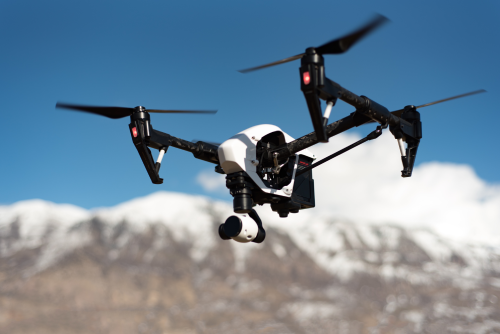
How drones are used in coastal erosion studies is no longer just a research question for large institutions. In India, drones have become a practical tool for mapping beaches, cliffs, dunes, estuaries, and seawalls faster and in more detail than many traditional field methods alone. When used properly, they help teams see where the coast is changing, how fast it is changing, and which areas need attention first.
Quick Take
- Drones help coastal teams capture high-resolution images, elevation data, and 3D surface models.
- They are especially useful for tracking shoreline movement, beach width changes, dune loss, cliff retreat, and storm damage.
- In India, drones are valuable along monsoon-affected and cyclone-prone coasts where conditions can change quickly.
- The biggest advantage is repeatability: fly the same area the same way over time and compare the results.
- Good erosion studies depend on more than flying a drone. Tide timing, ground control, weather, and consistent survey methods matter a lot.
- Drones do not replace all ground surveys or satellite data. The best studies often combine all three.
- Coastal drone operations may involve legal and safety sensitivities, especially near ports, defense areas, protected habitats, crowded beaches, and urban shorelines. Always verify the latest official rules and permissions before flying.
Why coastal erosion is difficult to measure
Coastal erosion is the gradual or sudden wearing away of land by waves, tides, currents, storms, and human activity. It sounds simple, but measuring it correctly is not easy.
A shoreline can look different within hours because of:
- High and low tide
- Seasonal beach shifts
- Monsoon waves
- Cyclones and storm surges
- River sediment changes
- Human structures like seawalls, groynes, and ports
- Sand mining or construction
- Vegetation growth or loss
Traditional field surveys can be accurate, but they are often slow and cover limited ground. Satellite images cover large areas, but their resolution and timing may not always be good enough for small or fast-moving changes.
This is where drones fit in: they can map a coastal stretch quickly, at very high detail, and repeat the survey as often as needed.
What drones actually capture in coastal erosion studies
Drones are not just taking pretty aerial photos. In erosion work, they create measurable datasets.
1. Orthomosaics
An orthomosaic is a large, map-like image made by stitching many drone photos together and correcting them for distortion. This lets surveyors measure real distances on the map.
An orthomosaic can help identify:
- Shoreline position
- Beach width
- Dune edges
- Erosion scarps
- Cracks near embankments
- Damage to seawalls or revetments
- Encroachment close to vulnerable edges
For a village panchayat, college project, or coastal consultant, this is often the first useful output.
2. Elevation models
A drone survey can also create an elevation model, which shows the height of the ground surface.
You may hear terms like:
- DEM: Digital Elevation Model
- DSM: Digital Surface Model
In simple words, these models show the shape of the land. That matters because erosion is not only about where the shoreline is. It is also about how much sand or soil has been lost.
Elevation models help answer questions like:
- Has the beach become lower after a storm?
- Are dunes flattening over time?
- Is a cliff face retreating?
- Is a protective berm getting smaller?
3. 3D models and point clouds
A point cloud is a dense set of spatial points created from overlapping drone images. From this, software can build a 3D model of the coast.
These 3D outputs are useful for:
- Cliff monitoring
- Dune monitoring
- Seawall inspection
- Estimating landslip or collapse zones
- Visualizing erosion for planners and local authorities
For public communication, a 3D model is often easier to understand than a technical report.
4. Cross-sections and beach profiles
A beach profile is a slice across the beach showing how its height changes from land to sea.
By repeating the same profile over time, researchers can see if the beach is:
- Losing sand
- Recovering after monsoon
- Becoming steeper
- Developing scarp edges
- Shifting landward
Drones make these profiles faster to produce across multiple locations.
5. Vegetation and habitat indicators
Coastal erosion is closely linked to vegetation such as dune grasses, mangroves, and other stabilizing plants.
With standard RGB cameras, and in some cases multispectral sensors, drones can help map:
- Loss of dune vegetation
- Retreat of mangrove edges
- Exposure of bare sediment
- Habitat fragmentation
- Changes around estuaries and mudflats
This is useful because erosion is not just a land-loss problem. It can also become an ecosystem problem.
The main ways drones are used in coastal erosion studies
Baseline mapping
Before anyone can say a coast is eroding, they need a starting point. Drones help create that baseline.
A baseline survey records:
- Current shoreline position
- Beach and dune geometry
- Existing structures
- Vegetation cover
- Nearby roads, houses, or utilities at risk
Without a baseline, later comparison becomes weak.
Repeated monitoring
This is one of the most important uses.
Teams fly the same stretch every month, season, or after major weather events and compare the outputs. If the drone missions are planned consistently, the differences become measurable.
Repeated monitoring can reveal:
- Gradual seasonal erosion
- Sudden storm damage
- Sand build-up in one area and loss in another
- Migration of tidal inlets
- Retreat of dunes or cliffs
Post-storm damage assessment
After rough weather, cyclones, or unusually high wave action, drones can quickly document affected stretches without sending large teams over unstable ground.
This helps identify:
- Breached embankments
- Washed-out beach access
- Collapsed retaining walls
- Exposed foundations
- Hazard zones for nearby settlements
On India’s east coast, where cyclone exposure can be high in some regions, this kind of rapid mapping can be especially valuable.
Infrastructure risk assessment
Coastal erosion is not just about nature. It affects people and assets.
Drones are used to assess risk to:
- Roads near beaches
- Coastal homes and resorts
- Fishing harbours and landing points
- Seawalls and groynes
- Drainage outlets
- Power or telecom infrastructure near the shore
A drone survey can help planners see how close erosion is getting to built assets.
Sediment movement studies
Drones cannot directly measure all underwater sediment movement, but they can show visible effects on land and nearshore features.
Researchers can track:
- Sand bar shape changes
- Beach berm formation or loss
- Mouth changes at rivers and estuaries
- Erosion around structures
- Deposition zones after storms
This is useful when trying to understand why one section of coast is losing sand while another is gaining it.
What a typical coastal erosion drone workflow looks like
A proper erosion study is more than just flying once over a beach.
1. Define the study question
Start with a clear purpose.
Examples:
- Has the shoreline moved inland over the last year?
- Did a recent storm reduce beach width?
- Are dunes shrinking near a tourist beach?
- Is a seawall reducing erosion locally but worsening it nearby?
The question decides the flight area, frequency, and type of output.
2. Plan around tide, weather, and season
This step is critical and often underestimated.
For valid comparison, surveys should ideally be done under similar conditions, especially:
- Similar tide stage
- Similar time of day
- Comparable seasonal conditions
- Safe wind conditions
- Good lighting
If one survey is done at low tide and another at high tide, the shoreline may appear to have changed even if erosion is minor.
3. Set ground control or use high-accuracy positioning
To improve accuracy, surveyors may place Ground Control Points, or GCPs, on stable locations and measure them with a GNSS receiver.
Some drones also use RTK or PPK.
- RTK: Real-Time Kinematic
- PPK: Post-Processed Kinematic
These are methods that improve location accuracy. For serious erosion studies, this matters because even small errors can mislead results.
4. Fly a planned mission
A typical mission may involve:
- Grid flights for mapping
- High overlap between images
- Constant altitude
- Consistent camera angle
- Extra edge coverage
- Sometimes oblique images for cliffs or structures
Over water, image matching can be harder because water surfaces change constantly. Surveyors usually focus on stable visible land features and avoid relying on moving wave patterns.
5. Process the data
Software is used to turn the photos into:
- Orthomosaic maps
- Elevation models
- Point clouds
- Contour maps
- 3D surface models
At this stage, errors should be checked carefully. Coastal scenes can be tricky because foam, reflections, wet sand, and repeating textures can confuse processing.
6. Compare dates and calculate change
Once multiple surveys exist, teams compare them to identify:
- Shoreline shift
- Height loss or gain
- Beach volume change
- Retreat distance
- Damage zones
This is the stage where real erosion evidence emerges.
7. Validate with field checks
Even a good drone dataset should not be trusted blindly.
Field teams should verify:
- The true shoreline marker used
- Sediment type
- Vegetation edge conditions
- Damage on the ground
- Areas hidden by shadows or structures
The best coastal erosion studies combine drone outputs with on-site observations.
Why drones are so useful on India’s coastline
India has a long and diverse coastline with beaches, rocky coasts, estuaries, deltas, mudflats, mangroves, islands, ports, and densely populated shorelines. That diversity makes drone use especially valuable.
Monsoon-driven change
Many Indian beaches look different before and after the monsoon. Drones make it practical to document those seasonal changes.
Cyclone-prone stretches
On parts of the east coast in particular, severe weather can reshape the coast quickly. Drone surveys are useful for post-event mapping and repeated recovery tracking.
River mouths and deltas
Dynamic areas such as estuaries and deltaic zones can change shape rapidly due to sediment flow, tides, and storm events. Drone mapping can capture these changes at a fine scale.
Urban beaches and tourism zones
Where public access, tourism, and erosion risk intersect, local bodies may need clear visual evidence. Drone maps and 3D models can support planning and communication.
Mangrove and wetland edges
Coastal protection is not only about hard structures. Vegetation and habitat also matter. Drones can monitor habitat edges that are difficult to cover on foot.
Drone data versus satellite and ground surveys
Drones are powerful, but they are not automatically the best tool for every task.
| Method | Best for | Main advantage | Main limit |
|---|---|---|---|
| Drone survey | Local to medium stretches, detailed erosion analysis | Very high detail, fast repeat surveys, strong visual outputs | Limited area per flight, weather dependent, legal restrictions |
| Satellite imagery | Large coastal regions, long-term broad trends | Covers big areas and historical periods | Lower detail, cloud cover issues, timing may not match study needs |
| Ground survey | Precise checkpoints, validation, engineering work | Strong local accuracy and field verification | Slow, labour-intensive, limited coverage |
In practice, the strongest studies often use all three:
- Satellite data for the big picture
- Drones for detailed mapping
- Ground surveys for validation
What kind of drone setup works for erosion studies
Not every coastal study needs a high-end platform.
Basic RGB mapping drone
Good for:
- Student projects
- Small shoreline mapping tasks
- Visual change detection
- Orthomosaics over modest areas
Best when the goal is to document visible change clearly.
RTK-enabled mapping drone
Good for:
- Professional surveys
- Repeat monitoring
- Better positional accuracy
- Engineering or planning use
Useful when comparisons over time need stronger confidence.
Multispectral drone
Good for:
- Vegetation health
- Dune plant cover
- Mangrove monitoring
- Habitat-related erosion studies
Not necessary for every project, but useful where vegetation is part of the question.
LiDAR-equipped drone
LiDAR uses laser pulses to measure surface shape.
Good for:
- Complex terrain
- Vegetated areas
- Higher-end professional applications
Usually more expensive and not needed for most beginner or small coastal projects.
Practical examples of how drones help
Example 1: Monitoring a retreating beach near a village
A local institution wants to know whether the beach edge has moved inland over two monsoons.
A drone survey can:
- Create a baseline orthomosaic
- Measure beach width at fixed transects
- Repeat after each monsoon
- Show whether erosion is seasonal or progressively worsening
Example 2: Checking dune loss near a tourism zone
A coastal town sees repeated damage to temporary beach structures.
A drone can:
- Map dune height and shape
- Show where dune vegetation is lost
- Compare pre-season and post-season conditions
- Support decisions on where not to place temporary infrastructure
Example 3: Assessing seawall performance
An agency wants to know if a seawall protected one section but shifted erosion down-drift.
A repeated drone survey can:
- Map the protected area
- Compare nearby unprotected sections
- Reveal sand accumulation versus loss patterns
- Support more informed coastal engineering review
Limits of drones in coastal erosion work
Drones are useful, but they do have limits.
Water is difficult to model
Drone photogrammetry works best on stable textured surfaces. Moving waves, reflections, and clear shallow water can reduce accuracy.
Timing can distort results
A survey at the wrong tide level can create misleading conclusions about shoreline movement.
Weather can ruin consistency
Wind, sea spray, haze, and changing light can affect both flight safety and data quality.
Coverage is limited
For very long coastlines, drone surveys alone may not be efficient. Broad-scale satellite analysis may be a better starting point.
Accuracy depends on method
A casual flight without ground control, proper overlap, or repeatable planning may look impressive but may not hold up for measurement.
Safety, legal, and compliance checks in India
Coastal drone operations need extra caution.
Safety issues to watch
- Strong coastal winds and gusts
- Salt spray, which can affect motors and electronics
- Crowded beaches and public privacy concerns
- Birds, especially in nesting or wetland areas
- Unstable cliffs, dunes, or embankments
- Magnetic or signal interference near infrastructure
Good practice includes:
- Flying early only if conditions are calm and visibility is good
- Keeping extra battery margin for flying against wind on return
- Avoiding take-off from loose sand if possible
- Cleaning equipment after salt exposure
- Not flying over crowds, traffic, or active fishing operations
Legal and permission issues
In India, drone operations must follow the latest applicable rules and official guidance. Coastal areas may involve additional sensitivity.
Before flying, verify:
- Whether the area is permitted airspace
- Digital Sky and any other official compliance steps that apply to your operation
- Whether the drone category and pilot requirements are met
- Whether local permissions are needed from district authorities, coastal management bodies, port authorities, forest departments, or site administrators
- Whether the area is near airports, ports, defense facilities, strategic assets, or protected zones
- Whether wildlife or conservation restrictions apply
Do not assume that an open beach is automatically open for drone flying. Coastal belts can include restricted or sensitive locations. If your survey is commercial, institutional, or near critical infrastructure, verify current official requirements before scheduling work.
Common mistakes in coastal drone surveys
1. Comparing surveys from different tide levels
This is one of the most common errors. It can make normal tidal variation look like erosion.
2. Using inconsistent flight paths
If altitude, overlap, camera angle, or coverage change too much between surveys, comparisons become weaker.
3. Skipping control points or accuracy checks
For serious measurement work, visual similarity is not enough.
4. Treating the waterline as a perfect shoreline marker
The visible edge of water changes constantly. Depending on the study, a more stable shoreline proxy may be needed.
5. Ignoring vegetation
A dune may appear stable in one image but be losing protective vegetation that signals future erosion risk.
6. Flying in unsafe wind conditions
Coastal winds can change quickly. A flight that feels manageable on take-off can become risky over the shoreline.
7. Overlooking shadows and wet sand effects
Dark wet sand, reflections, and shadows can confuse image processing and shoreline interpretation.
8. Not documenting metadata
Survey date, time, tide condition, weather, flight height, sensor settings, and control method should all be recorded. Without that, future comparison becomes much harder.
Best practices if you want reliable results
- Survey under similar tide and seasonal conditions each time
- Use fixed transects or repeated flight plans
- Add ground control or high-accuracy positioning where possible
- Keep overlap high and coverage consistent
- Combine drone outputs with field notes
- Store raw files, processed outputs, and survey metadata properly
- Use the same shoreline definition throughout the study
- Review safety and permissions before every mission, not just the first one
FAQ
Are drones accurate enough for coastal erosion studies?
They can be, especially when missions are well planned and supported by ground control or RTK/PPK methods. Accuracy depends heavily on workflow, not just the drone model.
Can a beginner drone pilot do an erosion study?
A beginner can document visible changes for learning or basic observation, but a defensible scientific or engineering study usually needs stronger survey planning, accuracy control, and careful data processing.
How often should coastal drone surveys be done?
That depends on the site. Some places are checked seasonally, while high-risk stretches may be surveyed before and after monsoon, or after major storms. The key is consistency.
Do drones replace field surveys on the coast?
No. They reduce time and improve coverage, but field verification is still important for accuracy, interpretation, and safety assessment.
Are drones better than satellite images for erosion work?
For detailed local studies, often yes. For very large regions or long historical review, satellites are often better. Many good projects use both.
What is the biggest source of error in coastal drone mapping?
In many cases, it is inconsistent timing, especially tide differences, along with weak ground control and poor repeatability between surveys.
Can drones map underwater erosion?
Not reliably in the same way they map land. They may show shallow water patterns in clear conditions, but underwater morphology usually needs other methods such as sonar or dedicated hydrographic surveys.
Is it legal to fly drones over beaches in India?
Not automatically in every case. You must verify the latest official rules, airspace status, and any local restrictions or permissions. Beaches can be near sensitive, crowded, or protected areas.
Final takeaway
If your goal is to understand how a coastline is changing, drones are one of the most practical tools available today. The right next step is not simply buying a drone and flying over a beach; it is designing a repeatable survey with the right timing, safety checks, and accuracy controls so the data can actually answer the erosion question you care about.
