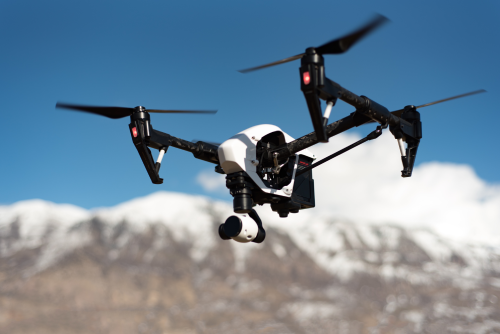
Drones are becoming a practical tool for campus security, especially on large school, college, and university premises where guards and fixed CCTV cameras cannot see everything. How drones are used in campus security is not just about aerial filming; it is about faster situational awareness, smarter patrols, and safer incident response.
Quick Take
- Drones help security teams watch large perimeters, open grounds, parking areas, rooftops, and event spaces more efficiently.
- They are most useful for:
- perimeter patrols
- alarm verification
- crowd monitoring during events
- emergency response
- night checks with thermal cameras
- A drone should support guards, CCTV, lighting, and access control, not replace them.
- For Indian campuses, legal and operational checks matter. Always verify the latest DGCA, Digital Sky, airspace, and local administrative requirements before flying.
- Privacy is a major issue on educational campuses. Clear policies, restricted flight zones, and disciplined data handling are essential.
Why campuses are turning to drones
Many campuses in India are bigger and more complex than they look on paper. A university may have long boundary walls, sports grounds, hostels, parking lots, staff housing, construction zones, and dark service roads. A private school may have multiple gates, bus movement, and crowded event days. Fixed cameras do not always cover these areas well.
That is where drones fit in.
A drone gives the security team a mobile eye in the sky. Instead of relying only on a guard to physically walk to the far end of the campus, the control room can get a real-time aerial view within minutes. This is useful when:
- a motion alarm is triggered near the boundary wall
- there is suspicious activity near a rear gate
- a college fest creates crowd pressure at entry points
- a student is missing on a large residential campus
- a fire, fight, or accident needs quick assessment
On campuses with hostels or open land nearby, drones can reduce response time and improve decision-making. But they only work well when the institution has a proper operating plan.
Main ways drones are used in campus security
1. Perimeter patrol and intrusion detection
This is one of the most common uses.
A drone can patrol the boundary wall, fencing, rear access points, service lanes, and low-traffic areas much faster than a foot patrol. Security teams use this to look for:
- broken fencing or wall damage
- attempted trespass
- suspicious vehicles parked near the boundary
- groups gathering in blind spots
- unauthorized movement after hours
This is especially relevant for campuses on city outskirts, where open land, poor lighting, or low night traffic create vulnerability.
A practical example: if a university has a long rear boundary next to vacant land, a drone can be flown on a scheduled evening route or launched only when a sensor or guard reports suspicious movement.
2. Verifying alarms before sending guards
Not every alert is a real threat.
Motion sensors, perimeter beams, or guard reports can be triggered by animals, weather, or harmless movement. Sending guards into a poorly lit area without context can waste time and create risk.
A drone allows the control room to quickly verify what is actually happening. It can confirm whether the issue is:
- a genuine intruder
- a stray animal
- an open gate
- a maintenance problem
- a false alarm
This “verify first, respond better” approach helps the security team dispatch the right number of personnel and avoid unnecessary panic.
3. Crowd monitoring during events, exams, and peak hours
Educational campuses regularly face temporary crowd surges. Common situations include:
- admission days
- exam entry and exit
- annual functions
- college festivals
- sports meets
- convocation events
- student gatherings or protests
From ground level, it is hard to understand where a crowd is building up or which gate is under pressure. A drone gives a wide aerial view, helping security and administration teams spot:
- bottlenecks at gates
- overcrowded corridors outside buildings
- blocked emergency paths
- vehicle and pedestrian conflict points
- unusual crowd movement
This can improve both safety and event management.
The key point is that the drone should be used for crowd overview, not for invasive close-up monitoring of students unless there is a clear security need and proper policy backing.
4. Emergency response and first assessment
When something serious happens, the first few minutes matter.
A drone can be launched to assess an incident before responders fully enter the area. This is useful in cases such as:
- fire or smoke near a building
- a fight in an open area
- suspected chemical or lab-related danger
- flooding after heavy rain
- structural damage after a storm
- an accident in a hard-to-reach part of the campus
From the air, the team can see:
- the size and location of the problem
- whether people are trapped or moving away
- which roads or paths are clear
- whether emergency vehicles can enter
- whether evacuation routes are open
On a large campus, that aerial view can save valuable time.
5. Night monitoring with thermal cameras
A thermal camera detects heat differences rather than visible light. That makes it useful in darkness, low visibility, and some partially obstructed environments.
On campus, thermal drones may help with:
- spotting people near the boundary at night
- checking dark fields or service roads
- identifying a person hiding behind vegetation or structures
- locating someone during a search
- finding heat signs linked to electrical or fire risk in some situations
Thermal is especially valuable on campuses with weak lighting or large open grounds.
But there are limits. Thermal is not magic. It does not automatically identify a person, and it does not replace proper investigation. Operators need training to interpret thermal images correctly.
6. Parking, gate, and traffic monitoring
Large schools and colleges often struggle with entry congestion, visitor movement, and vehicle management.
A drone can help security teams monitor:
- school bus circulation
- visitor parking overflow
- gate congestion during start and closing hours
- emergency vehicle access
- traffic spillover onto nearby public roads
This use is most helpful during short-duration peak periods, not as a full-time replacement for traffic staff.
For example, on a school annual day with hundreds of vehicles arriving within a narrow window, a drone can help the control room direct staff to the busiest gate before a jam becomes unsafe.
7. Searching for missing or vulnerable persons
On large campuses, it can take a long time to physically search hostels, fields, parking areas, terraces, sports grounds, and service spaces.
A drone can assist in searching for:
- a missing student
- a child separated during a school event
- a disoriented person on a residential campus
- someone who may have entered a restricted outdoor zone
- a person stranded during flood-like conditions
This is particularly useful when the campus includes open land, wooded patches, lakes, or multiple blocks spread out over a large area.
Search work should still be coordinated with the institution’s emergency team, and where necessary, with local authorities.
8. Post-incident documentation
After a security breach, vandalism event, storm, or accident, the campus may need a clear overview of what happened and where the impact spread.
A drone can document:
- route of entry or exit
- damaged boundary sections
- damage to roofs or outdoor structures
- debris spread after a storm
- the layout of a scene for internal review
This is useful for insurance records, maintenance planning, and internal investigation. It can also help campus management understand whether the original security design has weak spots.
What a practical campus drone security workflow looks like
The most successful campus drone programs do not treat the drone as a gadget. They treat it as part of a security workflow.
1. Define the mission
Start by deciding what the drone is actually for.
Typical mission types include:
- evening perimeter checks
- alarm verification
- event crowd monitoring
- emergency response
- night patrol on selected routes
If the objective is vague, the drone will be underused.
2. Map the campus and risk zones
Create a simple security map showing:
- boundary weak points
- open fields
- blind spots in CCTV coverage
- hostel zones
- no-go privacy areas
- safe launch and landing points
- nearby public roads and sensitive outside areas
If the campus lies near an airport, heliport, defence area, or another sensitive zone, airspace checking becomes even more important.
3. Build standard operating procedures
A written procedure should cover:
- who can authorize a flight
- who can pilot
- what happens during an alarm response
- maximum operating area and altitude
- weather limits
- battery and maintenance checks
- lost-link procedure
- emergency landing procedure
- footage storage and access rules
Without this, even a good drone setup becomes inconsistent.
4. Integrate the drone with the control room
The best use case is not “pilot flies around and later shares video.”
A practical security setup should allow the control room or duty officer to receive live situational awareness, decide whether to send guards, and coordinate response. Even if the campus starts small, the drone should feed into an existing security chain of command.
5. Log incidents and review footage
Every security flight should leave a record:
- date and time
- mission type
- pilot details
- flight result
- incident notes
- clip or image reference
- maintenance issue, if any
This helps with accountability, training, and evidence handling.
6. Review performance every month
Institutions often buy a drone and then discover that it is used only occasionally.
Monthly review questions help:
- Did the drone reduce response time?
- Were any patrol routes unnecessary?
- Did privacy complaints arise?
- Were there too many false alarms?
- Would better lighting or CCTV solve the problem more cheaply in some areas?
That review keeps the program practical.
Which drone setup suits which campus?
Not every institution needs the same level of drone system.
| Campus need | Recommended setup | Best for | Watch-outs |
|---|---|---|---|
| Basic daylight patrols | Small camera drone with stable hover, good battery, return-to-home, obstacle sensing | Schools and colleges testing drone patrols on open grounds and perimeter sections | Limited night value, weather sensitivity |
| Day and night response | Camera drone with zoom and thermal capability | Large universities, residential campuses, outskirts locations | Higher cost, more training, more disciplined operating rules |
| Event monitoring | Stable drone optimized for quick deployment and wide-area viewing | Festivals, sports meets, admissions, convoy and gate management | Must avoid unsafe operations over dense gatherings |
| Advanced automated operations | Docked or semi-automated system integrated with security alerts | Very large campuses with mature security teams | Expensive, operationally complex, verify regulatory suitability carefully |
For most institutions, a staged approach is better than buying the most advanced system immediately. Start with one clear problem, such as perimeter checks or event oversight, and expand only if the results justify it.
Benefits and limits of drones in campus security
What drones do well
- Cover open areas quickly
- Reach rooftops, back lanes, and distant perimeter sections
- Give real-time aerial awareness during incidents
- Help verify alarms before dispatching guards
- Provide temporary surveillance where fixed cameras do not exist
- Improve visibility during major events and crowd movement
- Reduce some physical risk to guards entering uncertain situations
Where drones fall short
- Battery life limits continuous patrol time
- Heavy rain, strong wind, and poor visibility can stop operations
- Dense indoor areas are not ideal for most standard security drones
- Aerial video is not the same as reliable identification
- Poorly trained operators can create more risk than value
- Drones cannot replace access control, lighting, fencing, and guard presence
- Privacy mistakes can damage trust very quickly
The key lesson is simple: drones are best for short, targeted, high-value tasks.
Safety, privacy, and compliance considerations in India
Any institution using drones for campus security in India should be conservative and careful.
Check the latest legal position before flying
Rules, permissions, and operating conditions can change. Before starting a campus security drone program, verify the latest official guidance related to:
- DGCA requirements
- Digital Sky airspace checks
- drone category and compliance status
- NPNT support where applicable
- operator requirements
- any special conditions for automated, night, or advanced operations
- local restrictions near airports, defence zones, and sensitive government areas
Do not assume that a consumer drone used for casual photography is automatically suitable for institutional security work.
Use trained and authorized operators
Campus security flying is not the same as hobby flying.
Operators should understand:
- pre-flight checks
- emergency procedures
- wind and weather limits
- crowd safety
- battery health
- incident communication
- evidence handling
If the institution uses a third-party service provider, responsibilities should be clearly documented.
Build a privacy-first operating policy
A campus includes students, staff, visitors, and in many cases residential or semi-private spaces. That makes privacy essential.
A sensible policy should include:
- no routine filming into hostel rooms, homes, washrooms, or other private spaces
- restricted routes near windows and residence blocks
- clear definition of why footage is captured
- limited access to recordings
- retention and deletion timelines
- visible notice to campus users where appropriate
- internal escalation rules for reviewing sensitive footage
The goal should be security, not constant intrusive observation.
Keep operations safe
Good practice includes:
- safe takeoff and landing zones
- no reckless low flying near people
- avoiding unnecessary flight over dense gatherings
- weather checks before every mission
- battery rotation and maintenance logs
- backup communication between pilot and control room
- defined emergency landing areas
Some campuses may also need coordination with local police or administration during major events or emergency situations, depending on the context. Verify this in advance instead of deciding during a crisis.
Common mistakes campuses make
Buying hardware before defining the job
A high-end drone does not fix a weak security plan. First define the use case, then choose the platform.
Treating the drone as a CCTV replacement
CCTV is fixed and continuous. A drone is mobile and temporary. Both have different strengths.
Ignoring privacy concerns
One badly handled incident involving hostel areas or student privacy can undermine the entire project.
Flying without documented procedures
If there is no clear approval chain, no logbook, and no incident process, the drone becomes a liability.
Overestimating battery life
Drones are not all-night patrol machines. Plan for short missions, spare batteries, and realistic coverage.
Using untrained internal volunteers
A student club member may be a skilled flyer, but security operations need accountability, discipline, and formal authorization.
Forgetting weather realities
Monsoon winds, dust, heat, and sudden rain can affect both safety and image quality. A campus plan must account for local conditions.
Failing to secure footage
Security footage should not end up circulating informally on phones or messaging groups. Access control matters.
FAQ
Are drones legal for campus security in India?
They can be, but the institution must verify the latest DGCA, Digital Sky, airspace, and compliance requirements before operating. Do not rely on outdated summaries.
Can a college or school use a drone at night?
Night use may involve additional operational and regulatory considerations. Check the current official rules and permissions before planning night patrols.
Do drones replace guards and CCTV?
No. Drones are best used as an additional layer for fast aerial awareness, especially over open areas and during incidents.
Is a thermal camera necessary?
Not always. For a small campus with good lighting, a standard camera drone may be enough. Thermal becomes more useful on large, dimly lit, or residential campuses.
How long can a drone patrol?
That depends on the drone, weather, payload, and flying style. In practice, campuses should think in short targeted missions, not endless patrols.
Are drones useful on small urban campuses?
Sometimes, but not always. If the premises are compact and mostly indoor, better lighting, access control, and fixed cameras may deliver more value.
Can drones help during college festivals and school functions?
Yes. They are useful for crowd overview, gate pressure checks, parking flow, and emergency visibility, provided flights are planned safely and lawfully.
What should a campus privacy policy include?
It should define where drones may fly, which areas are off-limits, who can view footage, how long data is stored, and how complaints are handled.
Should students operate the security drone?
Not casually. Security operations should be handled only by trained, authorized personnel or a qualified service provider working under formal procedures.
Final takeaway
Drones make the most sense for campuses that are large, event-heavy, hard to patrol, or full of outdoor blind spots. If your institution is considering them, do not start by shopping for the biggest drone; start by mapping the real security gap, verifying current Indian compliance requirements, and running a tightly controlled pilot with clear privacy rules.
