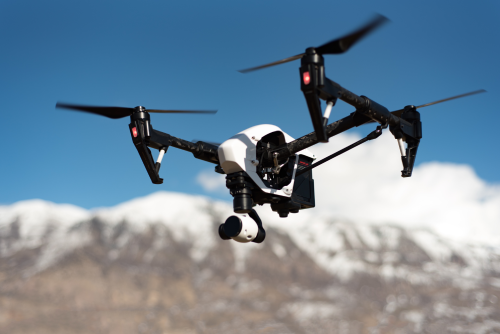
Construction billing disputes usually begin with one simple question: was that work actually done, and in what quantity? Drones are increasingly used in construction billing verification because they can create dated, measurable visual records of a site much faster than manual inspection alone.
For Indian developers, contractors, quantity surveyors, project management consultants, and lenders, drones are not just for progress photos anymore. Used correctly, they help verify billed quantities, reduce arguments over measurements, and improve confidence before payments are released.
Quick Take
- Construction billing verification means checking whether the quantities and progress claimed in a bill match the actual work completed on site.
- Drones are especially useful for large, open, and visible work such as earthwork, stockpiles, roads, roofs, site grading, external paving, and overall progress tracking.
- A drone survey can produce measurable outputs like an orthomosaic map, 3D model, point cloud, and volume calculations.
- Drones do not replace all manual measurement. Hidden work, internal finishes, embedded services, and material quality still need conventional checks.
- For payment-related use, accuracy matters more than pretty visuals. Survey control points, RTK/PPK workflows, and repeatable methods are important.
- In India, always verify the latest DGCA and Digital Sky requirements before flying, and take site permissions and safety planning seriously.
What construction billing verification actually means
In construction, contractors often raise running bills, progress bills, or milestone-based claims. These bills may include quantities such as:
- cubic metres of excavation or filling
- square metres of roofing or paving
- running metres of roads, drains, or trenches
- area of completed grading
- progress percentages for visible stages of work
Traditionally, these quantities are checked using site measurements, drawings, measurement books, total station surveys, engineer inspections, photographs, and contractor records.
The problem is that manual verification becomes slow and disputed when:
- the site is large
- the shape of the work is irregular
- the work changes quickly between bill cycles
- multiple contractors are involved
- one party claims more work than the other believes is complete
This is where drones help. They create a timestamped aerial record of the site and turn it into measurable data.
Why drones are useful for billing verification
A drone can cover a large project site in minutes and collect hundreds of overlapping images. Software then converts those images into a detailed map and 3D surface model that can be measured.
That makes drones useful for billing verification in three big ways:
Faster site coverage
A large open site that may take hours or days to walk and measure can often be documented much faster from the air.
Better visual evidence
Instead of relying only on written quantities, both client and contractor can look at the same mapped site condition for a specific date.
More consistent records across bill cycles
If surveys are repeated using the same method every week or month, progress becomes easier to track and compare.
Where drones help most in construction billing
Not every bill item is suitable for drone verification. The best use cases are visible, measurable, and spread across an area or corridor.
| Bill item or claim | Drone usefulness | Why it helps |
|---|---|---|
| Excavation and filling | Very high | Cut-and-fill volumes can be measured from 3D terrain data |
| Stockpile quantities | Very high | Volumes of sand, aggregate, soil, and debris can be calculated |
| Road and site grading progress | High | Linear and area-based work is easy to map |
| Roof area and external cladding progress | High | Top-down and oblique images help verify coverage |
| External paving and hardscape | High | Area calculations are straightforward |
| Drain, canal, pipeline corridor progress | High | Route progress can be mapped over distance |
| Building superstructure progress | Moderate | Good for visible stage checks, less useful for hidden details |
| Interior finishes | Low | Most work is not visible from outside |
| Reinforcement, concealed services, concrete quality | Very low | Requires ground inspection, testing, and records |
How drones are used in construction billing verification
Progress billing and milestone validation
Many construction bills are not pure quantity bills. They are linked to milestones such as:
- excavation complete
- plinth filling complete
- basement slab complete
- external roads complete up to a certain chainage
- roofing completed in a certain block
- solar mounting structures installed in a particular zone
Drones help by showing whether the visible milestone is genuinely complete or only partly done.
For example, if a contractor claims that external paving is 80% complete, a drone-generated orthomosaic can show the exact paved area on that survey date. The client team can compare that with the planned area and validate the claim more objectively.
Earthwork quantity verification
This is one of the strongest use cases.
In earthwork billing, disputes often arise over excavation depth, embankment volume, grading, filling, and dumping. A drone survey can create a 3D surface model of the site. By comparing the current surface to:
- a previous survey
- a design level
- a baseline surface
- a pre-excavation condition
the team can estimate how much material has been cut or filled.
This is especially useful for:
- basement excavation
- site leveling
- road embankment
- industrial platform formation
- borrow area and dump yard monitoring
If the survey is tied to reliable ground control, it becomes far more useful for bill checking than random site photos.
Stockpile measurement
Construction sites often store:
- sand
- murrum
- aggregate
- fly ash
- excavated soil
- scrap or demolition debris
Instead of rough visual estimates, drone data can be used to calculate stockpile volumes. This helps when a contractor claims material supplied or when the client wants to reconcile inventory against billing.
Stockpile measurement is often more accurate and repeatable with drones than with manual estimates, especially when piles are large or irregular.
Building envelope and roof measurement
For warehouses, factories, sheds, and large commercial projects, drones can help verify:
- roof sheet installation progress
- waterproofing coverage
- solar panel installation spread
- external façade coverage
- painting progress on accessible exteriors
This is not enough to certify workmanship on its own, but it is useful to confirm visible extent and area.
Roads, drains, canals, and other linear works
Linear infrastructure is hard to verify from ground level because the work stretches over long distances.
Drones help measure:
- road length completed
- shoulder preparation
- median work
- canal lining spread
- drainage trench length
- utility corridor progress
For billing teams, this reduces the dependence on scattered photos and makes it easier to see what has actually been completed package by package.
Site development and external works
On real estate and industrial projects, external works often generate repeated billing claims. Drones are useful for verifying:
- compound wall progress
- internal roads
- stormwater drains
- landscaping zones
- parking areas
- paving blocks
- site grading
- temporary access roads
Because these items are spread over large areas, drone maps make them easier to quantify.
Dispute resolution and audit evidence
A major reason companies adopt drones is not just speed. It is defensibility.
When there is a dispute between contractor, consultant, and client, a dated survey with measurements is stronger evidence than memory-based arguments. It also helps in internal audits, lender monitoring, and payment approval workflows.
A drone survey does not automatically “prove” everything, but it gives a common reference point.
The typical workflow for drone-based billing verification
To get useful results, the site team should not treat the drone as a flying camera only. The measurement objective must be planned in advance.
1. Identify the bill items to be verified
Before the flight, define what exactly needs checking:
- excavation quantity
- fill quantity
- stockpile volume
- road length completed
- roof area installed
- percentage progress of a zone
If this step is skipped, the output may look impressive but be useless for billing.
2. Gather project references
The drone team should work with the project or billing team to collect:
- relevant drawings
- BOQ items
- design levels if needed
- previous survey data
- site grid or coordinate reference
- measurement basis used in the contract
This avoids mismatches later.
3. Set up control for accuracy
For serious billing verification, the survey should use a reliable accuracy method such as:
- ground control points
- RTK-enabled drone workflow
- PPK processing
- known survey benchmarks
Without control, measurements may still be visually useful but less defensible for payment certification.
4. Plan the flight safely and legally
The operator should check:
- airspace restrictions
- site hazards
- crane movement
- overhead power lines
- wind and weather
- worker activity below
- take-off and landing zones
A billing verification survey should also avoid capturing more surrounding property than necessary.
5. Capture aerial data
The operator flies the mission with adequate image overlap and suitable altitude. Depending on the job, both top-down and angled images may be useful.
6. Process the data
The images are processed into outputs such as:
- orthomosaic
- point cloud
- digital surface model
- contour map
- 3D model
- volume report
7. Extract measurements
Now the billing team can measure:
- area
- distance
- elevation difference
- cut-and-fill
- stockpile volume
- zone-wise progress
8. Compare against the bill
The measured output is compared with:
- the contractor’s claim
- the BOQ
- previous billing period
- approved drawing quantities
- milestone definitions
9. Create a report that non-survey people can understand
A good report should include:
- survey date
- site area covered
- method used
- measurement assumptions
- output snapshots
- claim versus measured value
- observations and exclusions
This makes the data useful to project managers, finance teams, and decision-makers.
The drone outputs you should understand
You do not need to be a survey specialist to use drone results, but a few terms matter.
Orthomosaic
A stitched, top-down map made from many photos. It is useful for checking area, spread, and visible progress.
Point cloud
A dense 3D collection of measured points. It helps create accurate site surfaces and models.
Digital surface model
A 3D representation of the site surface, including features like ground, stockpiles, and built structures. It is commonly used for volume calculations.
Volume report
A measurement of how much material exists in a pile or how much earth has been cut or filled.
Contours and elevation maps
These show height differences across the site and help in grading and earthwork checks.
For billing verification, the most useful outputs are usually the orthomosaic, volume calculations, and annotated comparisons against the claim.
Accuracy matters more than drone brand
A common mistake is focusing on which drone was flown rather than how the survey was performed.
For billing verification, output quality depends on:
- survey planning
- image overlap
- altitude
- camera quality
- site control points
- RTK/PPK workflow
- software processing settings
- operator experience
- whether the site has trees, water, glare, dust, or poor texture
A beautiful 3D model is not automatically accurate enough for payment decisions.
When drone data is strong enough for billing
Drone measurement is strongest when:
- the work is visible from above
- the site is open and accessible
- the quantity is area, distance, or volume based
- surveys are repeated consistently
- survey control is used
- outputs are cross-checked by engineering staff
When drone data should only support, not decide
Drone data should be treated as supporting evidence when:
- work is hidden or internal
- tolerances are extremely tight
- surfaces are obstructed
- heavy shadow or reflective surfaces affect capture
- design data is incomplete
- the contract measurement method is different from the drone output method
What drones cannot reliably verify
This is important. Drones are powerful, but they are not magical.
They generally cannot confirm, on their own:
- concrete strength
- steel grade or bar spacing inside concrete
- underground utilities after backfilling
- quality of waterproofing under finishes
- hidden MEP work
- workmanship in interior areas not visible from air
- whether material was wasted, reworked, or rejected unless visibly apparent
So if a bill includes hidden or quality-based items, the drone output should be combined with site records, testing, and inspection reports.
Practical India-specific examples
Real estate project in a growing city
A developer receives a contractor bill for basement excavation, plinth filling, and external road base preparation. Instead of relying only on spot measurements, the developer commissions a drone survey at the end of the billing cycle.
The survey shows:
- actual excavation spread
- fill volume in the podium area
- road sub-base completed only in two of three planned stretches
Result: the excavation quantity is accepted, the plinth fill is adjusted to measured volume, and the road claim is partly certified.
Highway or industrial corridor package
A contractor claims progress on embankment, drainage line, and service road formation. A corridor drone survey shows chainage-wise completion and identifies a section that was prepared but not actually finished to the billed extent.
Result: billing becomes zone-based and much easier to reconcile.
Warehouse or factory construction
The project team wants to verify roofing and external paving before releasing payment. Drone imagery confirms roof coverage, identifies incomplete edge sections, and calculates the paved area around the building blocks.
Result: payment is tied to visible installed area rather than rough percentage estimates.
Solar plant construction
For a large solar site, drone mapping helps verify row-wise mounting structure installation, internal road spread, grading, and drainage channels.
Result: milestone billing is backed by mapped evidence across a very large site.
Safety, legal, and compliance points in India
If you are using drones for construction billing verification in India, do not treat it as only a technical job. It is also an operational and compliance activity.
Keep these points in mind:
- Verify the latest DGCA and Digital Sky requirements before each project. Rules can change, and applicability may depend on drone category, location, altitude, and operation type.
- Check whether the site lies near restricted or sensitive airspace. Do not assume a construction site is automatically clear to fly.
- Use an operator who understands current compliance, site safety, and record-keeping requirements.
- Take written approval from the project owner or authorised site representative before the survey.
- Coordinate with the site safety team. Cranes, boom lifts, batching plants, HT lines, and active work fronts create real flight hazards.
- Avoid flying directly over workers unless it is properly risk-assessed and operationally necessary.
- Respect privacy. Construction sites in cities may border homes, offices, schools, or roads.
- Keep logs, survey dates, and output files organised. If the data is later used in a dispute, poor record-keeping weakens its value.
- If drone survey results influence payment decisions, define the method in advance so both contractor and client know how the measurement will be interpreted.
When in doubt, verify with official sources and the project’s legal or compliance team before flying.
Common mistakes that make drone billing verification unreliable
Flying without defining the bill item
If the team simply asks for “a site survey,” the output may not answer the payment question.
Using drone photos instead of measurable maps
Aerial photos are useful, but billing verification usually needs proper measurement products, not just visuals.
Ignoring control points
For serious quantity verification, especially earthwork, lack of control can reduce trust in the result.
Comparing different drawing revisions
If the contractor used one revision and the billing team used another, even accurate drone data can be misread.
Mixing horizontal area with sloped area
A road embankment, stockpile face, or roof slope can create confusion if everyone is not using the same measurement basis.
Skipping repeatable survey methods
If each month the survey uses a different altitude, flight pattern, processing method, or reference system, trend comparison becomes weak.
Trying to verify hidden work from the air
This leads to false confidence. Drones verify what they can see and model, not what is buried or covered.
Treating drone output as final without engineering review
A survey specialist may produce the data, but project engineers and quantity surveyors still need to interpret it against contract terms.
What to ask a drone service provider before using them for billing verification
If you are hiring an external team, ask these questions:
- Have you done measurement-focused construction surveys, not just promotional shoots?
- What accuracy level is realistic for this site and use case?
- Will you use control points, RTK, or another survey-grade method?
- Can you deliver area, distance, and volume reports, not just photos and videos?
- How will you handle repeat surveys so month-to-month comparisons stay consistent?
- Can you mark the bill items directly on the orthomosaic?
- What assumptions or exclusions will be stated in the report?
- How quickly can you deliver outputs after the flight?
- What site safety and compliance steps will you follow?
- Can your outputs be reviewed in standard engineering software if needed?
These questions matter more than asking only which drone model they use.
FAQ
Can a drone replace a quantity surveyor or site engineer?
No. A drone is a measurement and documentation tool. Quantity surveyors, billing engineers, and project engineers are still needed to interpret the data and apply the contract measurement rules.
Is drone data accepted for payment certification?
It can be used as supporting evidence, and in some projects it is central to verification. But acceptance depends on the contract, client, consultant, and agreed process. It is best to define its role before billing disputes begin.
How accurate are drone measurements for construction billing?
It depends on the workflow. Accuracy improves with proper planning, good image overlap, survey control, and experienced processing. For high-value billing, do not rely on a casual drone flight.
Which construction items are easiest to verify with drones?
Earthwork, stockpiles, roads, grading, external paving, roof area, and large visible progress zones are among the easiest.
Which items are difficult or unsuitable?
Hidden services, reinforcement inside concrete, interior finishes, underground utilities, and quality-related claims are not well suited to drone-only verification.
How often should a site be surveyed for billing purposes?
That depends on project pace and billing cycle. Fast-moving sites may need weekly or fortnightly surveys. Many projects use monthly surveys aligned with running bills.
Do small and mid-size projects in India benefit, or only large infra projects?
Smaller projects can also benefit, especially where there are repeated disputes over visible quantities or where the site is too large to verify efficiently on foot.
What outputs should be attached to a bill verification record?
Usually a dated orthomosaic, annotated progress images, area or volume calculations, comparison against claim quantities, and a short methodology note are most useful.
Can drones help banks, investors, or lenders monitor project drawdowns?
Yes, especially for visible progress and broad quantity checks. But lenders should combine drone evidence with engineer certification and document review.
Final takeaway
If your construction payments depend on visible quantities spread across a large site, drones can make billing verification faster, clearer, and harder to manipulate. The smart way to start is with one well-defined pilot survey tied to specific bill items, proper survey control, and an agreed reporting format, so the data supports payment decisions instead of creating new arguments.
