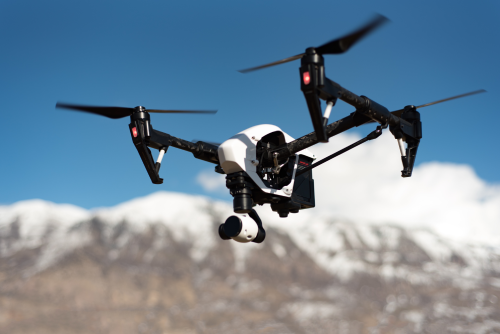
How drones are used in stockpile measurement is easier to understand than it sounds. A drone flies over a material yard, captures overlapping images, software turns those images into a 3D surface, and the site team gets volume estimates for sand, coal, aggregates, ore, fly ash, scrap, or other bulk material.
For Indian businesses, this matters because stockpiles are often large, uneven, dusty, and risky to inspect manually. Drones help teams measure faster, reduce people climbing unstable piles, and create repeatable records for inventory, planning, and reconciliation.
Quick Take
- Stockpile measurement with drones is mainly about calculating volume, usually in cubic metres.
- The most common method is photogrammetry, which means creating a 3D model from many overlapping photos.
- Drones are widely useful in mining, quarries, construction, cement, power, ports, waste management, and material depots.
- The real value is not just speed. It is safer access, repeatable surveys, digital records, and better visibility of changing inventory.
- Accuracy depends on flight planning, good image overlap, proper ground control or checkpoints, and correct processing.
- Volume is only part of the story. If you need weight in tonnes, you also need a reliable bulk density value for that material.
- Drones are excellent for open outdoor stockpiles, but they are less suitable in heavy rain, strong wind, poor lighting, tight indoor spaces, or areas with major signal and access challenges.
- In India, always verify the latest DGCA and Digital Sky requirements before flying. Site permissions, airspace status, and operational rules matter.
What stockpile measurement actually means
A stockpile is any mound or heap of material stored in bulk. Common examples include:
- Crushed stone and aggregates
- Sand and M-sand
- Coal and lignite
- Iron ore and other minerals
- Fly ash
- Fertiliser
- Grain in open yards
- Scrap metal
- Construction excavated material
- Waste and recyclables
Measuring a stockpile usually means finding its volume. The software calculates how much material sits above a defined base surface. That base could be:
- A flat concrete yard
- A previously surveyed ground surface
- A known reference plane
- A custom surface created around the pile edges
Once you know volume, you can use it for:
- Inventory tracking
- Reorder planning
- Production reconciliation
- Vendor billing checks
- Loss and shrinkage monitoring
- Project progress measurement
If the business needs tonnes instead of cubic metres, the measured volume is converted using bulk density. Bulk density is the average mass per unit volume of the material in its current loose or compacted state.
Why drones are replacing traditional stockpile surveys
Traditional stockpile measurement can be slow and risky.
Many sites still rely on a mix of:
- Visual estimates
- Truck count assumptions
- Manual tape or rod methods
- Total station surveys
- GNSS rover surveys
- Weighbridge reconciliation only
These methods can work, but they often have limitations.
The old problems
- People may need to climb loose or unstable piles.
- Large yards take time to cover.
- Dust, machinery, and traffic make surveying harder.
- Different staff may estimate the same pile differently.
- Frequent measurement is often skipped because it is too slow.
What drones improve
Better safety
The biggest advantage is often safety. Instead of walking on slopes of coal, sand, aggregate, or ore, the drone captures the pile from above.
Faster coverage
A drone can survey multiple piles in one session, especially in open yards. That makes weekly or even daily checks more realistic.
Repeatable process
If you fly similar missions from similar heights with similar overlap, your comparisons become more consistent over time.
Full site visibility
You do not just get one or two points. You get a full 3D surface, which helps catch irregular shapes and hidden volume changes.
Better documentation
The output can include maps, 3D views, timestamps, and volume reports. That is useful for internal records, contractor discussions, and audits.
How drones are used in stockpile measurement: the practical workflow
The workflow is usually straightforward, but accuracy depends on doing each step properly.
1. Plan the survey
Before flying, the operator needs to understand:
- What material is being measured
- How many piles are on site
- Whether the piles are separated or touching
- Whether the base surface is known
- What output is needed: cubic metres, tonnes, or both
- Whether this is a one-time survey or a recurring one
The team also checks operational issues such as:
- Site access
- Weather
- Wind
- Dust levels
- Machinery movement
- Obstacles like conveyors, silos, cables, poles, and cranes
For Indian sites, this is also the point where you confirm current compliance needs, site approvals, and airspace status.
2. Set control points or checkpoints if needed
For better accuracy, survey teams may use:
- Ground control points, or GCPs
- Checkpoints
- RTK or PPK-enabled drones
Ground control points are marked points on the ground whose coordinates are measured separately. They help anchor the drone model to real-world positions.
RTK stands for real-time kinematic. PPK stands for post-processed kinematic. Both are methods that improve positioning accuracy using satellite correction data.
Not every simple stockpile job needs a heavy control setup, but for higher-value inventory, engineering decisions, or dispute-sensitive reporting, stronger control is usually worth it.
3. Fly the drone with proper image overlap
The drone captures many overlapping images from above.
Why overlap matters:
- Each part of the pile should appear in multiple photos.
- The software uses matching features between photos to reconstruct the 3D shape.
- Poor overlap can create holes, distortions, or soft edges.
Operators may also take oblique images, which are angled images rather than straight-down shots, when the pile shape is steep or complex.
Good flight planning usually considers:
- Consistent altitude
- Safe distance from obstacles
- Enough image overlap
- Suitable camera angle
- Stable lighting conditions
4. Process the images into a 3D model
This is where photogrammetry happens.
Photogrammetry means using overlapping photos to calculate the shape and position of real-world objects.
Typical outputs include:
- Orthomosaic: a corrected top-down map image
- Point cloud: a dense set of 3D points representing the surface
- Digital surface model: a 3D surface showing heights of the pile and ground
For stockpile work, the key output is the 3D surface. That is what the software uses to calculate volume.
5. Define the pile boundary and the base
This is one of the most important steps.
The operator outlines the stockpile and tells the software where the pile ends. Then the software needs a base reference under that pile.
If the base is wrong, the volume will be wrong.
Examples:
- If the pile sits on a flat paved yard, the base may be easy to define.
- If it sits on uneven ground, the operator may need an earlier survey of the empty yard.
- If multiple piles are touching, the boundaries must be separated carefully.
This step is where experienced survey practice matters. A perfect drone flight cannot fix a badly chosen base surface.
6. Calculate volume
Once the boundary and base are set, the software calculates the space between the pile surface and the base.
This gives the pile volume, usually in cubic metres.
If needed, the site can then convert volume to estimated weight:
Weight = Volume x Bulk Density
For example, if a pile measures 5,000 cubic metres and the site has verified that the current bulk density is 1.6 tonnes per cubic metre, the estimated mass is 8,000 tonnes.
But this only works if the density value is realistic for that exact material condition. Moisture, particle size, compaction, and contamination can change density.
7. Generate a report and compare over time
The final deliverable may include:
- Per-pile volumes
- Total site volume
- 2D map views
- 3D visualisations
- Change from the previous survey
- Estimated tonnage
- Survey date and method notes
Over time, this becomes much more valuable than a one-off number. You can see:
- Which pile is growing or shrinking
- How fast material is moving
- Whether production and dispatch roughly match
- Whether losses or unexplained differences are appearing
Which Indian industries use drone stockpile measurement
This is not just a mining use case.
In India, drone stockpile surveys can be useful across many sectors.
Mining and quarrying
- Aggregate yards
- Stone crushers
- M-sand plants
- Mineral stockyards
- Overburden and spoil heaps
Construction and infrastructure
- Excavation and embankment progress
- Road project material yards
- Metro and rail project depots
- Cement and ready-mix raw material storage
Energy and industrial sites
- Coal yards at thermal power and industrial plants
- Fly ash storage
- Biomass fuel stockpiles
- Limestone and gypsum yards
Ports, logistics, and bulk handling
- Imported coal or ore stockyards
- Fertiliser and bulk mineral storage
- Open cargo yards
Waste management and recycling
- Municipal waste heaps
- Construction debris
- Recyclable material sorting yards
- Scrap and metal recovery areas
What equipment is commonly used
Not every stockpile job needs the same drone or sensor.
| Setup type | Best for | Main advantage | Main limitation |
|---|---|---|---|
| Standard RGB camera drone | Most open stockpiles in good light | Lower cost, widely available, good for photogrammetry | Can struggle on low-texture or shiny surfaces |
| RGB drone with RTK/PPK | Sites needing better positional consistency | Better georeferencing, fewer ground control needs in some cases | Still needs good workflow and validation |
| LiDAR-equipped drone | Complex terrain, poor texture, vegetation around piles | Captures 3D shape directly and handles difficult surfaces better | Higher cost and more specialised processing |
In simple terms
RGB photogrammetry
This is the most common approach. The drone takes normal photos, and software rebuilds the 3D surface from those images.
It is often enough for:
- Aggregate
- Sand
- Soil
- Fly ash
- Many open industrial piles
RTK or PPK
These features improve the position data attached to each image. They do not guarantee perfect results, but they help the model align more reliably.
LiDAR
LiDAR uses laser pulses to measure distance. It can be useful where photogrammetry struggles, such as very uniform surfaces, some complex environments, or sites with vegetation around the area of interest.
For many small and medium Indian businesses, a good RGB workflow is the practical starting point.
How accurate are drone stockpile measurements?
This is the question everyone asks, and the honest answer is: it depends on the workflow.
Accuracy can be affected by:
- Drone positioning quality
- Camera quality
- Flight height
- Image overlap
- Lighting
- Wind
- Surface texture
- Ground control quality
- Software processing settings
- Boundary and base definition
- Operator skill
A well-planned survey can be very reliable for inventory tracking and operational decisions. But not every drone survey is automatically “survey grade.”
A few practical rules:
- For regular inventory management, consistency often matters as much as absolute precision.
- For contractual billing, legal disputes, or high-value reconciliation, use stronger survey control and qualified professionals.
- Always validate the method on your site by comparing drone results with another trusted reference for a few cycles.
Practical examples of how businesses use it
1. Quarry or crusher yard
A quarry stores multiple piles of 20 mm, 40 mm, dust, and M-sand.
With drones, the team can:
- Survey all piles in one visit
- Get volume by pile type
- Compare with dispatch records
- Spot unusual shrinkage or mixing
This helps operations, sales planning, and stock visibility.
2. Coal yard at an industrial plant
Coal piles change shape daily as material is stacked and reclaimed.
Drone surveys help the plant:
- Estimate remaining inventory
- Compare measured stock against receipts and consumption
- Reduce the need for risky manual inspection on loose slopes
For coal, lighting, dust, and dark surface texture can affect photogrammetry, so workflow quality matters.
3. Construction site cut-and-fill measurement
On large road, industrial, or real estate sites, drones are used to measure not only stockpiles but also excavation and embankment progress.
The site team can compare:
- Original ground surface
- Current terrain
- Material moved in or out
That supports contractor billing checks and progress tracking.
When drones are the right choice and when they are not
Drones are a strong fit when
- The stockpiles are outdoors
- The site is large or hazardous to walk
- You need regular repeat surveys
- Multiple piles must be measured quickly
- You want visual records as well as numbers
Drones are less suitable when
- The piles are indoors or under roofs with poor GPS access
- The site is too tight for safe flight
- Weather is poor
- Dust is extreme during operations
- The material surface has too little visual texture for reliable photo reconstruction
- The task requires a formal boundary or legal land survey rather than just stock volume
In those situations, a total station, terrestrial scanner, or mixed survey method may be better.
Safety, legal, and compliance points in India
Drone stockpile work looks routine, but it is still aviation activity inside an industrial environment.
Operational safety on site
Before flying:
- Coordinate with the site supervisor
- Identify moving equipment zones
- Keep clear of loaders, dumpers, conveyors, cranes, and power lines
- Watch for dust plumes and loose debris
- Do not fly over people unnecessarily
- Maintain a safe launch and landing area
- Use PPE required by the site
Also consider timing. A yard may be safer to survey before loading activity begins or during a planned pause.
Data and privacy
Industrial sites may treat stock data as commercially sensitive. Agree in advance on:
- Who owns the data
- Where it will be stored
- Who can access reports
- Whether imagery can be reused for marketing or portfolio purposes
Indian drone compliance
In India, drone operations are governed by current DGCA rules and platform processes such as Digital Sky. Requirements can vary by airspace, drone type, location, and purpose.
Before flying, verify:
- Whether the airspace allows the operation
- Whether the aircraft and software setup are compliant for the intended use
- Whether any pilot qualifications or operator processes are required under current rules
- Whether local site approvals or security restrictions apply
Do not assume an industrial site is automatically clear to fly just because it is private property. If the site is near an airport, port, defence area, refinery, or other sensitive zone, check carefully.
Common mistakes that ruin stockpile results
Using the wrong base surface
This is the biggest source of bad volume numbers. A beautiful 3D model still gives the wrong answer if the reference surface under the pile is wrong.
Not enough image overlap
If the drone flight is rushed, the software may struggle to reconstruct steep edges and fine shape changes.
Flying in bad conditions
Strong wind, harsh shadows, rain, fog, or heavy dust can reduce image quality and consistency.
Ignoring density variation
Volume is not the same as weight. Wet material can behave very differently from dry material.
Mixing pile boundaries
When adjacent piles touch, it is easy to assign volume incorrectly between them.
No checkpoints or validation
If you never compare the drone outputs with another measurement method, you may not notice drift or workflow problems.
Inconsistent survey timing
If one survey is done after dispatch and the next is done before dispatch, trend comparisons become misleading.
Treating every drone as a survey tool
A consumer drone with basic settings can create useful visuals, but inventory measurement needs a controlled workflow and competent processing.
Should you do this in-house or hire a service provider?
For many Indian businesses, the best first step is not buying equipment. It is running a pilot project with a capable provider and checking whether the outputs are useful.
In-house may make sense if
- You survey frequently
- Your site team can support repeatable operations
- You need quick internal reporting
- You are willing to invest in training, software, and process control
Outsourcing may make sense if
- Surveys are occasional
- You need expert processing
- You want validated reporting without building the full workflow internally
- The site has challenging conditions or compliance needs
What to ask a provider
- What type of drone and method will you use?
- How will you validate accuracy?
- Do you use GCPs, checkpoints, RTK, or PPK where needed?
- What exactly is included in the report?
- How do you handle base surface definition?
- Can you show sample outputs for stockpiles similar to ours?
- How will data be stored and shared?
- What site conditions could reduce confidence in the result?
FAQ
Can a drone measure stockpiles accurately enough for business use?
Yes, often it can, especially for regular inventory tracking and operational decisions. But accuracy depends on flight quality, control points, processing, and correct base definition. Validate the method on your site before relying on it for critical financial decisions.
Do I need a LiDAR drone for stockpile measurement?
Usually not. For many open stockpiles, a good RGB camera drone with a proper photogrammetry workflow is enough. LiDAR becomes more attractive when surfaces are difficult to reconstruct, the terrain is complex, or the project demands a more specialised 3D capture method.
Can drone stockpile measurement replace a weighbridge?
Not exactly. A drone measures volume. A weighbridge measures mass directly for loaded vehicles. The two methods can complement each other. Drone data is useful for yard inventory, while weighbridge data is useful for dispatch and receipt records.
How often should stockpiles be surveyed?
That depends on how fast the material moves and how important inventory visibility is. Some sites survey weekly, some monthly, and some after each major production or dispatch cycle. The key is to use a repeatable schedule.
Can I convert drone volume into tonnes?
Yes, but only if you have a reliable bulk density value for that material in its current condition. If moisture, compaction, or mix changes often, review the density value regularly instead of using one fixed number forever.
Are drones useful for small businesses, not just large mines?
Yes. Small crusher units, construction contractors, material depots, and recycling yards can benefit too, especially if manual estimates are causing stock mismatches or safety concerns.
What deliverables should I expect from a stockpile drone survey?
A good survey usually includes per-pile volume, total volume, date of survey, map or orthomosaic, and a clear statement of method. If required, it may also include 3D views, cut-and-fill results, and estimated tonnage.
Can drones measure indoor stockpiles?
They can in some situations, but indoor work is harder because of limited GPS, tight spaces, poor lighting, and safety concerns. In such cases, ground-based scanning or a different survey method may be more practical.
Is drone stockpile measurement legal in India?
It can be, but you must follow current DGCA and Digital Sky requirements and site-specific permissions. Rules and processes can change, so verify the latest official guidance before any operation.
How long does a typical survey take?
The flight itself can be quick for a modest open yard, but total project time includes planning, setup, processing, and reporting. The real timeline depends on site size, number of piles, control requirements, and report detail.
Final takeaway
If your business manages outdoor bulk material and still relies on rough estimates, drones can make stockpile measurement safer, faster, and more repeatable. Start with one properly planned pilot survey, compare it against your current method, and decide from evidence whether to outsource regularly or build the capability in-house.
