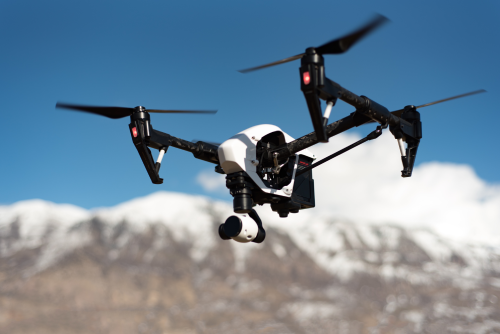
If you are comparing a 4K drone vs 1080p drone, the upgrade can be worth it, but not for everyone. For many buyers in India, the real question is not just resolution. It is whether the drone gives you better footage, easier editing, safer flying, and better long-term value for your use case.
Quick Take
- A good 4K drone is usually worth it for creators, paid shoots, real estate, travel filmmaking, and anyone who wants room to crop, stabilize, or future-proof footage.
- A 1080p drone can still be the smarter buy for first-time flyers, students, casual users, and buyers on a tight budget.
- Resolution alone does not decide image quality. Sensor quality, gimbal stabilization, bitrate, lens quality, and flying stability often matter more.
- A poor “4K” drone can look worse than a well-stabilized 1080p drone.
- For Indian buyers, after-sales support, spare batteries, repairability, and compliance matter almost as much as camera specs.
- If you mostly post on Instagram, WhatsApp, or casual YouTube uploads, 1080p may still be enough.
- If you plan to do professional work or want cleaner footage on larger screens, 4K is usually the better investment.
What 4K and 1080p actually mean
Let’s keep this simple.
- 1080p usually means Full HD video at 1920 × 1080 pixels.
- 4K in consumer drones usually means Ultra HD video at 3840 × 2160 pixels.
That gives 4K about four times as many pixels as 1080p.
On paper, that sounds like an easy win for 4K. But drone footage quality depends on more than pixel count. A tiny sensor, shaky camera, weak processing, or aggressive compression can make “4K” footage look soft, noisy, or unstable.
So yes, 4K offers more detail. But it only helps if the rest of the camera system is good enough to use that detail properly.
The biggest myth: more resolution always means better video
This is the mistake many buyers make.
A drone box says “4K,” so it looks like an automatic upgrade. In reality, you can get:
- true sharp 4K with good stabilization
- soft 4K that is heavily compressed
- fake or upscaled 4K that does not look much better than 1080p
- 1080p footage that looks excellent because the drone has a good gimbal and decent image processing
For most buyers, especially beginners, the better question is:
Would you rather have a stable, reliable drone with good 1080p, or a shaky, underpowered drone with bad 4K?
In many cases, the better 1080p drone is the smarter buy.
What matters more than resolution alone
Before paying extra for 4K, check these factors.
Gimbal stabilization
A gimbal is the motorized camera stabilizer that keeps video smooth when the drone moves.
This is one of the biggest real-world quality factors.
- A 3-axis gimbal usually gives much smoother footage than electronic stabilization alone.
- A drone with poor stabilization can produce shaky 4K video that looks worse than smooth 1080p.
- For cinematic travel shots, property videos, and client work, stabilization matters a lot.
Sensor quality
The sensor is the part of the camera that captures light.
A better sensor can improve:
- detail
- colour
- dynamic range
- low-light performance
- noise control
A high-resolution sensor on a very small, weak camera system may still struggle, especially at sunrise, sunset, or cloudy conditions.
Bitrate
Bitrate is how much data the drone uses to record video.
Higher bitrate can preserve more detail and reduce ugly compression artifacts like blockiness or smeared textures.
A drone that records 4K at a weak bitrate may not look much better than a well-recorded 1080p file.
Lens quality
A poor lens can make edges look soft, distort straight lines, or reduce contrast. Even if the drone records 4K, the footage may not appear truly crisp.
Frame rates
Some drones shoot:
- 1080p at higher frame rates
- 4K at lower frame rates
If you want smoother motion or basic slow motion, the available frame rates matter. Do not assume the best mode is automatically 4K.
Hover stability and flight control
A drone that drifts, jitters, or struggles in wind will not give consistently clean footage, no matter what resolution it records.
Editing and storage needs
4K files are much heavier than 1080p files.
That means:
- more memory cards
- more phone or laptop storage
- slower transfers
- more demanding editing
- faster battery drain on phones and laptops during editing
For students, hobbyists, and casual users with mid-range devices, this can be a real factor.
4K drone vs 1080p drone: side-by-side comparison
| Factor | 1080p Drone | 4K Drone | What it means for buyers |
|---|---|---|---|
| Sharpness | Good for casual use | Better on larger screens and for editing | 4K wins if the camera system is actually good |
| Cropping in editing | Limited | Much more flexibility | 4K helps if you want to reframe shots later |
| Stabilization needs | Important | Even more important | Bad stabilization ruins both, especially 4K |
| Storage use | Lighter files | Larger files | 1080p is easier on phones, laptops, and cards |
| Editing performance | Easier | Heavier | 4K needs stronger devices for smooth workflow |
| Social media output | Usually enough | Often compressed anyway | For casual posts, 1080p may be fine |
| Client work | Entry-level | Usually more suitable | 4K often looks more professional and future-ready |
| Low-light quality | Depends on sensor | Depends on sensor | 4K does not automatically improve low light |
| Price/value | Often cheaper | Usually costs more | Depends on how seriously you use the footage |
When a 1080p drone is still the smarter buy
A 1080p drone is not automatically outdated. For many people, it remains a sensible option.
You are buying your first drone
If you are still learning:
- takeoff and landing
- orientation
- smooth flying
- safe return
- battery management
then flight stability and reliability matter more than resolution.
A beginner often benefits more from:
- easy controls
- reliable GPS positioning
- decent battery life
- stable app connection
- affordable spare propellers and batteries
than from higher resolution.
You mainly post on social media
Most short-form platforms compress video heavily. Many people watch on phones, not large TVs or monitors.
If your main use is:
- Instagram Reels
- WhatsApp sharing
- basic YouTube uploads
- college projects
- personal travel memories
1080p may be enough, especially if the footage is stable and well exposed.
Your editing device is modest
If you edit on:
- a mid-range laptop
- an older computer
- a phone with limited storage
1080p is easier to handle.
That can save you a lot of frustration.
You would rather spend on a better overall drone
Sometimes the same budget gives you two choices:
- a cheap “4K” drone with weak camera stabilization and poor support
- a better-built 1080p drone with safer flying and stronger reliability
In that situation, option two may give you a better real-world experience.
You are training for flying, not filmmaking
Students, hobbyists, and clubs often want a drone to practice:
- basic piloting
- aerial awareness
- flight safety
- simple photography
For that, 1080p can still do the job.
When upgrading to 4K is worth it
For the right buyer, 4K is not just a spec. It gives practical benefits.
You create YouTube, travel, or commercial content
If you want cleaner footage for:
- YouTube travel videos
- resort or homestay promos
- property walkthroughs
- tourism content
- automotive or outdoor content
- branded social media work
4K usually makes sense.
Even when your final delivery is 1080p, starting with 4K gives more room to edit.
You want to crop without losing too much quality
This is one of the best reasons to shoot 4K.
You can:
- crop tighter
- reframe a shot
- correct horizon slightly
- stabilize in editing
- create multiple outputs from one wide aerial clip
That is useful for creators and professionals.
Example:
You shoot a wide 4K drone shot of a villa or farm stay. In editing, you can create:
- one full wide shot
- one tighter crop of the pool area
- one vertical crop for a Reel
Doing that from 1080p gives you far less flexibility.
You do paid work
If clients are paying for drone footage, 4K is usually the safer long-term choice.
This does not mean every client demands 4K delivery. Many final videos are still exported in 1080p. But 4K capture helps you:
- look more professional
- preserve more detail
- make cleaner edits
- keep footage usable for future projects
For real estate, hospitality, events, and commercial showcases, that extra flexibility matters.
You want more future-proof footage
A good drone is usually not an impulse purchase. You may use it for years.
A 4K drone gives you more room if your needs grow from:
- casual clips to content creation
- hobby flying to paid shoots
- personal use to client delivery
If your budget comfortably allows it, a good 4K drone can age better.
You shoot landscapes and scenic travel content
Wide aerial shots of mountains, coastline, forests, rivers, forts, and city skylines often benefit from the extra detail of 4K, especially when viewed on TVs, monitors, or larger screens.
Where 4K does not automatically help
This is important.
Low light
Many buyers assume 4K means better night or evening footage. It does not.
Low-light quality depends more on:
- sensor quality
- lens
- processing
- noise control
- exposure handling
A weak 4K drone can perform badly at dusk.
Wind performance
4K does not improve wind resistance. If the drone cannot hold itself steadily, the footage suffers.
Mapping or technical work
For inspection, survey, or photogrammetry-style work, 4K video alone is not the deciding factor. Still-image quality, shutter type, camera calibration, positioning accuracy, and workflow matter more.
Live social media impact
A lot of online platforms compress uploads. Your audience may not fully see the advantage of 4K unless the original footage and editing are already strong.
A practical rule: buy the best camera system, not the biggest number
Here is a simple way to think about it:
- Choose 1080p if you mainly want affordability, easy editing, and casual flying.
- Choose 4K if you care about serious video quality, cropping room, client work, or future flexibility.
But in both cases, prioritize this order:
- Flight reliability
- Stabilization
- Real camera quality
- After-sales support
- Storage and editing workflow
- Resolution
That order will save many buyers from a poor purchase.
India-specific buying advice
For drone buyers in India, the purchase decision is not only about specs.
Check after-sales support and spare parts
Before buying, check:
- service availability in India
- battery availability
- propeller availability
- repair turnaround time
- genuine accessories
- firmware and app support
A drone with excellent specs is less attractive if one damaged arm, battery issue, or gimbal issue leaves you stranded for weeks.
Think about weather and operating conditions
Indian users often fly in:
- hot weather
- dusty environments
- coastal humidity
- windy open fields
- uneven rural terrain
That means reliability matters. Some budget drones struggle with heat, long recording sessions, or inconsistent GPS performance.
Think about storage and internet costs
If you shoot 4K regularly, you will need:
- larger memory cards
- more backup storage
- faster transfers
- more upload time
That matters if you work from a mobile hotspot, travel often, or edit mostly on a phone.
Do not ignore accessories
A higher-resolution drone without enough batteries can be less useful than a slightly lower-resolution drone with a practical combo kit.
For many Indian buyers, the real purchase cost includes:
- extra batteries
- memory cards
- propellers
- carry case
- filters
- charger setup
Be careful with “cheap 4K” claims
This is especially important in online marketplaces.
Some low-cost drones advertise 4K but deliver:
- poor stabilization
- very soft footage
- unreliable flight control
- weak battery quality
- poor range
- poor app support
Treat resolution claims cautiously if the rest of the product looks toy-like.
How to decide in 6 steps
If you are still unsure, use this checklist.
1. Decide your final output
Ask yourself:
- Am I posting mostly to social media?
- Do I want travel memories?
- Do I need footage for paying clients?
- Will I watch this on a TV or monitor?
If it is mostly casual viewing, 1080p may be enough. If it is professional or long-term content, 4K is safer.
2. Check stabilization first
A properly stabilized 1080p drone often beats a shaky 4K drone.
3. Verify whether the 4K is actually usable
Look for signs of real quality, not just the label:
- stable footage
- proper gimbal
- decent sample quality from reliable reviewers
- no obvious softness or wobble
4. Check your editing workflow
If your laptop or phone already struggles with video, 4K may slow you down unless you are ready to upgrade your workflow.
5. Consider total ownership cost
Think beyond the drone body:
- batteries
- repairs
- service support
- storage
- accessories
6. Buy for the next two years, not the next two weeks
If you know you will grow into content creation or commercial use, it may be better to buy 4K once rather than replace a 1080p drone too soon.
Safety, legal, and compliance checks for buyers in India
Camera resolution does not decide whether a drone is legal to fly in India. What matters more is the drone’s category, the use case, the location, and whether current requirements are being met.
Before buying or flying, verify the latest official guidance on:
- DGCA rules
- Digital Sky processes
- whether your drone and use case fit current compliance requirements
- whether any registration, pilot certification, or permissions apply
- whether NPNT-related requirements apply to the drone category and purpose
- local no-fly or restricted areas
Also remember:
- Do not fly near airports, defence areas, emergency operations, or sensitive government locations unless clearly permitted.
- Do not fly over crowds or traffic carelessly.
- Respect privacy. Do not record people or private property in a way that can create conflict or legal trouble.
- If you are doing commercial work, verify the latest operational requirements and consider insurance based on your risk and client expectations.
Rules can change, so always confirm the current position before acting.
Common mistakes buyers make
Buying 4K and ignoring stabilization
This is the biggest one. Sharp but shaky footage is not useful.
Comparing only resolution, not the full camera system
Sensor, lens, bitrate, and gimbal matter a lot.
Falling for unrealistic “budget 4K” claims
A low price tag with flashy marketing is not the same as real image quality.
Ignoring editing and storage needs
4K sounds great until your laptop stutters and your phone storage fills up.
Overbuying for your actual use
If you only want casual weekend clips, a premium 4K setup may be unnecessary.
Underbuying for client work
If you plan to do paid shoots, a basic 1080p drone may feel limiting very quickly.
Not checking support and repair ecosystem
This matters more in India than many first-time buyers expect.
FAQ
Is a 4K drone always better than a 1080p drone?
No. A good 1080p drone with a proper gimbal and better flight stability can produce better-looking footage than a poor 4K drone.
Is 1080p enough for Instagram and YouTube?
For many casual users, yes. It is usually enough for social media and basic uploads, especially if the footage is stable and well shot.
Does 4K help if I export the final video in 1080p?
Yes. Shooting in 4K and exporting in 1080p gives you extra room to crop, stabilize, and reframe.
Do I need 4K for professional work?
Not always, but it is usually the better choice. For real estate, hospitality, commercial showcases, and creator work, 4K offers more flexibility and looks more professional.
Does 4K improve low-light performance?
No. Low-light performance depends more on sensor quality, lens quality, and image processing.
Are cheap 4K drones worth buying?
Only if the drone is reliable, stabilized, and backed by decent support. Many “cheap 4K” drones look impressive on paper but disappoint in real use.
Will 4K reduce flight time?
Not necessarily in a major way on its own. But drones with heavier camera systems or weaker thermal handling may have more practical limitations during longer use, especially in hot conditions.
What should Indian buyers check besides camera resolution?
Check service support, spare batteries, repair options, app reliability, compliance suitability, and whether the drone fits your actual shooting needs.
Final takeaway
If you are a beginner, student, or casual flyer, do not feel pressured to upgrade just because 4K sounds modern. A stable, reliable 1080p drone can still be the better buy.
But if you want serious content quality, editing flexibility, or paid work potential, a good 4K drone is usually worth the upgrade. Just make sure you are paying for a better drone, not just a bigger number on the box.
