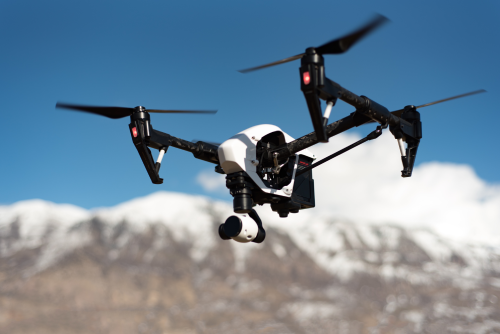
If you want to learn how to capture golden hour drone shots, the secret is not just owning a better drone. It is planning the light, choosing the right angle, and making calm camera decisions before sunrise or before sunset when the scene changes minute by minute.
For drone photography and videography, golden hour can turn ordinary roads, fields, coastlines, rooftops, and lakes into dramatic frames. In India, where haze, heat, monsoon clouds, and crowded urban spaces all affect a shoot, a little preparation goes a long way.
Quick Take
- Golden hour usually means the soft, warm light shortly after sunrise and shortly before sunset.
- Drone shots look best when the sun is low and coming from the side or slightly from behind the subject.
- Reach your location early. The best light often lasts only 10 to 25 minutes.
- For photos, shoot RAW if your drone supports it.
- For video, lock white balance and exposure whenever possible to avoid color and brightness shifts mid-shot.
- Keep ISO as low as possible for cleaner image quality.
- Fly slower than you think. Golden hour movement looks best when it feels smooth and deliberate.
- Watch for wind, birds, power lines, trees, and signal issues in low-angle light.
- In India, always verify the latest DGCA and Digital Sky requirements before flying and only operate where permitted.
Why golden hour works so well from the air
Golden hour light is low, soft, and directional.
That matters because drone cameras usually have small sensors compared with bigger mirrorless or cinema cameras. Small sensors can struggle in harsh midday light, where bright skies and dark ground create too much contrast. Golden hour reduces that problem.
From the air, golden hour gives you:
- Longer shadows that reveal shape and texture
- Warmer tones on buildings, crops, sand, rocks, and water
- Better separation between subject and background
- Softer highlights and more pleasing skin tones if people are in the frame
- More dramatic depth in wide landscapes
A flat field at noon may look dull. The same field at sunrise can show rows, tracks, mist, and shadow patterns. A city skyline at sunset can suddenly feel cinematic because side light defines the buildings.
When to fly for the best golden hour shots in India
Golden hour is not always a full hour.
In many places, the best light window is shorter than people expect, especially once the sun rises higher or dips lower. Local weather, season, haze, and terrain all affect it.
Sunrise vs sunset
Both can work, but they behave differently.
Sunrise
Sunrise often gives cleaner air, calmer winds, and fewer people on the ground. That makes it excellent for:
- Lakes and backwaters
- Empty roads or ghats
- Fields, plantations, and open landscapes
- Temples, forts, and architecture with less crowding
- Misty scenes in winter or hill regions
If you shoot near busy Indian cities, sunrise usually gives you a better chance of lower traffic, fewer pedestrians, and less visual clutter.
Sunset
Sunset is usually easier logistically because you do not have to wake up extremely early. It can deliver richer colors, but it also brings a few challenges:
- More people outdoors
- More wind in some areas
- More haze and pollution in urban locations
- Faster battery pressure because you may want multiple takes before light disappears
If your location has water, a west-facing shoreline, or a skyline view, sunset can be spectacular.
Seasonal differences in India
India’s seasons can change the look of golden hour more than many beginners realize.
- Summer: Bright, harsh days mean golden hour feels especially valuable. Heat shimmer and dust can reduce distant clarity.
- Monsoon: Clouds can either ruin the sun or create stunning breaks in the sky. Be cautious about moisture, gusts, and sudden weather changes.
- Winter: Northern India often gets haze or smog, especially around cities. This can soften the sun beautifully, but too much haze can reduce contrast.
- Post-monsoon: Often a strong time for clear skies, green landscapes, and clean color.
Use the sun direction, not just the clock
Do not think only in terms of time. Think in terms of where the sun will be relative to your subject.
Before you leave home, check:
- Sunrise or sunset time
- Sun direction
- Cloud cover
- Wind speed
- Whether your subject faces east or west
A fort wall, riverbank, or farm road can look totally different depending on whether the sun lights it from the front, side, or back.
Plan the shot before you launch
The biggest difference between average and great golden hour drone work is planning.
Pick subjects that benefit from low-angle light
Golden hour is best when the light can reveal shape, texture, reflection, or atmosphere.
Good subjects include:
- Rivers, lakes, dams, and backwaters
- Beaches and coastlines
- Agricultural fields with visible patterns
- Hill roads and winding highways
- Forts, old buildings, and textured architecture
- Bridges and flyovers
- Open grasslands and tree lines
- Boats, ghats, and waterfront scenes
- Tea estates, orchards, or plantations
- Desert or rocky terrain
Flat concrete rooftops with no pattern, crowded streets with too much clutter, or featureless open ground usually need stronger composition to work.
Decide your shot angle before takeoff
Ask yourself one question: what is the light doing for this frame?
Try one of these approaches:
- Side light: Best for texture, roads, rows in farms, ridges, and architecture
- Backlight: Best for silhouettes, glowing edges, haze, and reflections
- Front light: Cleaner and easier, but often less dramatic
If you are unsure, start with side light. It is the most consistently useful option.
Arrive early
Golden hour punishes late arrivals.
Reach the location early enough to:
- Walk the area
- Identify obstacles
- Check wind direction
- Set home point carefully
- Prepare batteries, memory card, and filter
- Visualize two or three shots before launch
For sunrise, that often means arriving while it is still dim but not so dark that you cannot safely assess the area.
Safety, legal, and compliance checks in India
Golden hour is beautiful, but low-angle light can also hide hazards.
Before any drone shoot in India:
- Verify the latest DGCA and Digital Sky rules that apply to your drone, flight area, and use case
- Fly only in permitted airspace
- Maintain visual line of sight at all times
- Avoid airports, military areas, sensitive locations, and other restricted zones
- Do not fly over crowds, busy roads, or gatherings
- Respect privacy, especially in residential areas, ghats, beaches, resorts, and rooftop environments
- Get landowner or site permission where needed
- Be extra careful near trees, towers, wires, birds, and uneven terrain
Low light adds another layer of risk. As the sun drops, it becomes harder to judge distance, branches, cables, and birds. Many drones also reduce obstacle-sensing performance in weak light.
Do not push into dusk or night just to squeeze out one more shot unless you are fully sure the flight is safe, permitted, and within the latest applicable rules.
Camera settings for golden hour drone shots
Golden hour looks forgiving, but your drone can still ruin it with bad automatic decisions.
The goal is simple: keep the image clean, keep colors consistent, and protect highlights in the sky.
Best settings for drone photos
For stills, use these starting points:
- Shoot in RAW if your drone supports it
- Keep ISO at the lowest native value, usually ISO 100
- Use manual white balance or a locked Kelvin setting instead of auto
- Slightly underexpose if the sky is very bright
- Turn on histogram and highlight warning if available
- Use auto exposure bracketing if the scene has bright sky and dark foreground
White balance is important because auto white balance can keep changing the warmth from shot to shot. That ruins consistency.
A good starting white balance for golden hour is often somewhere in the warm daylight range, then adjusted based on the look you want. The exact number matters less than keeping it stable.
Best settings for drone video
For video, consistency matters even more than for photos.
Use these general principles:
- Pick your frame rate before takeoff and stay consistent
- Keep shutter speed roughly around double the frame rate for natural motion blur
- Use an ND filter if the scene is bright and you need to control shutter speed
- Keep ISO low
- Lock white balance
- Use manual exposure if you can manage it
- Use a flat or log-style color profile only if you know how to grade it later
If that last point sounds too technical, keep it simple. A normal color profile with careful exposure is better than a flat profile you do not know how to edit.
Quick starting points
| Situation | Photo starting point | Video starting point |
|---|---|---|
| Soft sunrise with balanced light | RAW, ISO 100, locked white balance, slight underexposure if needed | 25 or 30 fps, low ISO, locked white balance, shutter controlled with ND if needed |
| Strong backlight and bright sky | RAW, ISO 100, expose for sky, use bracketing if available | Lock exposure to protect highlights, avoid auto exposure hunting |
| Final minutes before sunset | RAW, lowest ISO possible, watch shutter speed carefully | Keep motion smooth, avoid pushing ISO too high, land before image quality falls apart |
Manual vs auto
Beginners often ask whether to use manual settings or auto.
The practical answer:
- Use manual or semi-manual when you can
- Use auto with exposure lock if your drone app or your experience level makes full manual difficult
What you want to avoid is this:
- Auto white balance changing color mid-clip
- Auto exposure brightening and darkening every time you tilt the camera
- ISO jumping up and adding noise
Composition tips that make golden hour shots look intentional
Golden light alone does not guarantee a strong image. You still need structure.
Use side light for texture
This is the easiest composition upgrade.
When sunlight hits from the side, it reveals:
- Field rows
- Sand ripples
- Building edges
- Hill contours
- Road texture
- Tree shape
If your first shot feels flat, change your angle so the sun is off to one side instead of directly behind you.
Use shadows as part of the frame
Long shadows can become a design element.
Look for:
- Trees casting patterns on roads or fields
- Temple or fort shadows stretching across open ground
- Boats and jetties creating repeating shapes
- People or vehicles adding scale
Be careful not to over-rely on the sky. Sometimes the shadows on the ground are the actual subject.
Put the horizon where it matters
A common beginner mistake is placing the horizon in the middle every time.
Instead:
- Put the horizon lower when the sky is dramatic
- Put it higher when the ground textures, reflections, or patterns matter more
Make the choice on purpose.
Use reflections and water carefully
Golden hour and water are a natural match.
Try:
- Shooting across a river with side light
- Capturing boats with a glowing reflection trail
- Framing a shoreline curve with sunlit water
- Using backlight for sparkle, but not so much that the water becomes a blown-out patch
Look for layers
The best aerial frames often have foreground, middle ground, and background.
Example: – Foreground: trees or rooftop edge – Middle ground: road or river – Background: hills or city skyline
Layers give depth, especially in warm light.
Drone movements that work best at golden hour
Golden hour rewards smooth movement. Fast, aggressive flying often looks wrong unless you are intentionally making FPV-style content.
Here are six reliable moves.
1. Slow reveal
Start behind trees, a wall, a rooftop edge, or a ridge.
Then move up or forward slowly to reveal the lit subject.
Best for: – Forts – Temples – Lakes – Estates – Sunrise landscapes
2. Rise and tilt
Ascend gradually while tilting the camera down or up.
This is a strong way to reveal: – Rivers – Farm patterns – Coastlines – Roads
Keep the movement gentle. Most beginners tilt too quickly.
3. Orbit around a simple subject
Circle a lone tree, tower, building, statue, boat, or rock formation.
Golden hour works well here because light changes around the subject as you move.
Keep the subject simple. A messy urban block rarely makes a clean orbit.
4. Lateral slide
Move left or right while keeping the subject framed.
This creates parallax, which means foreground and background move at different speeds. It adds depth and looks more cinematic than just flying straight ahead.
5. Pull-back and rise
Start close to the subject, then move backward and upward.
This works well when you want to reveal: – A fort in its landscape – A ghat beside water – A farmhouse within fields – A road cutting through hills
6. Top-down drift
Golden hour is not only about horizon shots.
A straight-down view can work beautifully when the light creates pattern and contrast on the ground.
Try this over: – Fields – Sand – Salt pans – Boats near shore – Long shadows from trees or poles
A simple step-by-step workflow for better golden hour results
If you want consistent results, use the same process every time.
-
Choose one clear subject Do not arrive planning to shoot everything.
-
Check light direction and weather Cloud gaps, haze, and wind matter more than the exact temperature or forecast label.
-
Reach early At least 20 to 30 minutes before your expected light window.
-
Set up before the best light arrives Battery in, card formatted, white balance decided, filter attached if needed.
-
Take a safe first flight Use it to check exposure, wind, and composition rather than chasing hero shots immediately.
-
Capture your safe shot first Get one clean, simple composition before experimenting.
-
Then try two movement shots and one alternate angle This gives you variety without wasting battery.
-
Review quickly while there is still time Check sharpness, exposure, and whether the horizon is level.
-
Land before battery or visibility becomes stressful Do not force the last 5 percent of battery just because the sky looks prettier.
Real-world golden hour challenges in India
Haze and smog
Many Indian cities and plains deal with atmospheric haze, especially around sunrise in winter and around sunset in polluted urban areas.
Use haze creatively when it adds softness and depth. But if it kills contrast too much:
- Fly closer to the subject
- Use stronger shapes and silhouettes
- Avoid ultra-wide, distant cityscape shots
- Add dehaze carefully in editing, not excessively
Wind near coasts, hills, and open plains
A calm takeoff does not guarantee a calm flight.
At golden hour, wind can shift near beaches, cliffs, hill stations, and open agricultural land. If the drone is fighting hard to hold position, your footage will look less graceful and your battery will drain faster.
Birds
Bird activity can increase around sunrise and sunset.
Stay alert near: – Water bodies – Wetlands – Tree lines – Coastal areas – Open dumping grounds – Temple complexes with bird activity
If birds show interest in the drone, do not escalate. Gain distance safely and land if needed.
Dynamic range
The bright sky and darker land can still exceed what your drone sensor handles well.
To manage it:
- Expose for highlights
- Shoot RAW for stills
- Use bracketing in high-contrast scenes
- Avoid lifting shadows too aggressively later
Common mistakes beginners make
-
Arriving exactly at sunrise or sunset
By then, you are already late. -
Shooting everything facing the sun
Backlight is useful, but side light is often more flattering and easier to expose. -
Leaving white balance on auto
This causes odd color shifts between shots or clips. -
Flying too fast
Golden hour footage usually looks better with slow, controlled motion. -
Overexposing the sky
Once highlights are badly blown, recovery is limited. -
Raising ISO too much near the end of the session
Noise and mushy detail can ruin the shot. -
Ignoring foreground clutter
Wires, half-built structures, parked vehicles, and random rooftops can weaken the frame. -
Over-editing the warm tones
Golden hour should look rich, not orange and fake. -
Forgetting return planning
Low sun, glare, and fading light can make orientation harder on the way back.
Editing tips for a natural golden hour look
Golden hour images are already attractive. The edit should support the light, not overpower it.
For photos
- Lower highlights first
- Lift shadows gently
- Add warmth carefully, not aggressively
- Use contrast selectively
- Add dehaze only if haze is reducing clarity too much
- Straighten the horizon
- Crop out distractions
For video
- Match white balance across clips
- Keep the grade consistent from shot to shot
- Avoid over-saturating the yellows and oranges
- Stabilize lightly if needed, but do not create warping
- If you shot a flat profile, bring back contrast slowly and protect highlight detail
A good golden hour grade should feel believable. If every frame looks deep orange, viewers notice the edit before the scene.
FAQ
What is golden hour in drone photography?
It is the period shortly after sunrise and shortly before sunset when the sun is low and the light becomes soft, warm, and directional. The exact duration changes with season, weather, and location.
Is sunrise better than sunset for drone shots?
Not always, but sunrise often gives calmer air, fewer people, and cleaner light. Sunset can produce richer color, especially over water or skylines, but usually comes with more activity and sometimes more haze.
Do I need ND filters for golden hour video?
Often yes, especially if you want to keep shutter speed under control for smooth-looking motion. If you shoot only photos, ND filters are less essential.
Should I shoot in RAW or JPEG?
Shoot RAW for still photography whenever possible. It gives you more flexibility to recover highlights, adjust white balance, and manage contrast.
Is manual mode necessary for beginners?
Full manual is helpful, but not mandatory. If manual feels overwhelming, use auto exposure with exposure lock and lock white balance. The main goal is to avoid the camera changing decisions during the shot.
How high should I fly for golden hour shots?
There is no single best height. Start lower than you think and build the frame based on what the light is doing. Often, medium altitude gives better texture and depth than going as high as possible. Always stay within the latest applicable operating limits and permissions.
Can I keep flying after sunset if the sky still looks good?
Only if it is safe, permitted, and fully compliant with the latest rules that apply to your operation. From a practical standpoint, image quality, obstacle visibility, and orientation usually get worse quickly after the sun is down.
What subjects look best for golden hour drone photography in India?
Water bodies, ghats, coastlines, forts, agricultural fields, tea estates, desert terrain, hill roads, bridges, and old architecture all work very well because they respond strongly to low-angle light.
Final takeaway
To capture better golden hour drone shots, do three things on your next outing: reach early, lock your camera settings, and fly slower. Start with one simple subject, put the sun to the side, protect the highlights, and get one clean shot before experimenting.
If you do that consistently, even an entry-level camera drone can produce golden hour images that look polished, cinematic, and far more expensive than they really are.
