Introduction
Modern businesses use flying robots for real tasks every single day. You can spot them checking farm crops, mapping dirt roads, inspecting tall roofs, and shooting fun aerial videos. Buying a flying machine is only one step for a successful task. Teams also need skilled pilots, safe gear, good training, and clear software. Bringing all these parts together creates a helpful drone ecosystem.
What Is a Drone Ecosystem?
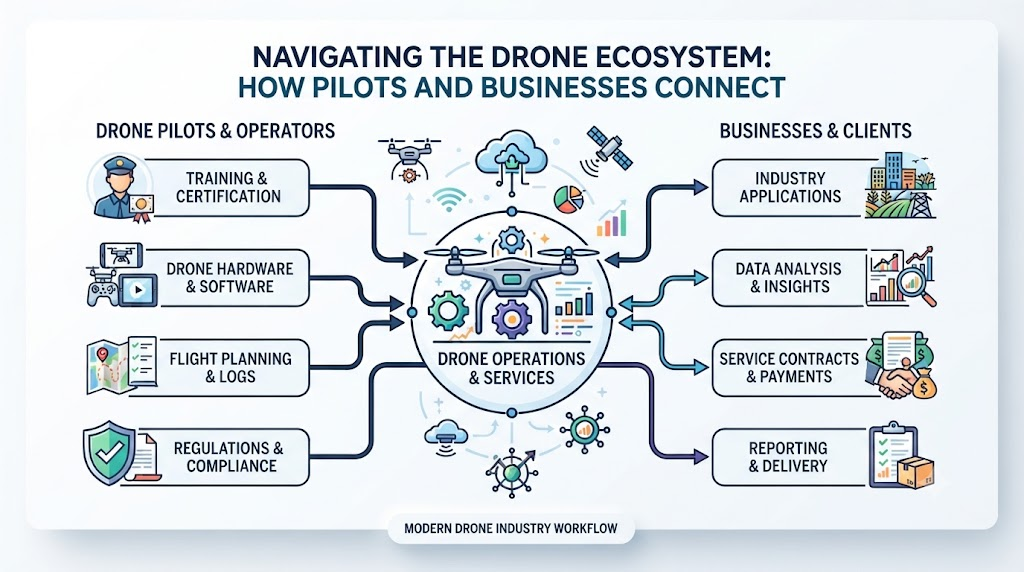
A drone ecosystem is a wide network of people, tools, and services that help sky projects succeed. It connects many groups who rely on each other to get work done safely and quickly.
- Drone pilots operate the aircraft with care and skill.
- Businesses need sky views and accurate data for daily operations.
- Manufacturers build flying parts, motors, and camera mounts.
- Training institutes teach flight skills and safety rules.
- Software teams process aerial pictures into clean digital maps.
- Service providers finish specific projects from start to finish.
- Industry communities share helpful tips and real-world ideas.
Each group supports the others to make modern flight safe, legal, and easy to manage. When all these parts work as one, complex tasks become much simpler for everyone involved.
Why Pilots and Businesses Need Each Other
Pilots and businesses depend on each other for great results. Companies need trained operators to fly heavy gear, while pilots look for steady jobs and clients.
A farm owner might need clear photos of sick plant leaves. A skilled pilot can capture those images using the right camera drone. The farm must share clear goals before the flight begins. The pilot must also understand the exact job before agreeing to fly. This teamwork turns a risky flight into a safe and productive mission.
How a Drone Ecosystem Connects Pilots and Businesses
Linking flyers with companies follows a few simple steps.
Businesses Define Their Needs
A company starts by finding its main problem. It might need land mapping, building checks, or crop scouting. Clear goals help teams find the right support.
Businesses Explore Pilot Profiles
Client teams review pilot profiles to check past work and gear. Looking at work samples and safety records helps companies choose the best match for a project.
Pilots Find Suitable Projects
Pilots show off their skills online so local clients can spot them. Clear profiles help businesses understand what a flyer can do. Joining a platform does not guarantee paid work right away.
Both Sides Discuss Project Details
Both parties talk about the site, timing, price, and final video or photo output. They also check local weather and safety rules before launch.
The Project Moves to Delivery
The pilot completes the flight and shares the final files. Deliverables often include sharp photos, digital maps, or inspection logs.
The Role of Drone Models and Equipment
Different jobs need unique flying tools. Common needs include:
- Cameras for clear aerial photos and videos.
- Mapping tools for land and dirt surveys.
- Thermal lenses for finding hot spots on equipment.
- Spray tanks for farm crop care.
- Sensors that gather specific field data.
Expensive gear is not always required. The right flyer depends on the task, budget, and local rules.
How Drone Training Supports Better Business Results
Training matters for safe and smart flights. Good courses teach stick control, flight planning, safety checks, and battery care.
Businesses should always check a pilot’s training credentials. In India, pilots look to official Directorate General of Civil Aviation (DGCA) rules and the Digital Sky platform for legal guidance. Not every school offers the same course, so learners must verify details carefully.
Industries That Benefit From Connected Drone Networks
Agriculture
Drones help farmers check crop health, spot dry dirt, and spray fields. Proper gear and local rules keep farm flights safe.
Construction and Infrastructure
Flying cameras help builders track site progress and view tall structures without risk. Good mapping depends on steady gear and clear weather.
Land Surveying and Mapping
Drones snap rapid overhead photos that software turns into 3D land maps. Companies often hire mapping specialists alongside expert pilots.
Film and Aerial Photography
Media crews hire pilots to shoot smooth clips for movies and outdoor events. Good planning keeps flights clear of people and power lines.
Industrial Inspection
Robotic cameras check solar panels and wind turbines safely. Drones do not replace every inspection method, but they save time on tall assets.
Benefits of a Connected Drone Ecosystem
Bringing drone services together creates many practical perks. Users can find pilots faster, compare gear models easily, and learn from training experts in one spot. A shared network saves time when planning new sky jobs.
Common Problems in the Drone Industry
Pilots and businesses sometimes face tough hurdles. Issues include unclear project goals, wrong equipment choices, brief pilot experience, and sudden rule delays. Clear project briefs and written terms help reduce these risks.
How Businesses Can Choose the Right Drone Pilot
Companies should check past work samples, safety steps, and equipment before hiring. A low price tag should not guide the final choice. Both sides must agree on payment terms, delivery dates, and data handling early on.
How Pilots Can Build Strong Business Connections
Pilots win trust by keeping profiles honest and sharing clear work samples. Flyers should focus on tasks they can complete safely. Good communication helps clients feel confident.
How DronesNow Supports a Connected Drone Ecosystem
Platforms like DronesNow help users explore certified pilots, training schools, and searchable drone models in one place. These tools make it simple to compare specs and discover options across the industry.
Practical Tips for Starting a Project
Set clear goals, establish a budget, and check local flying rules before launch. Make sure both teams agree on the final output in writing.
Frequently Asked Questions
1. What is a drone ecosystem?
It is a connected network of pilots, businesses, gear makers, and training schools. Every part works together to make commercial flight safe, organized, and easy to run.
2. How do drone ecosystems connect pilots and businesses?
They bring flyers and client companies together on shared platforms. This helps both sides discover local services, review work history, and talk about project goals quickly.
3. How can a business find a suitable drone pilot?
Companies can review pilot profiles, past work samples, equipment lists, and safety records online to match the right flyer with their specific project needs.
4. What types of work can commercial drones support?
Commercial drones help with farm crop checks, land mapping, building roof reviews, infrastructure inspections, and media video shoots across many different fields.
5. Why do businesses need trained drone pilots?
Trained flyers understand safety rules, motor care, battery limits, and local airspace limits. Their skills protect people on the ground and ensure accurate project results.
6. How do businesses choose the right drone?
Buyers compare camera zoom, battery flight time, payload weights, and sensor types for different models to find a machine that matches their specific task.
7. Can drone pilots find projects through online platforms?
Yes, licensed flyers publish work profiles to meet local clients. Online tools help them display their skills, though finding work still takes active effort.
8. What should businesses check before hiring a drone pilot?
Clients should verify safety records, equipment fit, past project examples, valid pilot certifications, and clear delivery terms before signing any agreement.
9. How can drone training help pilots?
Good training courses teach steady flight control, weather check routines, equipment maintenance, and emergency landing steps to keep every flight safe.
10. How can DronesNow help users explore the drone industry?
The site lets users compare drone models, view pilot profiles, and find training schools easily in one central place without unnecessary searching.
11. Are drone rules the same everywhere?
No, flight rules depend heavily on the aircraft weight, flying location, and type of operation. Pilots must check local guidelines before every single launch.
12. What deliverables do businesses usually get from a drone project?
Clients commonly receive high-resolution aerial photos, stitched orthomosaic maps, thermal inspection videos, or structured data reports depending on their initial goals.
Conclusion
Bringing together pilots, businesses, equipment makers, training institutes, and service providers creates a strong foundation for modern aerial work. A successful project always relies on clear communication, well-defined goals, skilled operators, and proper safety planning. When all these pieces fit together smoothly, commercial flights become safer, faster, and much more productive. Take time to explore DronesNow.in today if you want to discover reliable pilot profiles, training options, and equipment resources that match your next project.
