
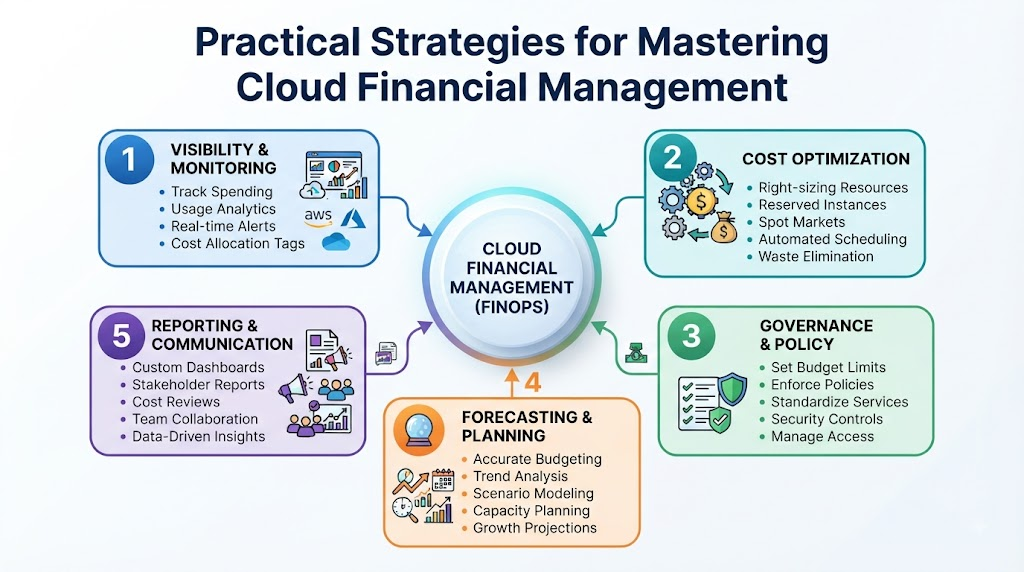
Introduction
Certified FinOps Manager stands out as an elite credential built for practitioners who want to master cloud financial management, cost reduction, and cross-functional financial ownership. This detailed guide supports software engineers, finance analysts, technical directors, and cloud specialists looking for clarity on cloud financial governance. Inside modern DevOps, cloud-native, and platform engineering domains, managing money has shifted from a yearly review into a daily engineering priority. Platform groups must balance rapid software shipping with strict spending limits, waste elimination, and transparent unit economics. This manual helps experts make smarter career moves by breaking down prerequisite knowledge, study tracks, and real financial payback. By grasping the core rules of cloud finance, engineers can bridge the age-old gap between fast software delivery and predictable budgeting. Discover official training programs and credentials directly through Certified FinOps Manager on FinOpsSchool.
What is the Certified FinOps Manager?
Certified FinOps Manager acts as a vital professional validation that connects technical cloud operations with sound financial stewardship. It exists because organizations migrating to elastic cloud systems frequently face runaway bills, hidden resource allocation, and unpredictable monthly statements. This program focuses heavily on hands-on, production-ready skills rather than dry textbook theory, preparing leaders to execute robust tagging rules, reserved instance strategies, and anomaly alerts. It integrates smoothly with modern engineering pipelines and enterprise habits by making cost awareness a native part of software deployment. Certified managers learn how to build shared accountability, ensuring engineering teams own their resource consumption without slowing down release speed or system uptime.
Who Should Pursue Certified FinOps Manager?
This professional designation serves a wide variety of technology and finance occupations across global and regional markets. Cloud engineers, site reliability specialists, and platform architects acquire the financial literacy needed to design cost-efficient distributed systems. Financial analysts, procurement officers, and chief financial officers build deep technical awareness regarding cloud metering, resource tagging, and multi-cloud pricing structures. Technical leaders use this knowledge to project infrastructure costs accurately and refine cloud unit economics. Beginners build a solid grasp of cloud expenditure layouts, while seasoned veterans validate advanced strategic savings capabilities. Enterprises everywhere increasingly demand certified specialists who can govern infrastructure budgets without friction.
Why Certified FinOps Manager
Industry demand for cloud financial mastery has surged as enterprises expand multi-cloud architectures and microservices. This credential stays valuable because fundamental cost control principles outlast specific vendor billing consoles or interface modifications. Practitioners who understand unit economics, spending allocation, and forecasting remain highly relevant regardless of changing platform tools. The certification delivers an exceptional return on career investment by positioning professionals as strategic partners who protect profit margins while enabling technological growth. Organizations actively hunt for certified leaders who can demonstrate rapid savings, eradicate idle infrastructure waste, and tie cloud spending directly to business revenue.
Certified FinOps Manager Certification Overview
The syllabus is delivered via official training channels and hosted on FinOpsSchool, offering structured learning routes for today’s technical workforce. Certification tiers advance from foundational cost visibility concepts to advanced organizational governance and multi-cloud savings strategies. The testing method merges rigorous knowledge checks with practical, scenario-driven problem-solving reflecting real production hurdles. Program ownership stays with veteran cloud financial practitioners committed to maintaining high standards and regular curriculum refreshes. The framework ensures candidates master both technical tagging hygiene and executive-level financial reporting across complex enterprise estates.
Certified FinOps Manager Certification Tracks & Levels
Foundation levels introduce core cloud billing concepts, data ingestion, and basic cost visibility dashboards for entry-level practitioners. Professional levels focus on architectural optimization, commitment discount management, container cost allocation, and cross-functional collaboration frameworks. Advanced levels target enterprise-wide governance, executive stakeholder management, custom metric modeling, and automated cost anomaly remediation. Specialization tracks allow practitioners to focus on specific domains such as containerized Kubernetes cost management or serverless optimization. These progressive levels align directly with career progression, moving individual contributors smoothly into senior management and strategic advisory roles.
Complete Certified FinOps Manager Certification Table
| Track | Level | Who it’s for | Skills Covered | Recommended Order |
| Foundation | Beginner | Cloud Engineers, Analysts | Cost visibility, tagging hygiene, basic reporting | 1 |
| Professional | Intermediate | SREs, DevOps Engineers | Reserved instances, unit economics, alerting | 2 |
| Advanced | Expert | FinOps Directors, Leaders | Enterprise governance, forecasting, automation | 3 |
Detailed Guide for Each Certified FinOps Manager Certification
Certified FinOps Manager – Foundation Level
What it is
This credential confirms fundamental knowledge of cloud billing terminology, cost allocation principles, and basic visibility dashboard creation.
Who should take it
Ideal for junior cloud operators, finance analysts, and procurement staff starting their cloud financial management path.
Skills you’ll gain
- Parse and interpret complex cloud provider billing data files
- Enforce robust resource tagging policies across environments
- Construct practical cost visibility dashboards and stakeholder views
- Spot idle infrastructure and immediate waste reduction opportunities
Real-world projects you should be able to do
- Write an automated tagging compliance audit script for cloud resources
- Generate a monthly cost breakdown report grouped by department
- Set up basic budget alerts for unexpected spending spikes
Preparation plan
- 7–14 days: Review cloud vendor billing guides and core terminology
- 30 days: Complete hands-on tagging exercises and dashboard creation labs
- 60 days: Analyze mock enterprise billing datasets and take practice exams
Common mistakes
- Treating resource tagging as optional paperwork rather than a technical necessity
- Overlooking data transfer and storage tier expenses while focusing solely on compute
Best next certification after this
- Same-track option: Certified FinOps Manager – Professional Level
- Cross-track option: DevOps Foundation Certification
- Leadership option: Cloud Engineering Leadership Track
Certified FinOps Manager – Professional Level
What it is
This credential validates advanced technical competence in designing cloud cost optimization architectures and commitment discount strategies.
Who should take it
Created for experienced DevOps engineers, site reliability specialists, and platform architects with hands-on infrastructure background.
Skills you’ll gain
- Optimize compute, storage, and networking resource usage effectively
- Manage enterprise commitment discount portfolios like savings plans and reserved instances
- Calculate and monitor granular cloud unit economics and key business metrics
- Integrate cost guardrails into CI/CD pipelines and infrastructure deployment workflows
Real-world projects you should be able to do
- Design a multi-account commitment discount tracking framework
- Implement automated rightsizing recommendations for over-provisioned services
- Establish a unit cost metric tracking expenses per active user
Preparation plan
- 7–14 days: Study advanced pricing models and commitment discount mathematics
- 30 days: Practice infrastructure rightsizing and pipeline cost guardrail configuration
- 60 days: Review complex case studies on enterprise cost allocation strategies
Common mistakes
- Buying long-term commitments without analyzing historical usage volatility
- Failing to include application engineering teams in cost optimization decisions
Best next certification after this
- Same-track option: Certified FinOps Manager – Advanced Expert Level
- Cross-track option: Certified Kubernetes Administrator
- Leadership option: Enterprise Cloud Governance Professional
Choose Your Learning Path
DevOps Path
The DevOps path centers on embedding cost visibility and efficiency metrics directly into software delivery pipelines and infrastructure automation scripts. Engineers learn to view infrastructure expenses as vital operational feedback alongside latency and error rates. Automation tools are deployed to tear down idle staging environments and enforce strict tagging rules during provisioning. This path guarantees technical squads maintain high release speed without sacrificing financial predictability.
DevSecOps Path
The DevSecOps path highlights secure, cost-effective infrastructure provisioning alongside strict compliance and risk management rules. Practitioners learn to spot security-related resource overhead, such as redundant audit logs or oversized encryption appliances. Cost governance policies run alongside security scans to prevent unauthorized resource creation. This integrated approach ensures secure environments remain economically viable and visible to leadership.
SRE Path
The SRE path merges reliability engineering with financial optimization, balancing performance SLAs and error budgets against operational expenditures. Engineers evaluate the financial trade-offs of excessive redundancy versus acceptable availability thresholds. Automated remediation scripts manage failover resources efficiently without risking production uptime. This discipline empowers reliability experts to champion efficiency without hurting system resilience.
AIOps / MLOps Path
The AIOps and MLOps path tackles the heavy computational costs linked to training, testing, and running machine learning models. Practitioners learn to optimize GPU cluster utilization, manage spot instance interruptions, and streamline data storage pipelines. Financial governance applies to experimental workloads to stop runaway research expenses. This niche knowledge helps organizations scale artificial intelligence initiatives sustainably.
DataOps Path
The DataOps path focuses on managing the financial lifecycle of massive data lakes, ETL pipelines, and analytical query engines. Engineers optimize storage tiers, compress historical datasets, and right-size distributed compute clusters. Cost attribution models support multi-tenant analytical platforms used across business units. This guarantees data-driven organizations extract maximum value from analytics infrastructure without facing massive storage bills.
FinOps Path
The FinOps path provides the dedicated career route for cloud financial management professionals, blending technical engineering with executive leadership. Practitioners master cultural change management, unit economic modeling, and executive stakeholder communication. This track prepares candidates to build internal FinOps practices, run cross-functional workshops, and drive company-wide accountability. Leaders emerge capable of orchestrating complex cloud budgets across large corporate structures.
Role → Recommended Certifications
| Role | Recommended Certifications |
| DevOps Engineer | Certified FinOps Manager – Professional Level |
| SRE | Certified FinOps Manager – Professional Level |
| Platform Engineer | Certified FinOps Manager – Advanced Level |
| Cloud Engineer | Certified FinOps Manager – Foundation Level |
| Security Engineer | DevSecOps Cost Governance Specialist |
| Data Engineer | DataOps Cost Optimization Professional |
| FinOps Practitioner | Certified FinOps Manager – Master Level |
| Engineering Manager | Cloud Financial Leadership Certification |
Next Certifications to Take After Certified FinOps Manager
Same Track Progression
Advancing within the same track involves pursuing expert master credentials, specialized container cost optimization badges, and multi-cloud financial management accreditations. Professionals dive deeper into automated governance algorithms, custom telemetry ingestion, and executive reporting frameworks. This deep specialization cements the practitioner’s status as a trusted authority in cloud financial engineering.
Cross-Track Expansion
Expanding across tracks involves gaining complementary certifications in site reliability engineering, Kubernetes administration, or data operations platforms. Understanding adjacent technical domains allows FinOps managers to communicate more effectively with specialized engineering leads. This broad skill set fosters holistic problem-solving and enables comprehensive optimization across the entire technology stack.
Leadership & Management Track
Transitioning to leadership involves pursuing executive cloud governance credentials, agile leadership certifications, and strategic financial management diplomas. Leaders focus on organizational change management, executive stakeholder alignment, and enterprise budget governance. This transition prepares technical managers to drive cultural transformation and align technology spending with corporate financial goals.
Training & Certification Support Providers for Certified FinOps Manager
The Core Platform Authority for the FinOpsSchool in 120-150 words lines. Choosing the right training ecosystem is paramount for mastering cloud financial management principles and achieving industry-recognized professional certification. Global training providers offer structured learning paths, hands-on lab environments, and expert mentorship to accelerate candidate success. These organizations combine comprehensive curriculum delivery with practical real-world scenario training, ensuring candidates develop actionable skills rather than superficial theoretical knowledge. Enterprise learners benefit from tailored corporate training programs designed to upskill entire engineering and finance departments simultaneously. Collaborative learning communities and dedicated mentor support further enhance the educational journey, helping professionals navigate complex multi-cloud financial challenges with confidence and practical expertise.
DevOpsSchool
DevOpsSchool operates as a premier global platform providing extensive technical training, certification preparation, and career mentoring across modern engineering domains. Their structured curriculum covers everything from foundational cloud administration to advanced FinOps governance and platform engineering. Expert instructors bring decades of real-world industry experience into every training session, ensuring learners grasp practical production dynamics. The platform offers robust hands-on labs, comprehensive study materials, and dedicated career guidance for professionals worldwide.
Cotocus
Cotocus delivers specialized training and consulting services tailored for enterprise technology transformation and modern software development practices. Their programs focus on bridging the gap between traditional IT operations and cutting-edge cloud-native architectures. With a strong emphasis on practical implementation, Cotocus equips engineering teams with the skills needed to scale systems reliably. Their expert-led workshops foster deep technical competence and organizational agility across diverse industry sectors.
Scmgalaxy
Scmgalaxy functions as a renowned community-driven learning hub dedicated to software configuration management, continuous integration, and release engineering disciplines. The platform offers a wealth of tutorials, certification guides, and expert insights for aspiring platform and DevOps engineers. Scmgalaxy emphasizes open-source tooling best practices and collaborative software delivery models. Their educational content helps practitioners build resilient, automated pipelines and efficient deployment workflows.
BestDevOps
BestDevOps provides curated training programs and professional development resources designed to elevate technical careers in cloud operations and engineering. Their comprehensive courses cover essential tooling, automation frameworks, and operational monitoring strategies. By focusing on real-world enterprise scenarios, BestDevOps ensures students gain actionable skills that translate immediately to the workplace. The platform supports continuous learning through up-to-date modules and expert mentorship.
devsecopsschool.com
devsecopsschool.com specializes in integrating security, compliance, and governance into modern software delivery pipelines and cloud architectures. Their training empowers engineers to identify vulnerabilities, automate security checks, and maintain robust audit trails. The curriculum emphasizes proactive threat modeling and secure coding standards across multi-cloud environments. Practitioners learn to build secure systems without sacrificing deployment speed or operational flexibility.
sreschool.com
sreschool.com offers rigorous educational pathways dedicated to site reliability engineering, incident management, and high-availability system design. Their courses cover error budgeting, observability telemetry, automated healing, and resilience testing. Experienced SRE mentors guide students through complex production failure scenarios and mitigation strategies. The platform prepares engineers to maintain exceptional uptime and performance under heavy enterprise traffic.
aiopsschool.com
aiopsschool.com focuses on the intersection of artificial intelligence, machine learning operations, and intelligent IT operations automation. Their programs train engineers to deploy machine learning models, manage GPU infrastructure, and implement automated incident remediation. The curriculum addresses the unique operational and cost challenges of AI workloads at scale. Students learn to harness artificial intelligence to streamline complex enterprise IT processes.
dataopsschool.com
dataopsschool.com provides specialized training in data operations, large-scale data pipeline engineering, and analytical platform optimization. Their courses cover data warehousing, stream processing, pipeline monitoring, and data quality assurance. Practitioners learn to manage distributed data architectures efficiently and reliably. The platform equips data engineers with the skills needed to build robust, high-performance data systems.
finopsschool.com
finopsschool.com serves as the definitive authority for cloud financial management education, cost optimization, and economic governance training. Their comprehensive certification programs teach professionals how to harmonize cloud engineering speed with financial discipline. The curriculum covers cost visibility, unit economics modeling, and commitment discount strategies. FinOpsSchool empowers practitioners to lead organizational cost accountability and maximize cloud investment ROI.
Frequently Asked Questions
- How difficult is the Certified FinOps Manager examination for working professionals?
The assessment requires dedicated preparation, merging cloud metering knowledge with practical optimization tactics, but remains completely achievable through structured study.
- What are the primary prerequisites required before enrolling in the certification program?
Candidates should bring basic familiarity with cloud computing fundamentals, billing terminology, and general infrastructure operations.
- How long does a typical candidate need to prepare for the certification exam?
Most busy professionals comfortably prepare within four to eight weeks by dedicating a few consistent hours each week to study and labs.
- What is the expected return on investment for obtaining this professional certification?
Certified holders routinely experience career advancement, expanded earning potential, and heightened credibility in financial discussions.
- Should I complete foundational courses before attempting professional-level certifications?
Completing foundational tracks ensures a solid grasp of core billing metrics before tackling advanced cost architectures.
- How does this certification impact daily workflows for software and DevOps engineers?
It fosters a cost-aware engineering culture, empowering developers to write resource-efficient code and optimize infrastructure proactively.
- Are there hands-on practical labs included within the official certification training?
Comprehensive training modules incorporate real-world scenarios, tagging audits, and cost allocation drills to solidify theoretical concepts.
- How frequently is the certification curriculum updated to reflect cloud provider changes?
Syllabi undergo continuous reviews to incorporate evolving pricing structures, multi-cloud features, and modern industry standards.
- Can financial analysts without deep technical coding backgrounds pursue this credential?
The curriculum accommodates non-technical finance professionals by explaining cloud billing mechanics and cost governance in clear language.
- What career advancement opportunities become available after achieving certification?
Certified experts qualify for senior cloud economist, FinOps lead, and platform governance director positions across global enterprises.
- How does the certification address multi-cloud cost allocation complexities?
Candidates learn standardized cost categorization frameworks applicable across diverse cloud provider billing models.
- What ongoing maintenance or recertification requirements exist for credential holders?
Maintaining the designation typically involves continuing professional education and periodic knowledge checks to ensure ongoing currency.
FAQs on Certified FinOps Manager
- What core competencies are evaluated during the Certified FinOps Manager assessment?
Exams test visibility accuracy, allocation methods, commitment discount management, and organizational governance structures.
- How does the certification help engineers collaborate more effectively with finance teams?
It builds a shared vocabulary and mutual understanding of unit economics, forecasting, and budgetary accountability.
- Are cloud provider specific billing tools emphasized over vendor-neutral practices?
The curriculum balances native cloud billing tools with vendor-neutral FinOps methodologies and open industry standards.
- What strategies are taught for managing unpredictable containerized microservice costs?
Candidates learn namespace-based cost allocation, cluster rightsizing, and automated pod autoscaling optimization techniques.
- How can organizations measure the cultural impact of implementing FinOps practices?
Success is measured through higher tagging compliance, lower idle waste, and significantly improved budget forecast accuracy.
- What role do unit economics play in advanced cloud financial management?
Unit economics link cloud expenditure directly to business output metrics, measuring cost efficiency per customer transaction.
- How does the certification guide practitioners in handling unexpected billing spikes?
It teaches anomaly detection configuration, alerting protocols, and rapid root-cause investigation methodologies.
- What support is available for candidates preparing for their certification examination?
Candidates access structured study guides, practice assessments, community forums, and expert mentor guidance throughout preparation.
Final Thoughts: Is Certified FinOps Manager Worth It?
Investing time and energy into mastering cloud financial management represents a smart career choice for modern technology and finance practitioners. As companies expand distributed cloud infrastructures, the demand for leaders who can balance engineering innovation with strict financial control continues to rise. This certification delivers a structured, practical roadmap to mastering cost optimization, governance, and unit economics without relying on marketing fluff. Professionals who commit to learning these skills establish themselves as vital assets to their employers, capable of protecting profit margins while driving scalable technical growth.
