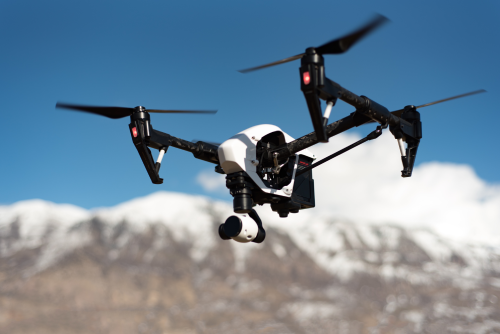
Smart flight modes can make a drone much easier to fly and a lot more useful, especially if you want smooth tracking shots, automatic orbits, repeatable routes, or quick social-media clips without advanced piloting skills. The best drones with smart flight modes are not just the ones with the longest feature list, but the ones whose automation works reliably, safely, and with realistic support for buyers in India.
Quick Take
-
Best overall for most buyers: DJI Mini 4 Pro
Best mix of portability, reliable tracking, obstacle sensing, and genuinely useful automation. -
Best for creators and small businesses: DJI Air 3
Better framing flexibility and stronger all-round shooting confidence than most compact drones. -
Best premium choice for professional video work: DJI Mavic 3 Pro
Expensive, but excellent if smart flight modes support paid shoots and repeatable workflows. -
Best value older pick: DJI Mini 3 Pro
Still a strong buy if you want real tracking and cinematic auto modes without jumping to the newest flagship. -
Best non-DJI compact alternative: Autel EVO Nano+
Worth considering only if you can confirm dependable local service, batteries, and warranty support. -
Best non-DJI prosumer alternative: Autel EVO Lite+
A camera-first option with useful automation, but ecosystem and support matter more here. -
Most important buyer note in India:
Do not buy a drone for smart features alone. Verify current compliance requirements, firmware/app support, spare batteries, repair options, and who will service it in your city.
What “smart flight modes” actually mean
Many drones advertise intelligent features, but not all of them matter in real flying. For most buyers, these are the smart modes worth paying attention to:
ActiveTrack or Subject Tracking
The drone follows a person, bike, car, or other subject automatically while keeping it in frame.
Useful for: – Travel vlogs – Outdoor sports in open areas – Real estate walk-through exteriors – Creator shots when you are alone
What to know: – Tracking is usually best in open spaces. – It can fail around trees, wires, crowds, low light, and subjects moving unpredictably. – It does not replace safe manual control.
Spotlight
The drone flies where you steer it while the camera keeps pointing at the subject.
Useful for: – Beginners who want help with framing – Slow-moving creative shots – Keeping a building, person, or vehicle centred
This is often more practical than full tracking because you keep more control.
Point of Interest or Orbit
The drone circles a subject automatically.
Useful for: – Monuments – Resorts – Farmhouses – Vehicles parked in a safe open area – Real estate hero shots
The quality of the orbit depends on GPS accuracy, obstacle clearance, and the drone’s sensing system.
Waypoint Flight
You set a route or key positions, and the drone can repeat that path.
Useful for: – Construction progress videos – Site documentation – Tourism shots that need consistency – Comparing the same location over time
This is one of the most valuable “pro” smart features because repeatability saves time.
QuickShots and MasterShots
Preset moves like dronie, rocket, circle, helix, or automated mini-edits.
Useful for: – Beginners – Fast social media clips – Learning movement ideas – Getting decent footage with little practice
These are convenient, but they are not a substitute for strong tracking, waypoint, or obstacle sensing.
Obstacle Sensing and Automatic Return
These are not always marketed as creative modes, but they matter more than many cinematic presets.
Useful for: – Beginner safety – Recovering from weak signal – Avoiding simple collisions – Reducing panic during flight
Important: obstacle sensing does not reliably see everything, especially wires, thin branches, shiny surfaces, or difficult lighting.
Best drones with smart flight modes at a glance
| Drone | Best for | Smart modes that matter most | Why it stands out | Main watch-out |
|---|---|---|---|---|
| DJI Mini 4 Pro | Most buyers, travel creators, advanced beginners | ActiveTrack 360, Spotlight, Point of Interest, Waypoint Flight, QuickShots, MasterShots | Best balance of small size and serious automation | Small body is less forgiving in strong wind than larger drones |
| DJI Air 3 | Creators, small businesses, event shooters | Advanced tracking, waypoint tools, QuickShots, obstacle-aware automation | More flexible framing and a more capable all-round platform | Bigger spend, bigger kit |
| DJI Mavic 3 Pro | Professional teams, agencies, premium creators | Reliable tracking, waypoint repeatability, advanced sensing, pro workflow features | Strongest premium smart-flight package for commercial-style shooting | Expensive drone, batteries, and accessories |
| DJI Mini 3 Pro | Buyers chasing value | Core tracking, Spotlight, orbit-style modes, QuickShots | Still compact and very capable for content creators | Older and not as complete as Mini 4 Pro |
| Autel EVO Nano+ | Compact alternative seekers | Subject tracking, orbit, cinematic auto shots | Small, travel-friendly alternative to DJI | Verify app quality, batteries, service, and repairs in India |
| Autel EVO Lite+ | Camera-first hobbyists and prosumers | Tracking, orbit, cinematic presets | Larger alternative with useful automation | Support and ecosystem can vary a lot by seller and region |
1) DJI Mini 4 Pro
Why it is the best overall pick
If you want the easiest answer to “Which drone gives me the most useful smart flight modes without becoming too large or too expensive?”, this is it.
The Mini 4 Pro brings together: – reliable subject tracking – useful waypoint capability – strong beginner-friendly automation – a compact body that is easy to carry – obstacle sensing that makes automation more practical
For many buyers, this is the point where smart modes stop feeling like a gimmick and start feeling like real tools.
Best for
- First serious drone buyers
- Solo creators
- Travel videographers
- Students learning aerial filmmaking
- Small businesses making social content
- Buyers who value portability
Why it works well in practice
A lot of beginners want automated shots because they are still learning stick control. The Mini 4 Pro makes sense because it gives you a strong mix of:
- follow shots that look smoother
- orbit shots with less stress
- repeatable flights for testing ideas
- good enough sensing to reduce simple mistakes
That makes it especially attractive for resort marketing, YouTube travel videos, college projects, and lightweight commercial content.
Where it is not perfect
- Small drones still get pushed around earlier by wind.
- Smart tracking works best in open spaces, not crowded streets.
- Buyers in India should not assume that portability automatically settles compliance questions.
2) DJI Air 3
Why it is the best step-up pick
The Air 3 is the drone many creators move to when they outgrow the compact mini class. Its smart flight modes are strong, but the bigger reason to choose it is confidence: more stable shooting, more flexible framing, and a platform that feels better suited to repeat work.
One major advantage is that it gives you more framing options than a basic single-camera drone. That matters for smart modes because tracking is not just about following a subject. It is about following it from a useful distance with a pleasing perspective.
Best for
- Wedding and event content teams
- Real estate creators
- Tourism and hospitality shoots
- Auto content in controlled, legal environments
- Small production businesses
Why it stands out
Compared with a mini-class drone, the Air 3 can feel more “grown up” in actual work. Smart modes become more useful because the drone itself is a more capable shooting platform.
It is a strong choice if you: – already know you will fly often – want better lens flexibility – need repeatable client work – do not want to jump to full premium pricing
Main compromise
You are buying a larger, more expensive system. Extra batteries, safe transport, and compliance checks become more important.
3) DJI Mavic 3 Pro
Why it is the best premium option
For buyers doing paid video work, premium real estate content, higher-end wedding films, tourism campaigns, or agency work, the Mavic 3 Pro is the strongest smart-flight choice in this list.
Its value is not only that it has smart modes. It is that the automation sits inside a more professional shooting system.
Best for
- Video professionals
- Production houses
- Experienced commercial operators
- Agencies that need repeatable, polished results
Where the smart modes help most
For professionals, smart modes are less about showing off automation and more about reducing workload.
Examples: – repeating a route over a site for consistent progress footage – maintaining better subject framing during a complex move – capturing alternate focal-length shots without changing aircraft – building safer, more repeatable commercial workflows
Main compromise
This is not a casual purchase.
You should only consider it if: – your workload justifies the cost – you can handle the bigger operational checklist – you have a clear service, battery, and repair plan
For many Indian buyers, the Air 3 is the more practical ceiling before cost and complexity rise sharply.
4) DJI Mini 3 Pro
Why it is still a strong value buy
The Mini 3 Pro remains relevant because it gives many buyers the features they actually use most:
- subject tracking
- Spotlight-style framing help
- orbit and QuickShot-style automation
- a very portable form factor
If you do not need the newest sensing and the most advanced automation package, it can still make a lot of sense.
Best for
- Budget-conscious creators
- Beginners stepping beyond entry-level drones
- Buyers who want a known, proven model
- Social video creators
Where it fits today
This is the drone to look at when your question is not “What is the absolute best?” but “What is the smartest buy if I want real intelligent features and solid footage without going top-end?”
Main compromise
Its smart-mode set is not as complete or as polished as the Mini 4 Pro. If automation is your main reason to upgrade, the newer model is the better long-term choice.
5) Autel EVO Nano+
Why it is worth considering
Not everyone wants to enter the DJI ecosystem. If you want a compact alternative with useful intelligent shooting features, the EVO Nano+ is one of the better-known names to look at.
Best for
- Buyers who prefer a non-DJI option
- Travel-friendly flying
- Casual creators who still want tracking and orbit-style features
The real buyer warning
In India, non-DJI alternatives can look attractive on paper, but the real test is support.
Before buying, confirm: – who handles warranty – where batteries will come from – whether spare props are easy to get – which app version is supported – whether firmware updates are being maintained – what the repair path is if something fails
If you cannot get clear answers, the smart modes are not worth much.
6) Autel EVO Lite+
Why it makes this list
The EVO Lite+ is more interesting for buyers who care about camera performance first and smart modes second. It can still be a useful option if you want tracking and cinematic automation in a larger drone and have access to dependable seller support.
Best for
- Prosumer hobbyists
- Camera-focused buyers who want an alternative brand
- Users who value automation but are not depending on the deepest ecosystem
Main trade-off
This is where ecosystem strength matters. Smart features rely heavily on software quality, firmware stability, and long-term support. If those are inconsistent, the best headline features lose value quickly.
Which smart flight mode matters for your use case?
If you are a beginner
Prioritise: – stable hover – reliable return-to-home – obstacle sensing – QuickShots – simple subject tracking
Do not chase pro-level waypoint tools if you are still learning orientation, landing, and manual braking.
If you are a travel creator or vlogger
Prioritise: – ActiveTrack or strong subject tracking – Spotlight – compact size – quick setup – easy controller workflow
For this use, the Mini 4 Pro is usually the sweet spot.
If you shoot real estate, resorts, or tourism
Prioritise: – orbit and Point of Interest – waypoint flight – framing flexibility – reliable repeat flights – stable footage in mild wind
The Air 3 is often the most sensible choice here.
If you shoot events or weddings
Prioritise: – framing flexibility – dependable subject lock – safety and manual override – efficient workflow
But remember: smart modes do not make flying over people safe or automatically legal. Event work requires extra caution, permissions where applicable, and a strong manual pilot.
If you need site progress or inspection-style repeat shots
Prioritise: – waypoint flight – repeatability – stable hover – reliable app logs and workflow – manual override when conditions change
This is where higher-end models justify their price.
How to choose the right drone in India
1. Start with the shot, not the spec sheet
Ask yourself: – Do I mainly want the drone to follow me? – Do I want repeatable routes? – Do I mostly need instant social-media clips? – Will I shoot properties, construction sites, travel videos, or products?
A buyer who only needs quick solo creator shots should not overpay for a heavy pro system.
2. Decide whether portability matters more than wind confidence
Small drones are convenient and often the easiest to carry daily. Larger drones are usually more comfortable in wind and more confidence-inspiring for client work.
3. Pay for obstacle sensing before paying for extra gimmicks
A cinematic preset is nice. Better sensing, better return-to-home behaviour, and better tracking are more valuable.
4. Check the full ownership ecosystem
Before purchase, ask: – Can I get extra batteries easily? – Are props and chargers easy to buy? – Is there a local repair option? – Is the app stable on my phone? – Does the seller clearly explain warranty?
5. Think about controller choice
A controller with a built-in screen can be more convenient if: – your phone is older – you want fewer setup hassles – you fly often – you want a cleaner field workflow
6. Keep compliance in mind from day one
India-specific rules can change, and your requirements may depend on the drone category, where you fly, and whether the use is recreational or commercial. Verify the latest DGCA and Digital Sky guidance before buying or operating any drone.
Before you trust smart flight modes on a real shoot
-
Test in an open area first
No people, no wires, no trees close by. -
Practice manual takeoff and landing
You should be able to fly without automation. -
Check return-to-home settings
Make sure the return height is sensible for the location. -
Try tracking on a simple subject
Walk in a straight line before trying curves, bikes, or vehicles. -
Watch how the drone reacts to side obstacles
Do not assume it sees everything. -
Review the footage before using the mode professionally
Some tracking is technically successful but visually poor.
This one test session will tell you more than hours of marketing videos.
Safety, legal, and compliance points for India
Smart flight modes make flying easier, but they do not remove your legal or safety responsibilities.
What to keep in mind
- Verify the latest DGCA and Digital Sky rules before you buy or fly.
- Check whether your drone, intended airspace, and type of use require any registration, permissions, pilot certification, or other compliance steps under current rules.
- Do not assume that a drone sold online is automatically compliant for your intended use in India.
- Avoid airports, military areas, strategic locations, border zones, and other restricted or sensitive areas.
- Respect temporary local restrictions around major public events or security-sensitive situations.
- Maintain visual line of sight unless current law and your operational setup clearly allow otherwise.
- Do not use tracking or orbit modes near crowds, traffic, power lines, or unpredictable obstacles.
- Respect privacy. Avoid filming people or private property without permission.
- If you are doing commercial work, confirm whether insurance, client permissions, or additional operational compliance are needed.
Common mistakes buyers make
Buying for QuickShots and ignoring the rest
QuickShots look impressive in ads, but the more important features are: – tracking quality – obstacle sensing – return-to-home reliability – app stability – battery ecosystem
Thinking obstacle avoidance makes the drone “crash-proof”
It does not. Wires, branches, glass, low-light scenes, and awkward angles still fool many drones.
Choosing the smallest possible drone for every job
A very small drone is convenient, but not always the best tool for windy beaches, hill stations, or repeat client work.
Ignoring service and spare battery availability
A smart drone with no dependable battery source or repair path is a poor buy.
Trusting smart modes before learning basic flying
Automation helps best when you understand what the drone is trying to do. If you cannot take over manually, you are not ready to use smart modes in real-world situations.
Flying automated modes in visually cluttered locations
Tracking yourself through trees, narrow lanes, terraces, electric wires, or crowded event spaces is how “intelligent” flights turn into expensive mistakes.
FAQ
What is the best drone with smart flight modes for most people?
For most buyers, the DJI Mini 4 Pro is the strongest all-round pick because it combines strong tracking, useful waypoint features, compact size, and beginner-friendly safety tools.
Are smart flight modes actually useful or just marketing?
They are genuinely useful when they are the right kind of smart modes. Subject tracking, Spotlight, waypoint flight, and reliable return-to-home are practical. Basic preset shots alone are less important.
Is an under-250g drone enough for serious content creation?
Yes, for many creators it is. Travel videos, social media reels, property teasers, and solo shooting can all work very well with a compact drone. But larger drones can be better in wind and more comfortable for repeat client work.
Which is better for tracking: DJI Mini 4 Pro or DJI Air 3?
If portability matters most, choose the Mini 4 Pro. If you shoot more often, want more framing flexibility, and need a more capable platform overall, the Air 3 is the better long-term tool.
Do I still need to learn manual flying if the drone has smart modes?
Absolutely. Smart modes reduce workload, but every drone pilot should know how to take off, hover, reposition, brake, and land manually.
Do smart flight modes work well indoors?
Usually not as well as many beginners expect. GPS conditions, tight spaces, low light, and obstacle clutter can make indoor automation unreliable. Use extra caution and do not assume outdoor performance will carry over indoors.
Are non-DJI drones worth considering in India?
They can be, but only if you can clearly verify service support, firmware stability, spare battery supply, and repair options. On pure smart-flight maturity, DJI remains the safer benchmark for many buyers.
Is waypoint flight useful for normal users?
Yes, if you want repeat shots over time or consistent cinematic moves. It is especially useful for construction progress, content series, and location comparisons.
What should I verify before buying any drone in India?
Verify: – current legality for your intended use – seller warranty terms – spare battery availability – repair and service path – controller/app compatibility – local airspace restrictions where you plan to fly
Final takeaway
If you want the simplest good answer, buy the drone whose automation you will actually use, not the one with the longest feature list. For most Indian buyers, that means DJI Mini 4 Pro; for more serious creator or business work, DJI Air 3 is the stronger step up; and for premium commercial shooting, DJI Mavic 3 Pro is the high-end choice. Before you spend, confirm compliance, service, and battery support, then practice manual flying in an open area before trusting any smart mode on a real job.
